The treetops glow golden-red as our car rolls to a stop in the parking lot next to St. John's Abbey Arboretum. It's a brisk fall day in Collegeville, Minn., and, as if to emphasize this point, the Johnnies are playing football at nearby Clemens Stadium. We can hear campus buzzing with red-clad fans down the road. But my fiancé and I are here for a different sort of celebration: We set off on a morning hike into the St. John's woods.
We enter the arboretum via a boardwalk. Slicing a small wetland, the boardwalk is framed by tallgrass on both sides. I consider the Ojibwe, Ottawa and Winnebago tribes that once lived here before treaty negotiations opened the area to European settlers in the 1850s. Soon after these treaties, Benedictine monks hailing from Bavaria came to build their monastery, also establishing St. John's College (now University), the first private institution for higher education in Minnesota.
It's not difficult to imagine what the monks saw in this 2,800-acre parcel: It features both hardwood forest and expansive prairie. Home to conifer plantations, wetlands, tallgrass prairie, oak savanna, lakes and mixed oak and maple forests, the landscape is a stunning mix of wide-open panoramas and canopied, narrow trails. No wonder the Benedictines called it the "Schoenthal" or "Beautiful Valley" when they discovered this stretch in 1865.
We begin our hike along the 1.5-mile Boardwalk Loop, which takes us over wet meadow giving way to a small patch of oak savanna and, finally, a mix of denser forest. The second half of the loop features wetland and grassy brush, with the fall colors visible in the distance. Exposed to the crisp, whipping wind, my fiancé and I resolve to stick to the trails with more tree cover.
Hooking south along Pine Knob Trail, we encounter vibrant foliage among the hardwoods. Both sides of the trail are thick with green and yellow underbrush and neon red vines crawling up tall tree trunks. With branches swaying in the wind above us, sending leaves tumbling to the forest floor, it is quiet and sheltered on this nestled dirt path.
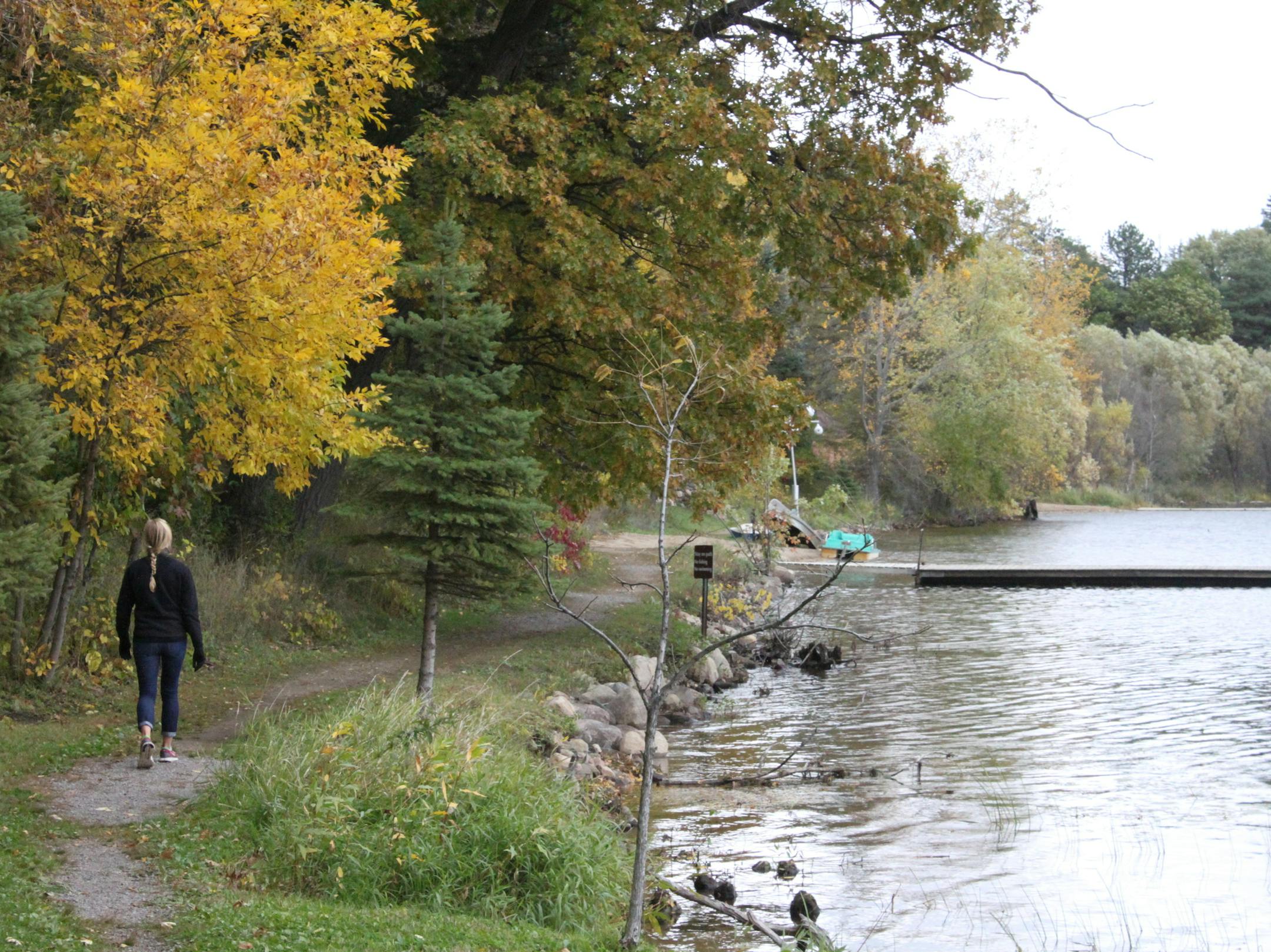
Reaching the edge of campus, we head down to the beach on Sagatagan Lake, aka "Lake Sag." It is here that the Chapel Trail commences, an out-and-back 3-mile hike marked by rolling, but not technical, terrain. The turnaround point is the 100-year-old Stella Maris Chapel, situated deep in the woods on the lake's edge. The chapel is visible across the lake from the western shoreline, but the only way to see it up close is by foot, canoe, snowshoes or skis.
As we follow the dirt trail to the chapel, we're able to admire the colors and smells of Collegeville. The trees blaze auburn and gold as we breathe in the earthy scent of autumn air. Around every corner is evidence of the Benedictines, known for their stewardship of the land they had the good fortune of acquiring. As we move from the beach back into the woods, we are suddenly surrounded by imposing pines. As a graduate of St. Benedict's, I know this to be the oldest documented forest planting in Minnesota, the work of monks in the late 1800s who hoped to recreate their coniferous Bavarian homeland.
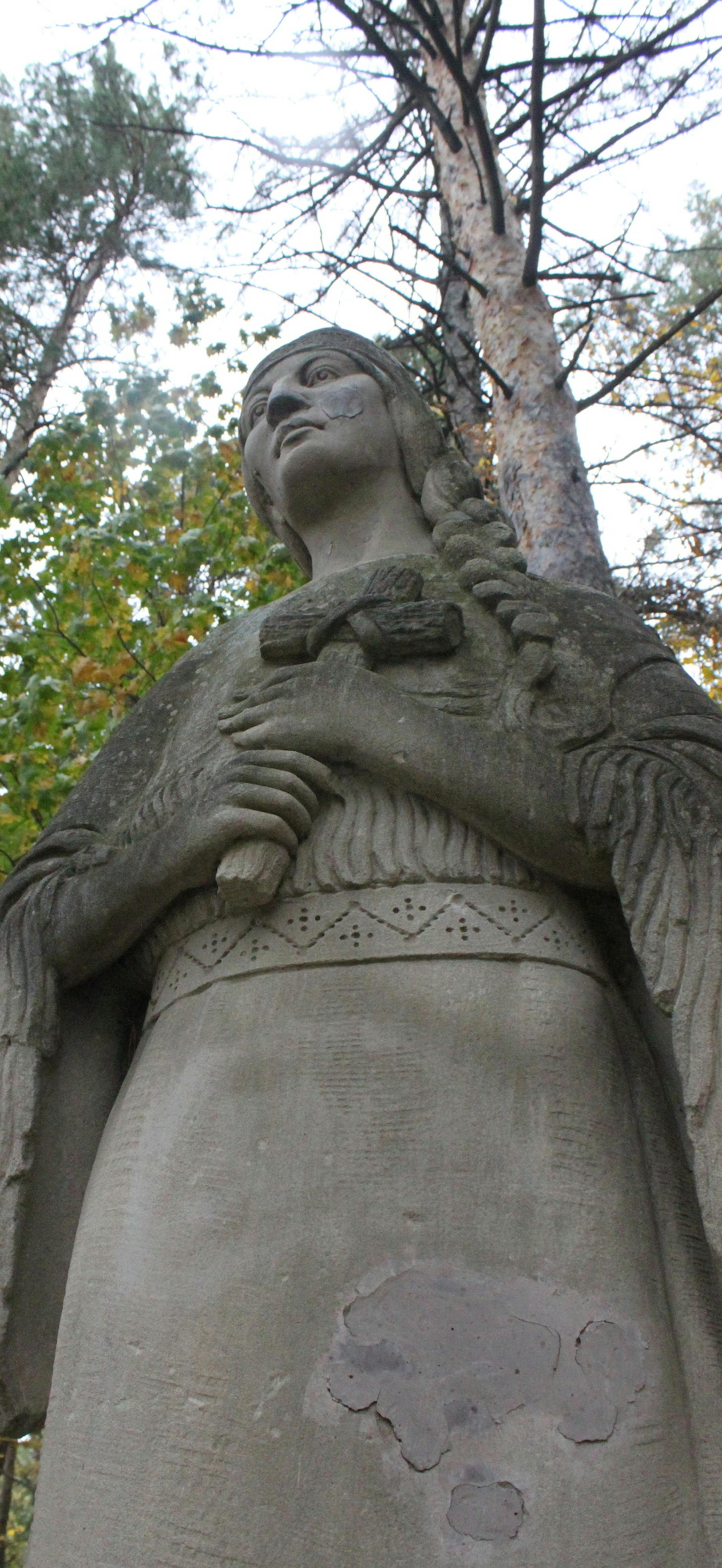
A couple hundred meters into the Chapel Trail, we come across the statue of Blessed Kateri Tekakwitha (1656-1680). Gifted by St. Olaf Catholic Church in Minneapolis in 1956, the statue honors a 17th-century saint who was the daughter of a Mohawk warrior and a Christian Algonquin woman. As a teenager she converted to Catholicism and later became known as a patron of ecology. The first American Indian to be canonized, the "Lily of the Mohawks" watches over the lake with a sleeping dog at her feet. St. John's tradition dictates that we pat the dog on the head before moving along the trail toward the chapel.