

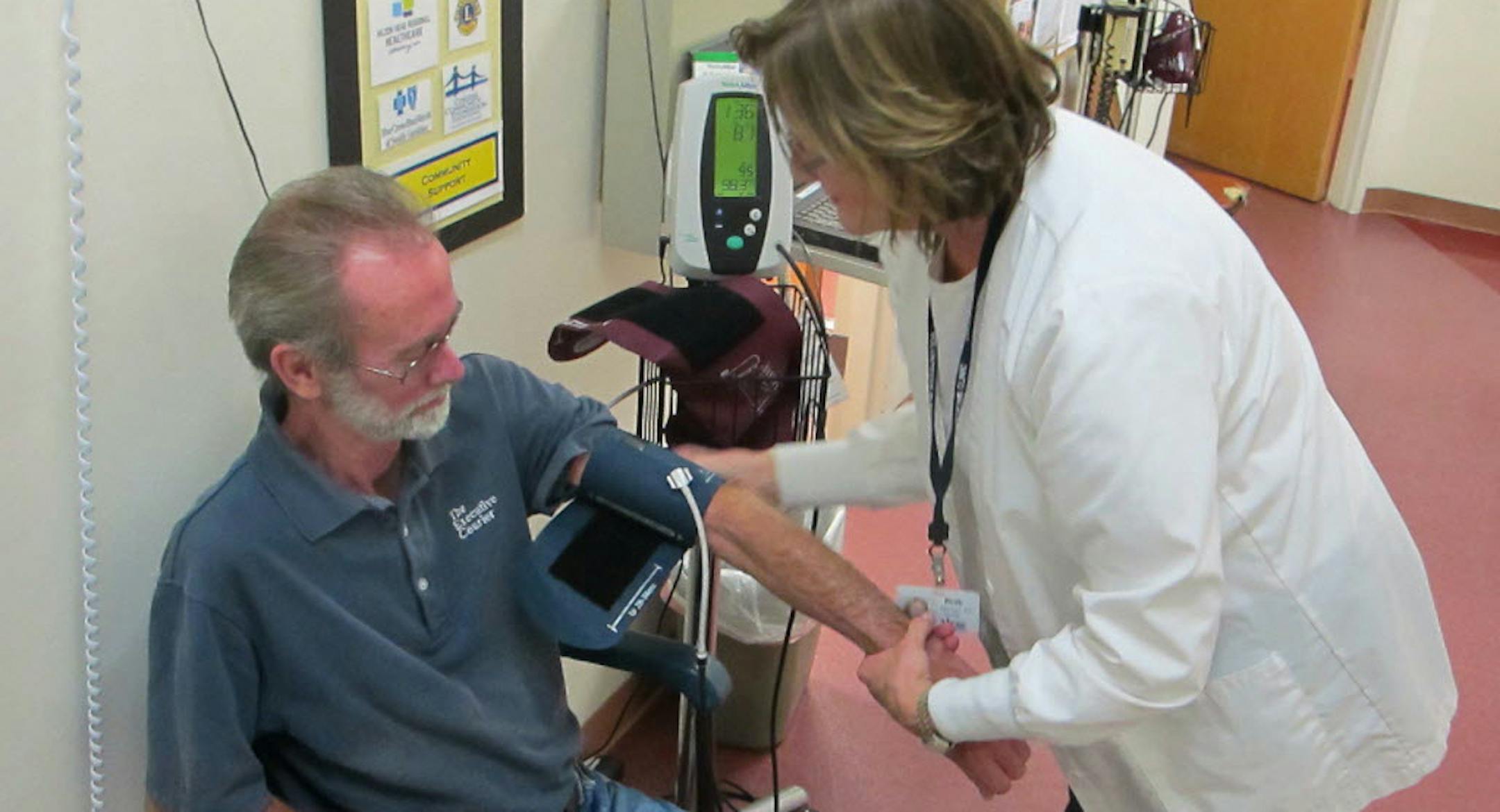
People 60 and older don't need to be treated as aggressively for high blood pressure, according to new physician guidelines that may help lower the number of medicines taken by baby boomers.
The recommendations, published in the Journal of the American Medical Association, suggest treatment goals for older people should be set at 150-over-90 millimeters of mercury, based on studies showing these patients fare just as well over time at this higher level.
The goal for other groups is 140 over 90, according to the guidelines by a panel convened by the U.S. National Heart, Lung and Blood Institute.
The top number in a blood pressure reading is the systolic rate and shows the pressure when the heart beats. The lower number is the diastolic reading, which measures the pressure between heartbeats.
Hypertension increases the risk of heart disease, the leading cause of death worldwide. Studies show about 90 percent of people may eventually develop it. While the changes probably won't reduce how many people are treated for hypertension, the new goals may trim the number and types of pills patients have to take, doctors said.
"Hypertension is a disorder that requires many medications, and the patient doesn't feel any better when you treat them," said Dr. Richard Krasuski, a Cleveland Clinic cardiologist who was not involved in writing the guidelines.
Many people who suffer from hypertension require several types of drugs for their treatment, which can extend life by more than two years.
Drugs to treat hypertension are the third-biggest-selling class of medicines worldwide, according to IMS Health, a market research company. The medicines, sold alone or in combination with other drugs, generated $51.6 billion in 2012.


