
High-tech treasure hunting

A free class at the Washington County Library will cover the basics of geocaching, the fast-growing activity that allows participants to use technology to find hidden containers.

September 7, 2012 at 11:08PM
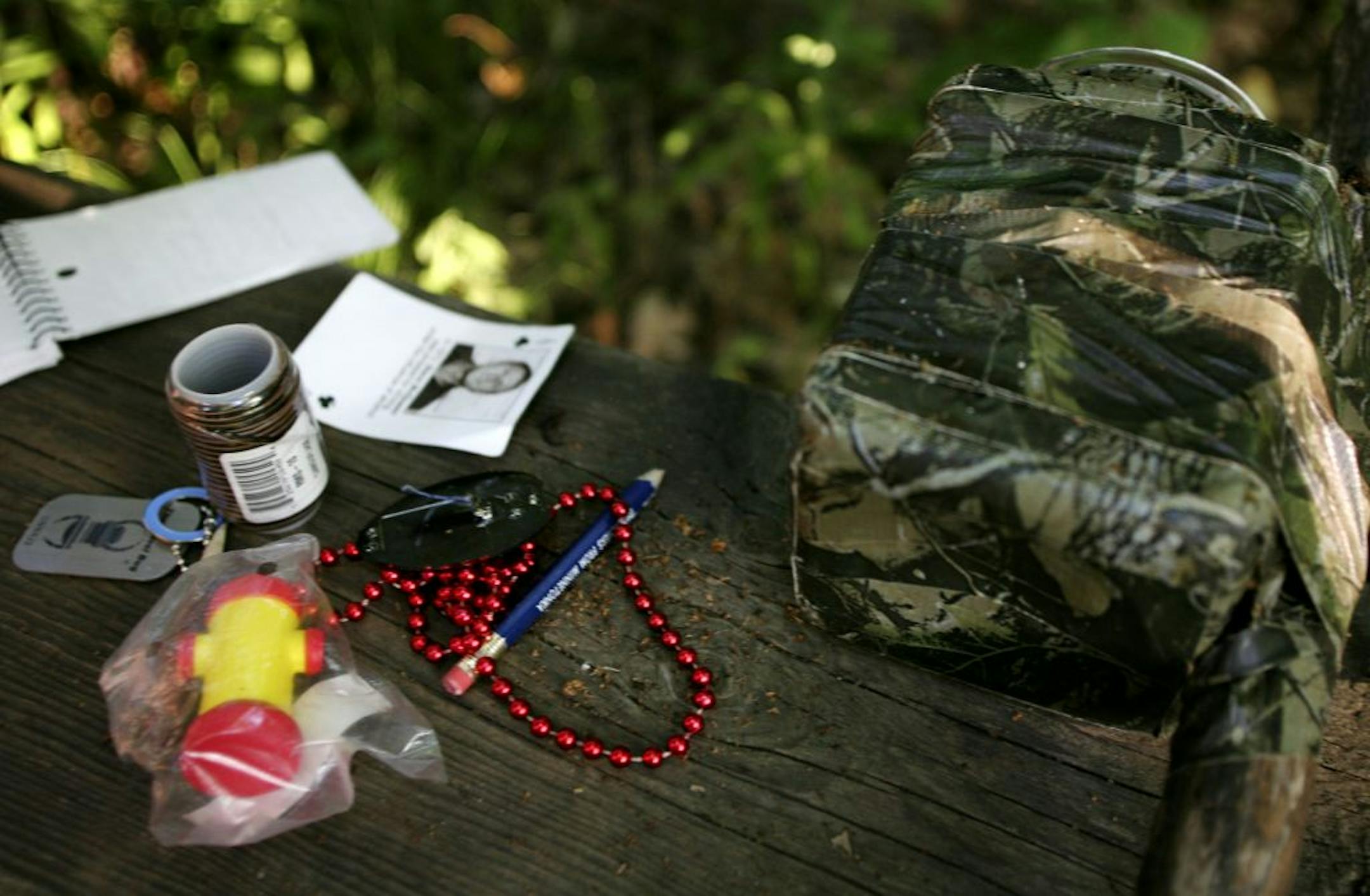
JENNIFER SIMONSON � jsimonson@startribune.com Eden Prairie, MN-July 31, 2007 Jeff and Lauren Weaver found a geocache they had hidden a few weeks earlier in order to add a coin to the collection of items in the cache. GENERAL INFORMATION: Geocaching with Eden Prairie residents Jeff and Lauren Weaver.
Geocaching treasures (Jm - Star Tribune/The Minnesota Star Tribune)

Ardent geocachers will brave the cold and dig through piles of ice and snow to seek out hidden treasures. But for many, the popular outdoor activity is largely a warm-weather event.

The Washington County Library is looking to change that.

Later this month, it plans to hide one of the containers called a cache inside the R.H. Stafford Library and one other library in the county to give seekers an opportunity to geocache indoors and make the library a winter destination.

"When it's cold and nasty outside, this gives one more venue for cachers to travel to," library manager Chad Lubbers said. "The whole idea is to get people to move around and give people something to do in the middle of the winter."

To introduce people to the hobby, Matt and Caitlyn Pekuri of Woodbury will lead a "Get Started with Geocaching" class from 1 to 3 p.m. Saturday at the Stafford Library, 8595 Central Park Place. They will talk about becoming familiar with GPS-enabled devices used to find caches, how to input coordinates and other tips for beginners.

Geocaching is a term that was coined in 2000. It is a sport in which participants use GPS technology to enter coordinates, then go from there to look for small waterproof containers hidden in parks, nature preserves, neighborhoods and along bike paths.

Most caches include a guest book that finders sign, and larger ones include small trinkets or objects for trading. Finders can take what's inside and are encouraged to leave an object of the same or greater value in its place for the next person.

The hobby got its start when GPS enthusiast Dave Ulmer set out to test the accuracy of GPS signals available to citizens. He hid a cache and shared the coordinates online. A man who found Ulmer's cache shared his experience online. As chats spread, others around the world hid caches and the sport took off, according to Geocaching.com, the world's largest location-based gaming portal.

There are now more than 1.4 million caches hidden worldwide, and there are more than 5 million geocachers worldwide, the website says. The United States and Germany have the most participants, followed by the Czech Republic, Canada and the United Kingdom, the website says.

Geocaching has a growing following in the state, according to Minnesota Geocaching Association, which will hold its autumn geocaching weekend Sept. 22 at William O'Brien State in Marine on St. Croix.

The Minnesota DNR also is turning to geocaching to promote tourism and encourage treasure seekers to visit all 75 state parks. Launched in June, the Geocaching Avian Adventure challenges guests to locate the Bird Cache in each park and along one state trail to collect bird cards at each site and complete challenges along the way. The final stop is at Itasca State Park, where finishers who find the Minnesota State Bird Challenge cache can upload their photo to the Avian Adventure Finishers Gallery. The contest runs through June 2014.

"People are into searching," Lubbers said. And that is another reason the library will hold the class.

For those who like to venture out on their own, thousands of caches have been hidden across the Twin Cities, including hundreds in Woodbury and throughout Washington County, according to a map on Geocaching.com.

Searchers use their GPS to get to coordinates that correspond with the cache, but they can still be cleverly hidden in the landscape. Others require detective work such as in solving a riddle to find them.

Since the library is made from metal infrastructure and GPS units don't work well inside, Lubbers said searchers will be led to a clue outside the library. Then they will have to solve it to find the treasure inside.

Tim Harlow • 651-925-5039 • Twitter: @timstrib

about the writer

about the writer

Tim Harlow

Reporter

Tim Harlow covers traffic and transportation issues in the Minneapolis-St. Paul area, and likes to get out of the office, even during rush hour. He also covers the suburbs in northern Hennepin and all of Anoka counties, plus breaking news and weather.

See Moreicon

More from No Section

See More
FILE -- A rent deposit slot at an apartment complex in Tucker, Ga., on July 21, 2020. As an eviction crisis has seemed increasingly likely this summer, everyone in the housing market has made the same plea to Washington: Send money — lots of it — that would keep renters in their homes and landlords afloat. (Melissa Golden/The New York Times) ORG XMIT: XNYT58
Melissa Golden/The New York Times

It’s too soon to tell how much the immigration crackdown is to blame.