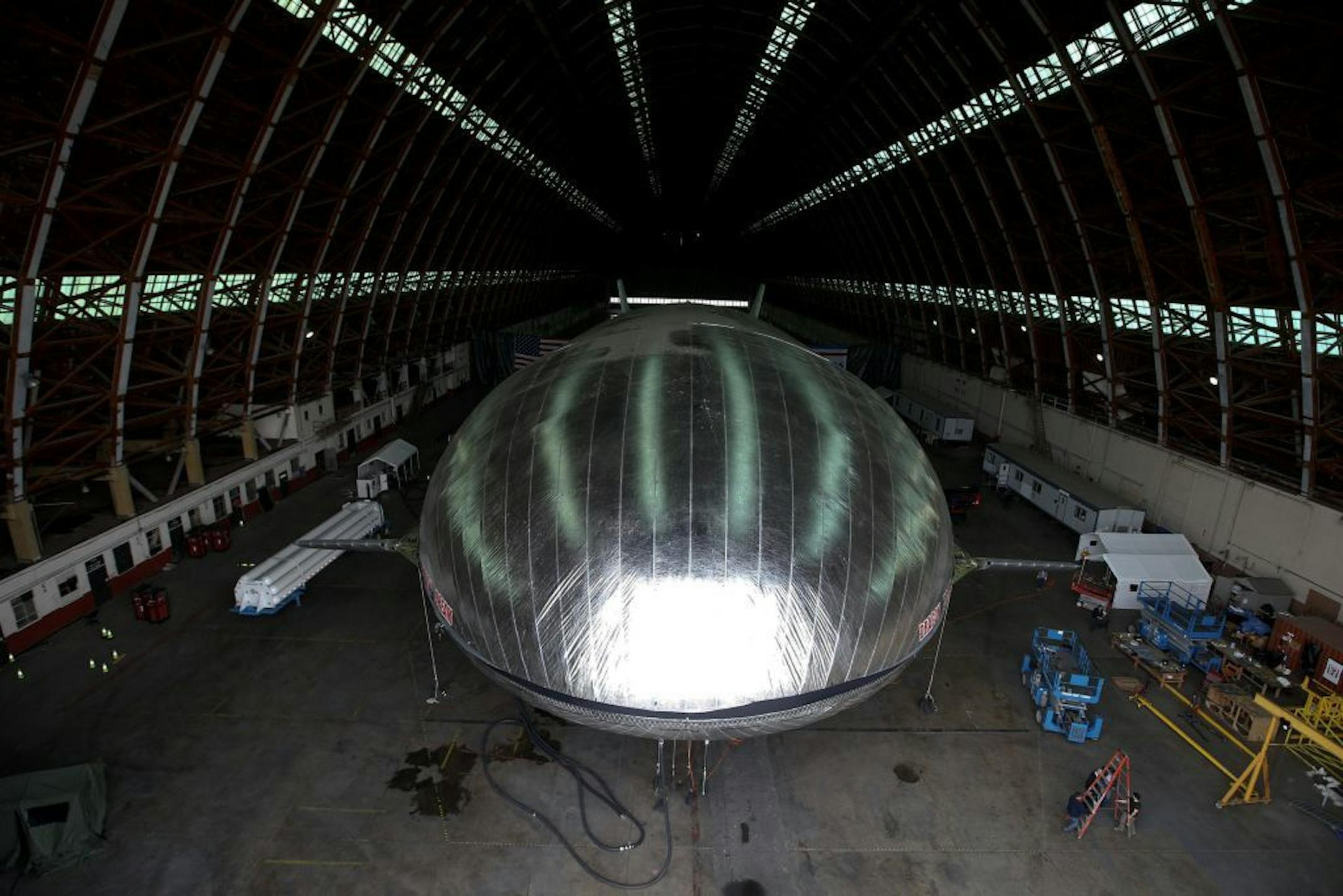
TUSTIN, Calif. - The massive blimp-like aircraft flies but just barely, hovering only a dozen feet off a military hangar floor during flight testing south of Los Angeles.
Still, the fact that the hulking 230-foot-long Aeroscraft could fly for just a few minutes represents a step forward in aviation, according to the engineers who developed it. The Department of Defense and NASA have invested $35 million in the prototype because of its potential to one day carry more cargo than any other aircraft to disaster zones and forward military bases.
"I realized that I put a little dot in the line of aviation history. A little dot for something that has never been demonstrated before, now it's feasible," said flight control engineer Munir Jojo-Verge.
The airship is undergoing testing this month at Marine Corps Air Station in Tustin, and must go through several more rounds of flight testing before it could be used in a disaster zone or anywhere else. The first major flight test took place Jan. 3.
The biggest challenge for engineers is making sure the airship will be able to withstand high winds and other extreme weather conditions, Jojo-Verge said.
"Their vulnerability is their large size," said aviation expert and former Navy test pilot Pete Field. "There's a lot of surface area so wind affects it tremendously."
Worldwide Aeros, the company that developed the aircraft, said it also must secure more funding for the next round of flight tests, but is hopeful the Defense Department and others will step in again as investors.
The company says the cargo airship's potential to carry more cargo more efficiently than ever before would provide the U.S. military with an advantage on the battlefield and greater capacity to save more lives during natural disasters.