

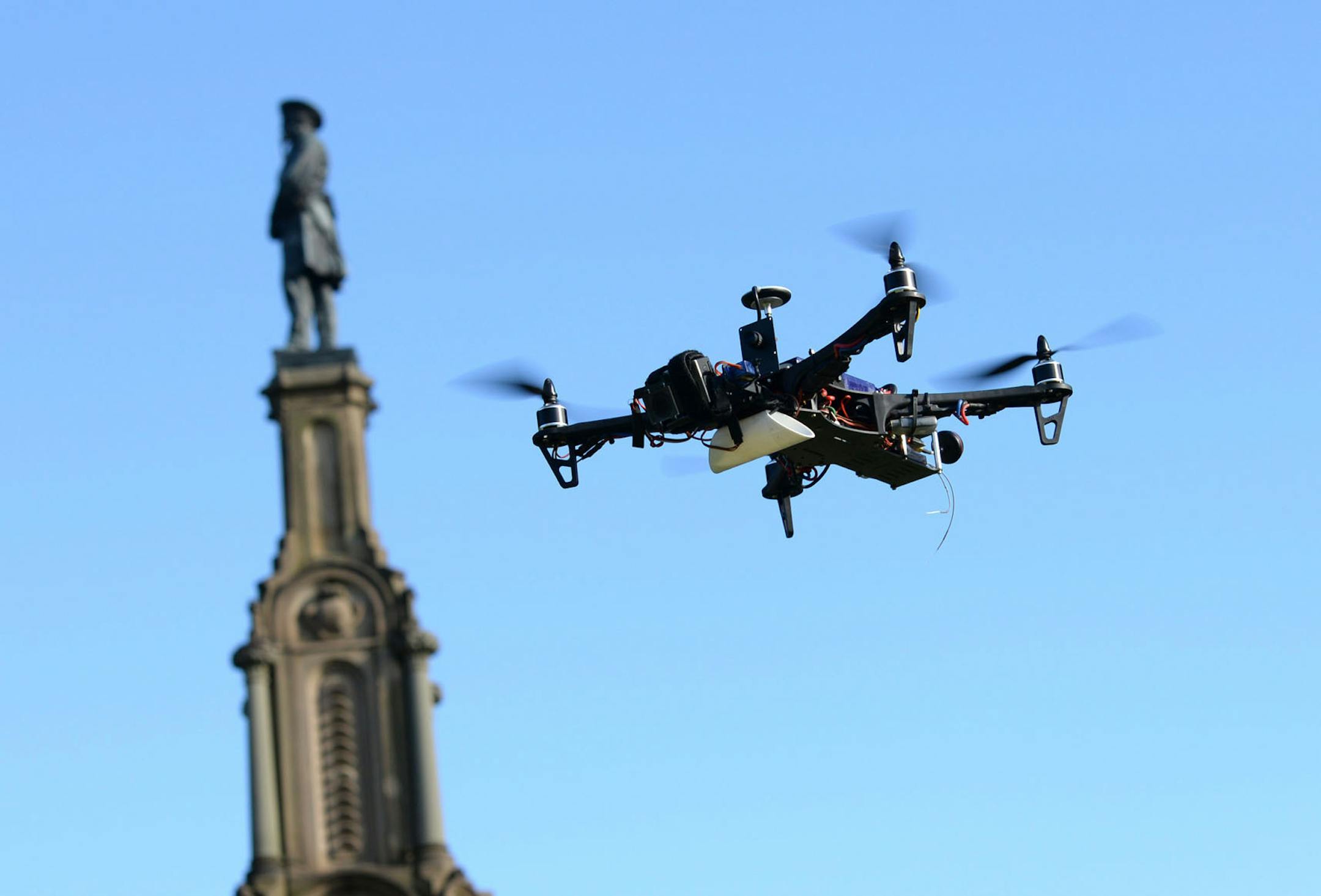
WASHINGTON - The accident rate for drones was worse than all other types of aircraft during the past 20 years, though recently it has begun to improve, a Senate hearing was told Wednesday.
That safety record, which is approaching the crash rate of traditional aircraft, isn't reason to slow the coming boom in civilian uses for drones, Mary Cummings, director of Duke University's Humans and Autonomy Laboratory, told the Senate Commerce, Science and Transportation Committee.
Some military drones, such as the General Atomics Aeronautical Systems Inc. Predator, are now safer than privately operated planes, she said.
"As a former fighter pilot and a private pilot, I understand the importance of what I am saying — which is that a drone is, on average a better pilot than I am," she said.
Global sales of civilian and military drones may reach $89 billion during the next decade, according to a forecast by the Teal Group Corp., a Fairfax, Va.-based aerospace research company, and Congress has ordered the Federal Aviation Administration to craft rules for civilian operations by 2015.
Cummings didn't provide specific data about the rates of drone accidents on models other than the Predator.
The chief of the FAA, which on Dec. 30 granted approvals for six drone test and research sites across the nation, urged caution about introducing drones into the skies too quickly.
Because a drone's operator remains on the ground, aspects of unmanned craft are "inherently different" from traditional aircraft, FAA Administrator Michael Huerta said.


