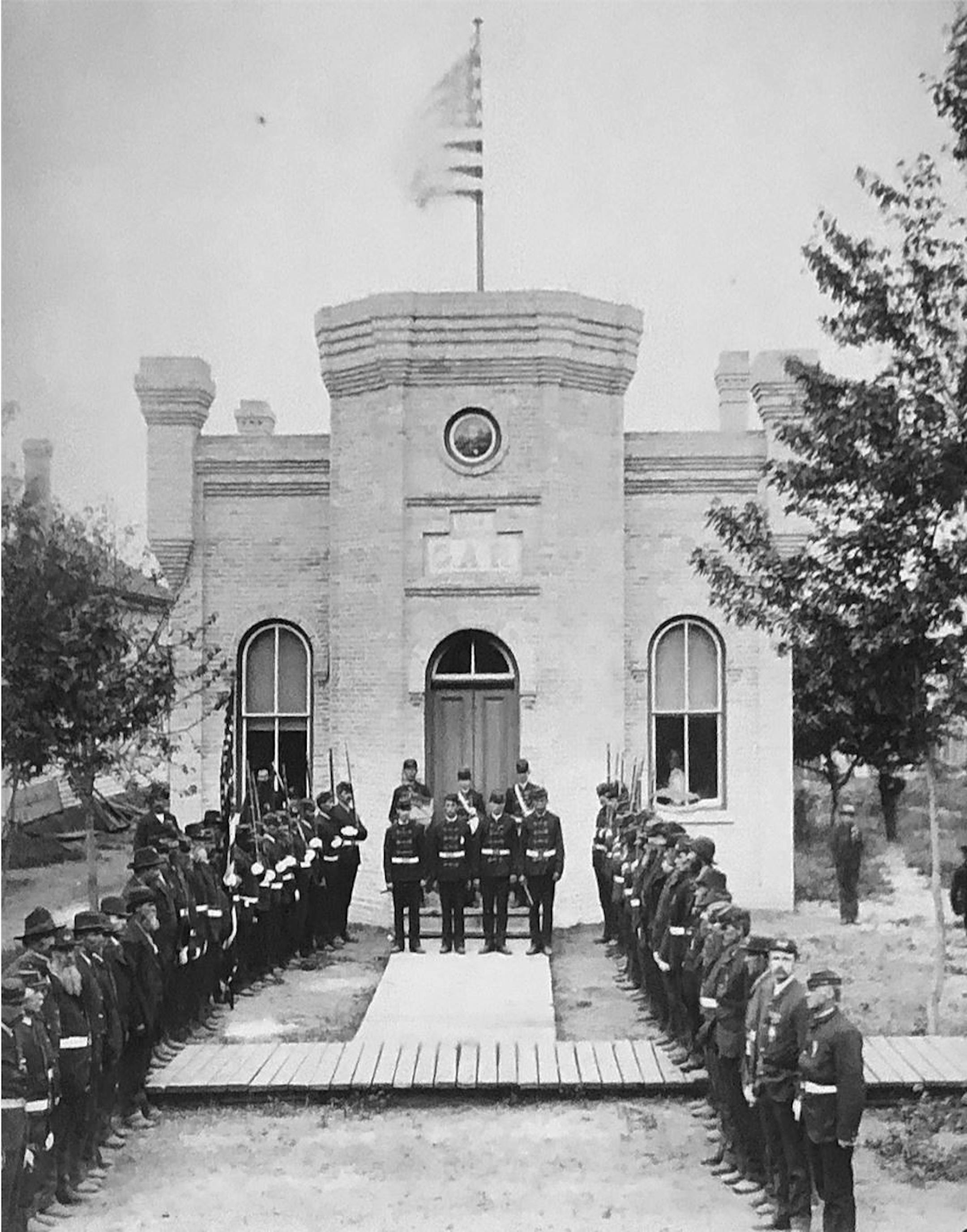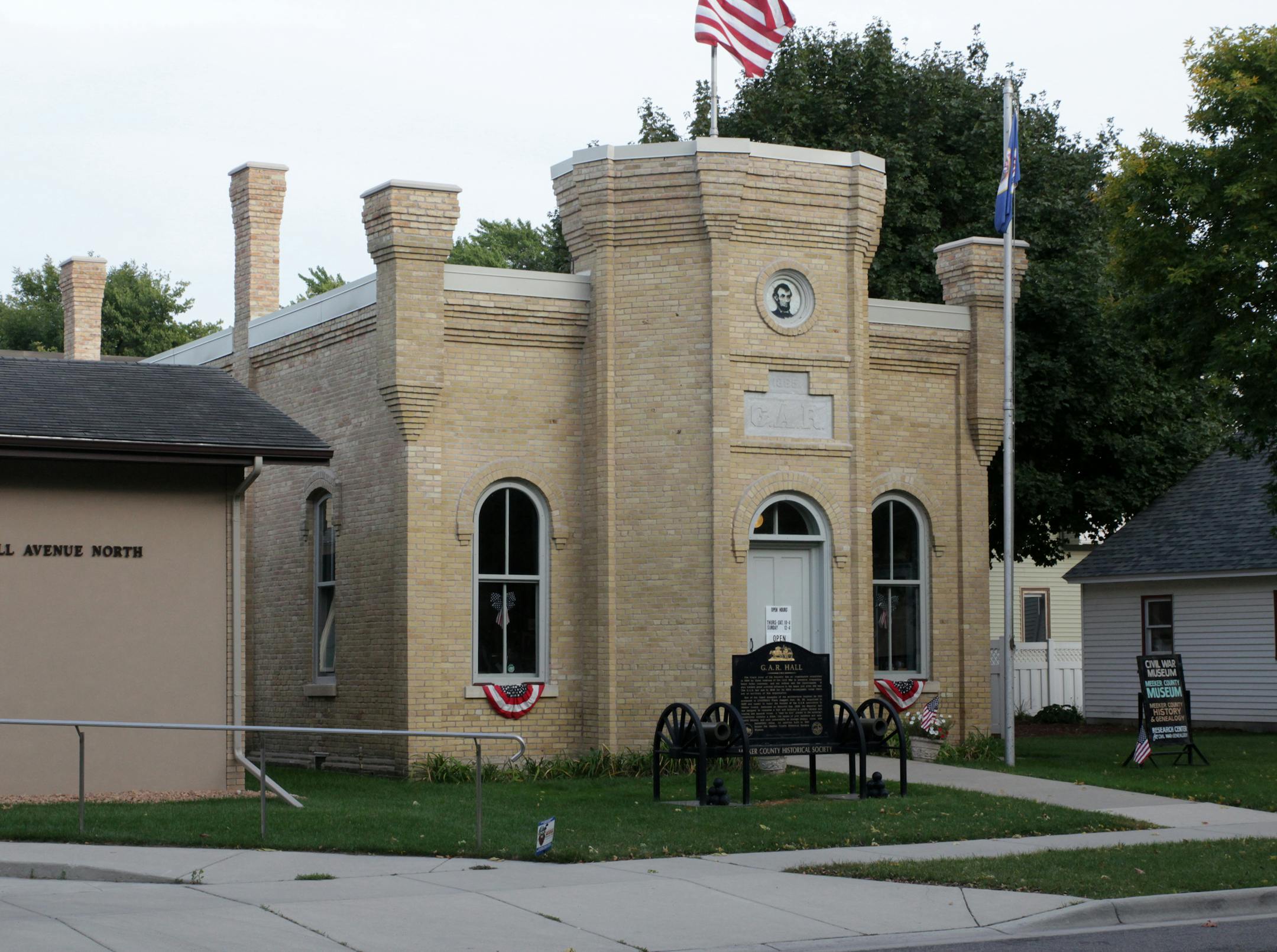
The Grand Army of the Republic Hall, a small castle-shaped building tucked between a church and a detached garage in Litchfield, Minn., looks like a humble monument to a bygone era.
But the brick structure — known as Memorial Hall when built by Civil War veterans in 1885 — is one of only three GAR halls in the country with an intact meeting space.
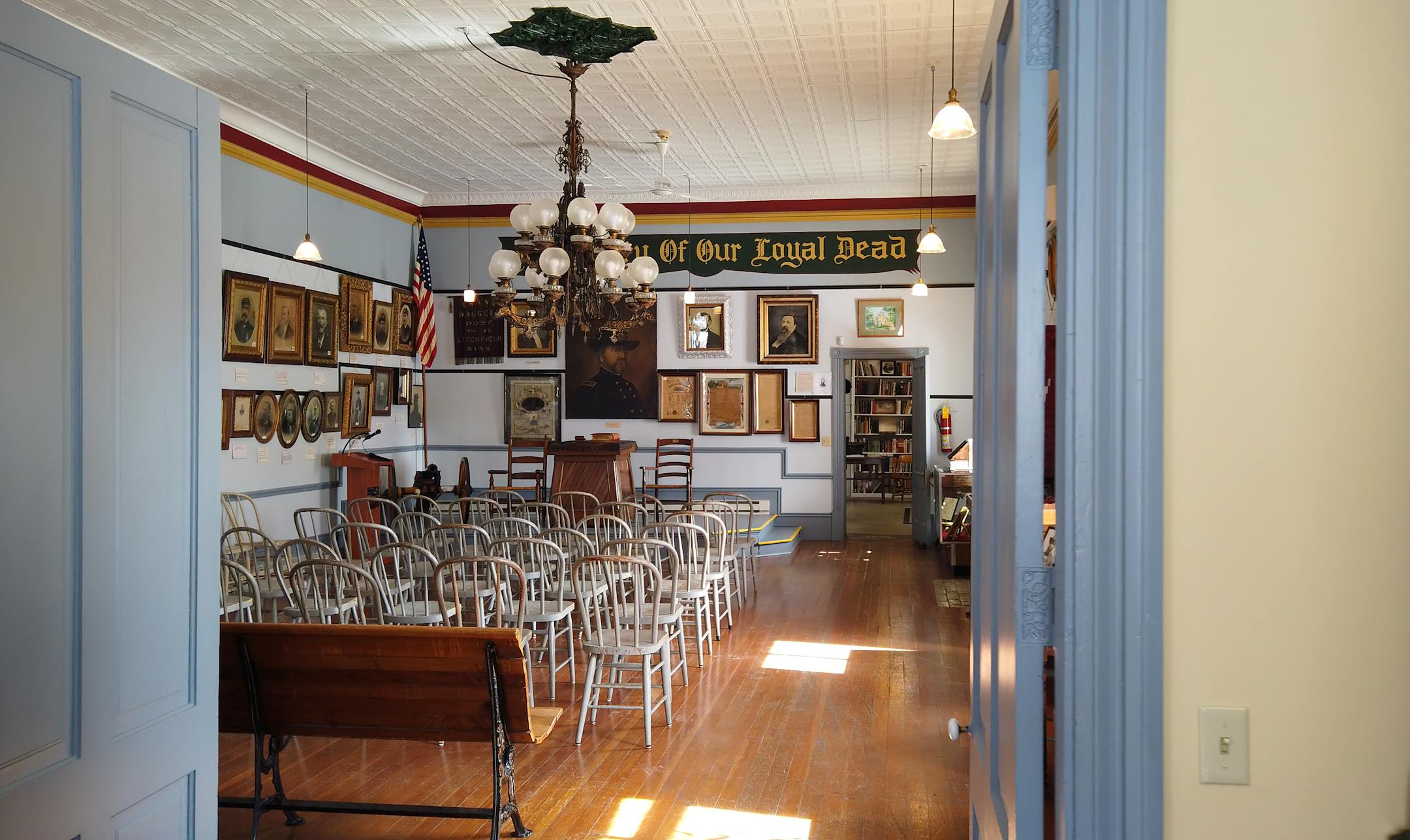
Pictures of the founding members still line the walls. Wooden chairs inscribed with members' names are still set up in rows. And still visible on the wall is a large motto: "We are the boys of '61."
The building has been listed on the National Register of Historic Places for nearly 50 years but Litchfield residents are working to get the site added to the more renowned list of National Historic Landmarks.
"The [hall] is the best example of the hundreds of posts found in small towns across the nation in the late 19th century," states the application written by historical consultant Daniel Hoisington. "Stepping into that hall today is a remarkable journey into the past."
The Grand Army of the Republic, a precursor to service organizations like the American Legion and Veterans of Foreign Wars, was founded in 1866 and grew into a political and social force that encouraged fraternity among members, advocated for benefits for injured soldiers and their families, and helped establish what's now called Memorial Day.
At its high point in 1890, the GAR had nearly 430,000 members and nearly 7,000 posts nationally, and Minnesota had about 8,500 members and 178 posts, according to Hoisington. Litchfield's branch, the Frank Daggett Post, was the first in Minnesota to build its own hall.
"These were very forward-looking gentlemen," said Connie Lies, a former member of the Litchfield City Council and Meeker County Historical Society. "They built the hall to look like a fort and then immediately deeded it to the city of Litchfield."