![At the former Ford Plant in St. Paul, Minnesota on May 10, 2021, the central water feature is an important part of sending treated storm water to Hidden Falls Park. ] RICHARD TSONG-TAATARII ¥ Richard.Tsong-Taatarii@startribune.com](https://arc.stimg.co/startribunemedia/KG2FKK4OBUAYAXFMAHTTNTSJXI.jpg?&w=1080)
A few months from now, as stormwater gathers in a winding creek bed and flows toward St. Paul's Hidden Falls — much as it did more than a century ago — Greg Brick admitted he might celebrate just a little.
"The public had gotten so used to seeing that ugly sewer outfall above the waterfall ledge that they thought nothing of it," said Brick of the creek that was sent underground through a storm sewer pipe when Ford built its Highland Park plant in 1925. "But it is so wonderful to get rid of that ugly eyesore!"
While the retired state Department of Natural Resources hydrologist may have been the first to suggest "daylighting" Hidden Falls Creek in a 2008 report to the Capitol Region Watershed District, he's been joined by a growing legion of city officials, environmentalists, developers and neighbors giddy over the soon-to-be-completed transformation.
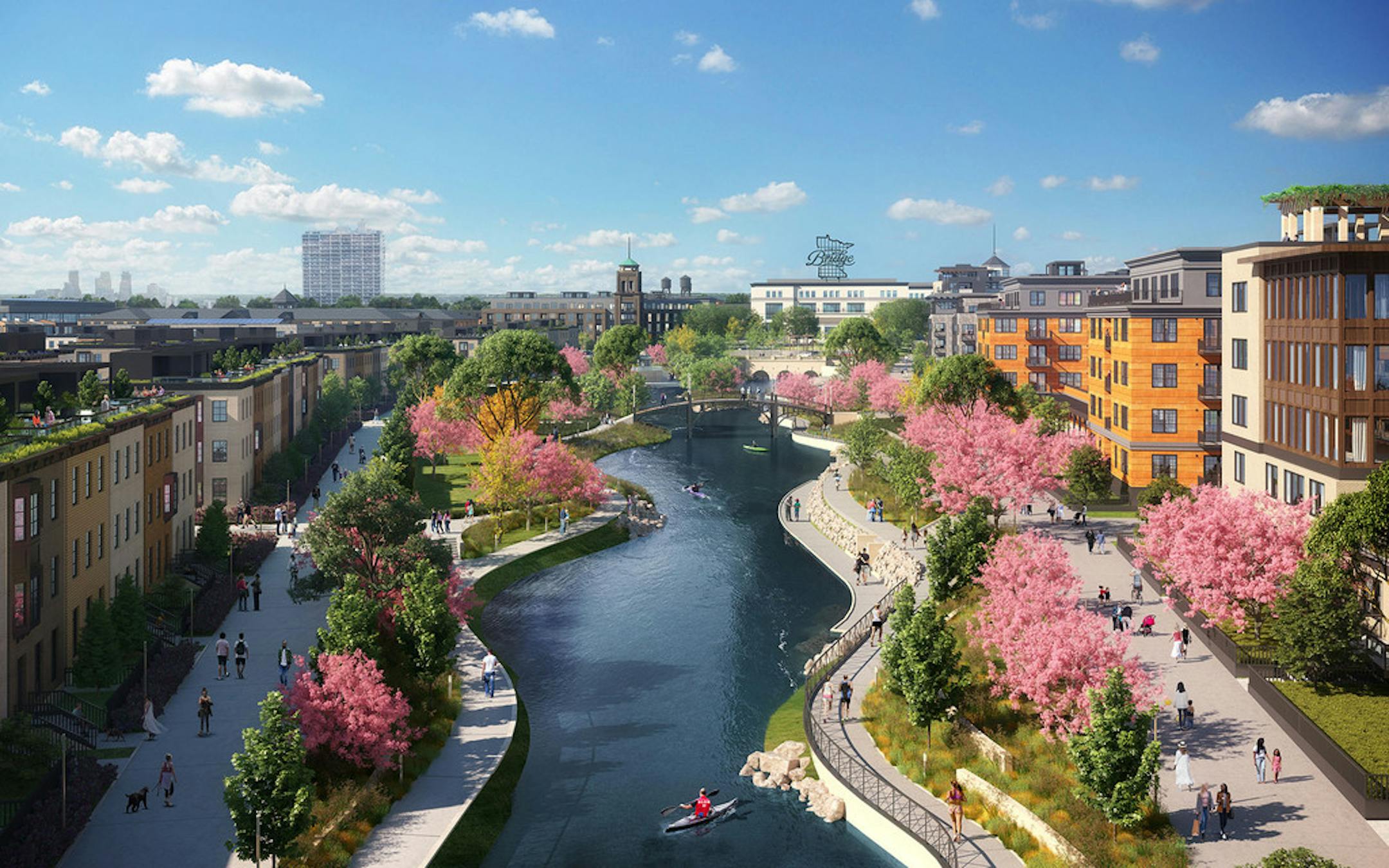
No longer hidden from public view, the remade creek is the centerpiece of the new Highland Bridge development. The water feature will not only be the site of paddle-boarders in the summer and ice skaters in the winter, but it will clean millions of gallons of stormwater before returning it to the Mississippi River below.
Wes Saunders-Pearce, water resource coordinator for the city, said the re-created creek will connect with the community in a transformational way. Already, he said, he is impressed by "how much this small segment binds the whole neighborhood to the Highland Bridge neighborhood."
But it is even bigger than that, said Ellen Stewart, senior landscape architect in the Design and Construction Division of the city's Parks and Recreation Department. It will help reconnect an entire city with the river that helped create it. This project is an element of St. Paul's Great River Passage master plan, meant to remind people of the vital role the river plays in the life of St. Paul.
"The river is our geography. It is the reason for St. Paul and for the people living here over centuries and centuries," she said. "When I lived in Highland, I didn't feel this proximity to the river. The more we can do to provide that, the more reasons people will have to visit and have pride and to be better stewards of the resources we have."
After officials at the Capitol Region Watershed District floated the idea of restoring a stream years ago, developers at the Ryan Cos. — chosen by Ford as master developer of the 122-acre site — embraced the idea. It is expected to help attract thousands of visitors — and new residents.