

It’s hard to imagine my late summer kitchen without eggplant.
Strolling the farmers markets, I can’t hold back and pile my basket with eggplant in all shapes and sizes — black, thin and footlong; bright fuchsia; magenta with white striations; pale violet; light green; egg-shaped ivory.
Given its mild flavor and dense texture, there’s a lot eggplant can do. It often stands in for meat when sautéed or in casseroles or on the grill.
At the farmers market, look for firm, shiny eggplants that are heavy for their size. A botanical cousin to the tomato, pepper and potato, eggplant doesn’t like the cold so do not refrigerate it. I like to display a variety of them in a big basket on the kitchen counter to use throughout the week. Despite their different colors and shapes, all eggplants taste similar and can be used interchangeably in most recipes. Our local eggplant is so fresh that there’s no need to salt before using; that’s a trick to use with eggplants that may have passed their peak. Peel them if you must, but I seldom bother.
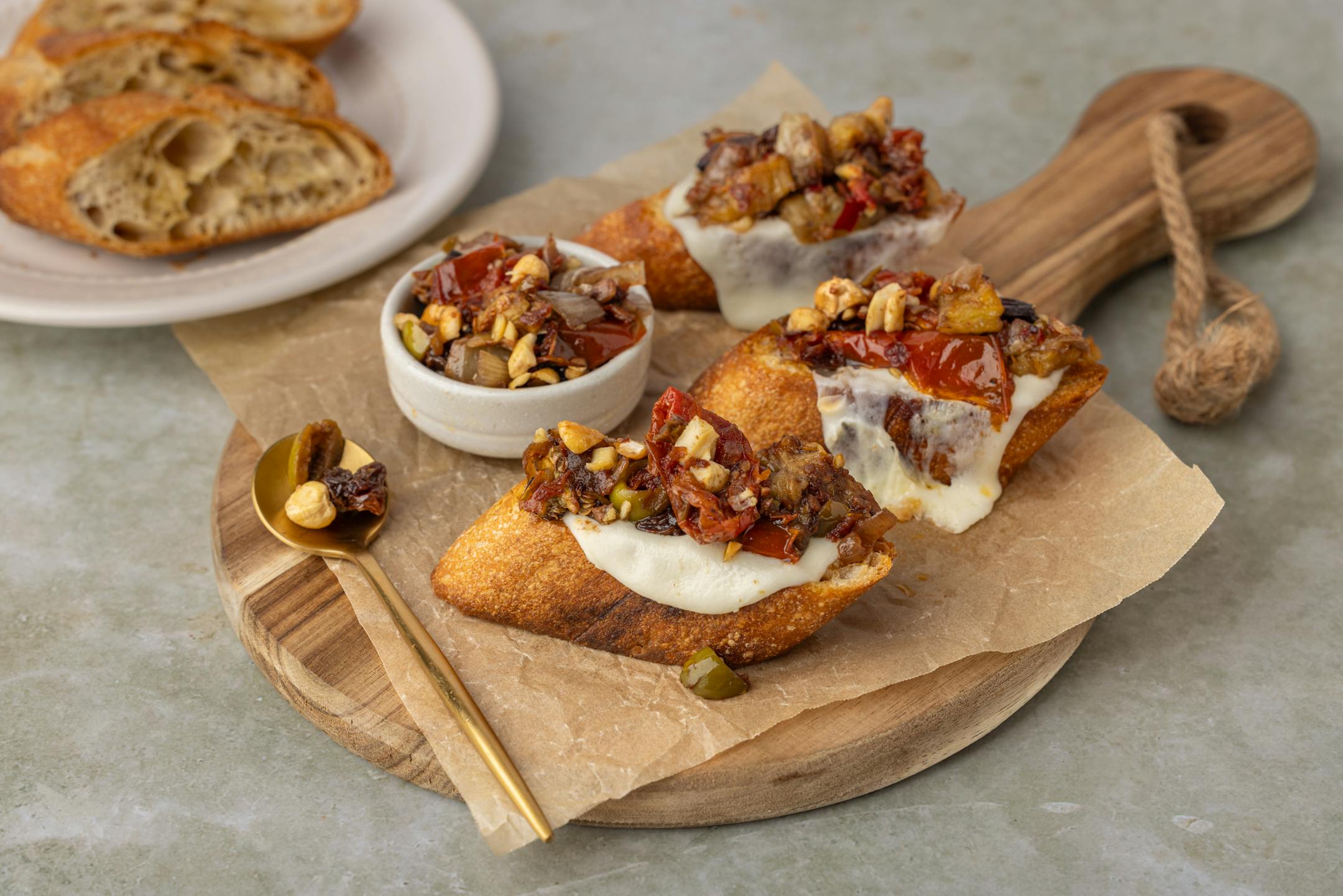
As eggplant season winds down, I’ve been making Sicilian caponata, a sweet-savory compote of Arabic inspiration. It’s a powerful collision of flavors — eggplant, capers, olives, onions, tomatoes, raisins and vinegar. Try it tossed with pasta, folded into eggs, smeared on a pizza or piled on Italian sausage. Layer it over soft cheese on bruschetta for a hearty appetizer or to serve as a side to a bowl of soup.
Make a big batch of caponata to store in a covered container in the refrigerator; it will keep for several weeks. Caponata will spark the most ordinary ingredients and make simple weeknight dinners sing.
Eggplant Caponata
Serves 4 to 6.
Eggplant’s neutral flavor and dense texture act like a sponge in this pungent Sicilian version of ratatouille. Make it a day or so ahead to allow all the components to marry. Serve it at room temperature on top of crostini layered with soft cheese (chèvre, cream cheese, mozzarella … whatever you please). From Beth Dooley.


