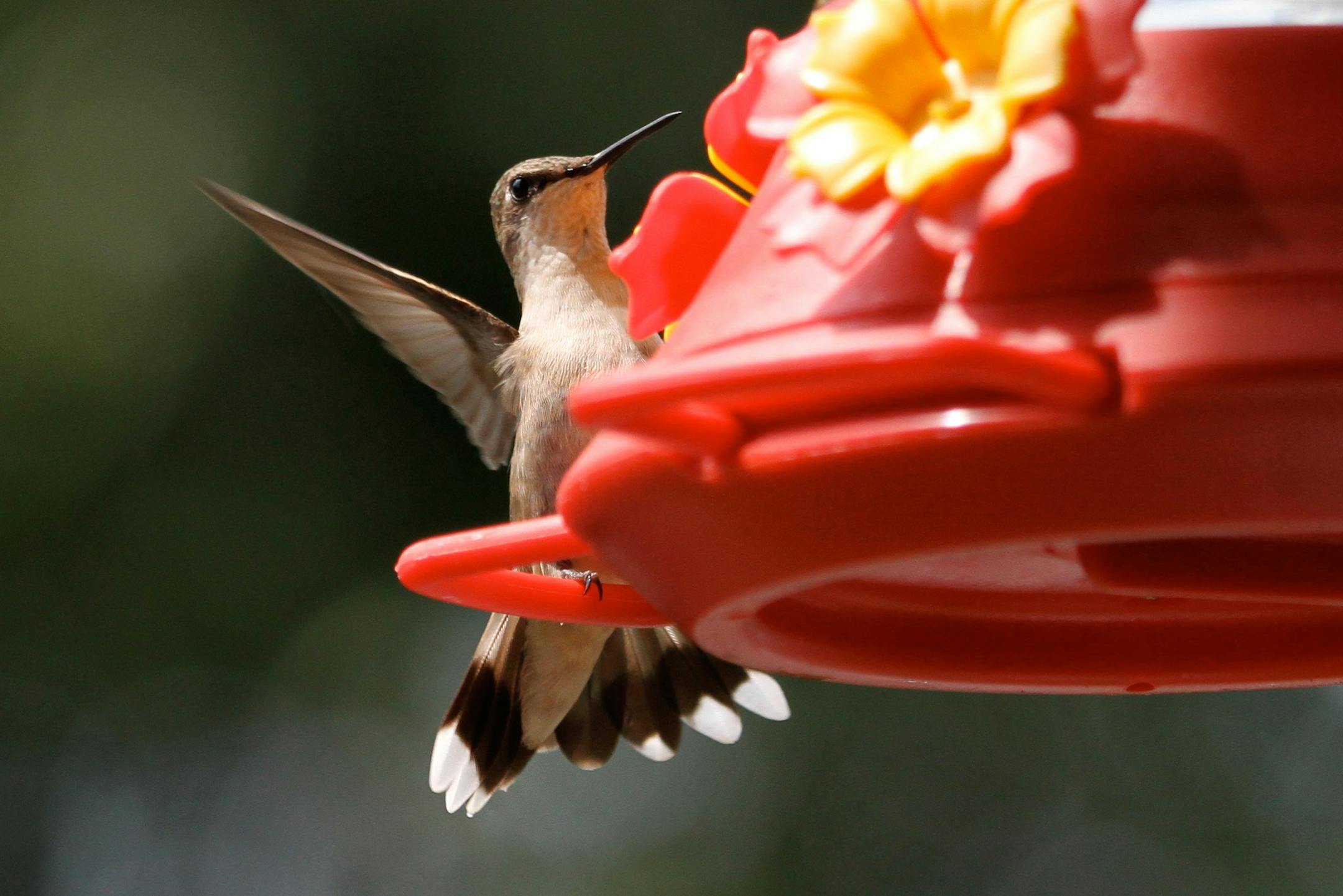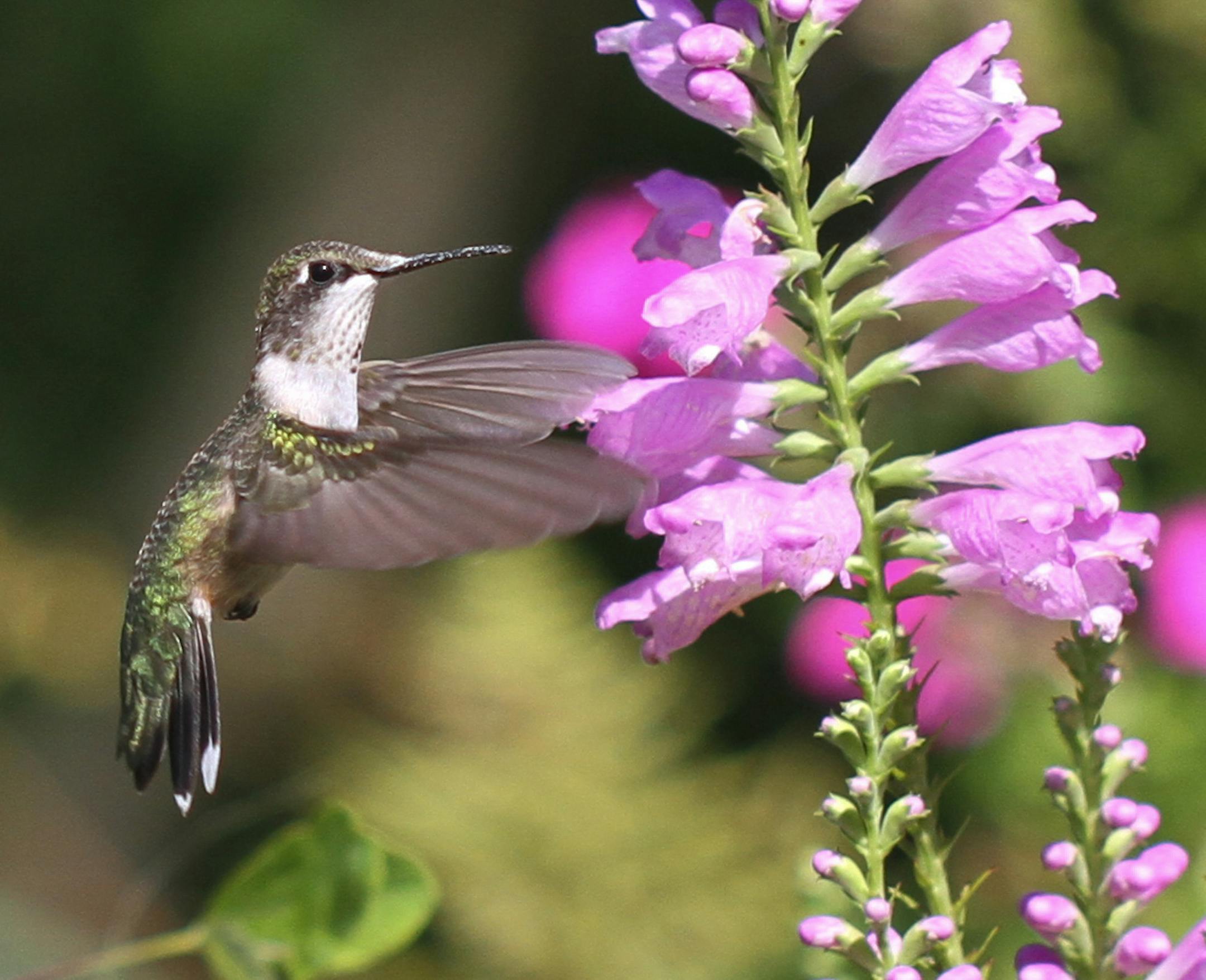
It's a familiar lament: "Why don't I ever see hummingbirds at my nectar feeder?"
It was the same story in my backyard for many years. No matter how many feeders I put out, the ruby-throated hummingbirds stopped by only briefly in spring and fall on their way north or back south.
But as I read up on these little dynamos and their needs, the light began to dawn. The key to attracting hummingbirds and keeping them around all summer is making them feel at home, and a feeder filled with sugar water is really only the frosting on the cake.
Unlike many songbirds, hummingbirds don't form pairs, so what we're really after is a female hummingbird. And what she's looking for is a landscape she can rely on to sustain her brood.
First and foremost, hummingbirds need a visual "Stop" sign, so hang a basket outdoors with bright red blossoms in early spring. This eye-catching display may cause one or several hummingbirds to interrupt their headlong migration, especially if they're young birds looking to set up new territories.
Create a dynamo deli
Food is a major concern for racing metabolisms that need to be replenished every 15 minutes, and wild birds look first to familiar sources. Red, trumpet-shaped flowers announce "Sweet treats here." Even though I'm a big fan of native plants, many natives don't bloom until later in the summer. So go ahead and plant bright annuals to provide nectar early in the season, because what you're looking for are plants in bloom in a succession from spring through fall.
Natural nectar isn't the whole story because hummingbirds need protein — in fact, at least a quarter of their diet is on the carnivorous side. They're on the lookout for tiny insects, and these are attracted to plants with tiny flowers.
Even though hummingbirds think they're tough enough to take on all comers, safety from predators is a concern. So a backyard that offers shelter in the form of evergreen trees or shrubs, and/or dense deciduous shrubbery, earns another tick on the hummingbird checklist. They also need perches, since they spend a lot of time surveying their territory. A small tree or tall shrub, even an arbor or trellis, fills the bill.