

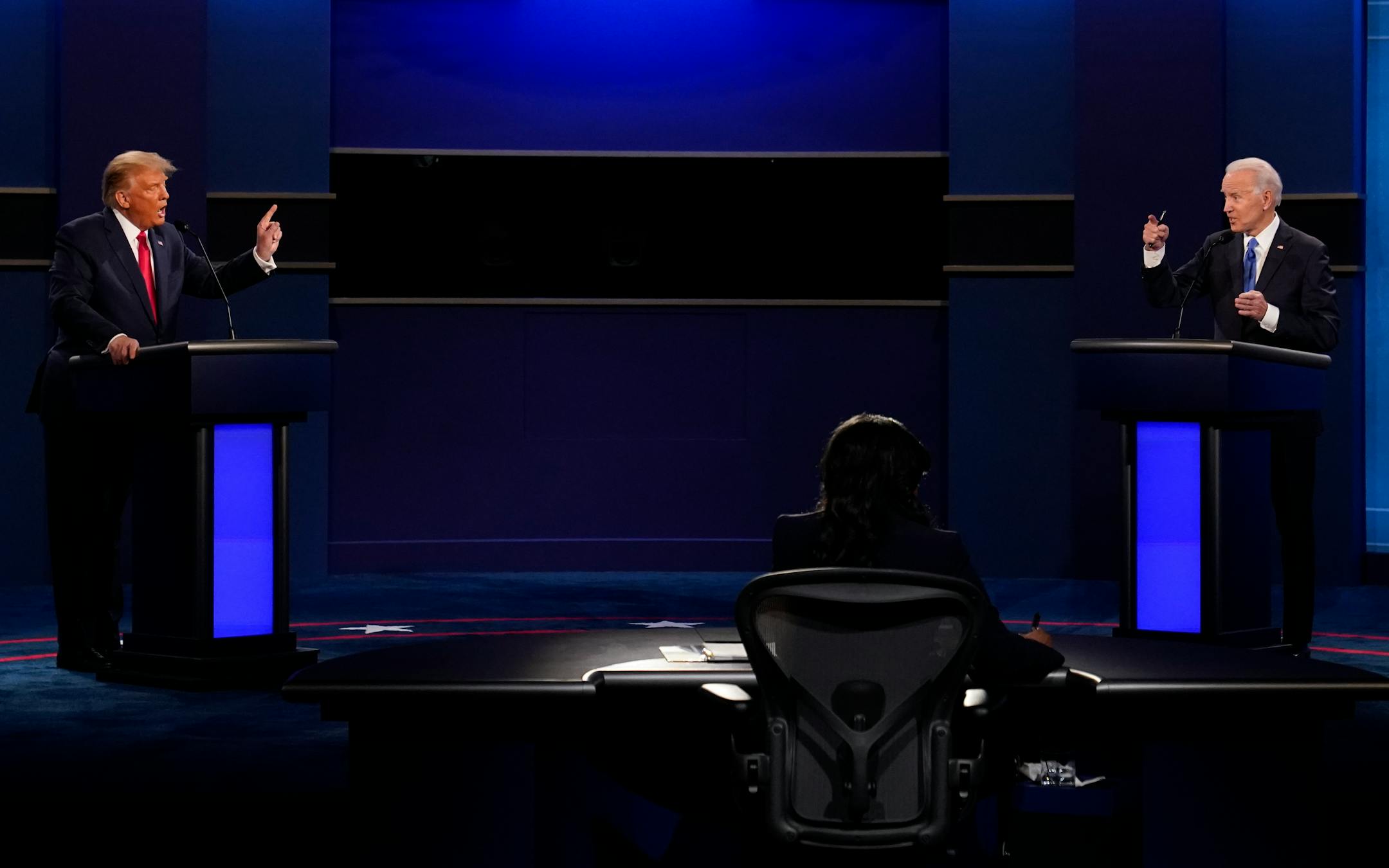
Super Tuesday brought an effective end to the 2024 presidential primary season and with it the start of a long general election campaign between President Biden and former president Donald Trump that could be the most negative in modern times - and the most consequential.
Tuesday’s voting will be followed by Biden’s State of the Union address Thursday, and then both candidates will campaign at events Saturday in Georgia - an early pairing in a battleground state. While both will continue to secure the necessary delegates in upcoming primaries to guarantee their nominations, they will be focused almost exclusively on one another.
The general election begins with Biden and Trump displaying as many vulnerabilities as assets. Trump tried to overturn the 2020 election, is facing 91 felony counts and has threatened anti-constitutional actions if elected to a second term. Biden is already the oldest president in the nation’s history and is confronting doubts about his capacity to serve into his mid-80s as well as some of the lowest approval ratings of any modern incumbent seeking a second term.
Many Americans wish this were not the choice ahead. Some continue to imagine a race without one or the other, or both, at the top of their party’s ticket. Scenarios about an open Democratic convention or Trump somehow being disqualified flicker around the edges of the campaign. On Tuesday, as an example, the office of Michelle Obama declared that she will not be a candidate for president this year, putting to rest a far-right notion that has rumbled for months.
Barring something unexpected, 2024 will be a rerun of the 2020 election, though in a markedly different country and political climate. In 2020, Trump was the unpopular incumbent, the country was reeling from the worst pandemic in a century, the economy had fallen into a tailspin, and Biden benefited from a campaign strategy that kept him out of the limelight and Trump in it.
The 2024 election will carry its own set of fraught particulars: an attack on the Capitol on Jan. 6, 2021; Trump’s multiple indictments on charges stemming from that post-election period; and other issues, including the worst inflation in four decades, the lowest unemployment in roughly that same time frame and a Supreme Court decision ending a constitutional right to abortion that turned into the most explosive political issue of the time.
“There is no historical comparison for this election,” Democratic pollster Anna Greenberg said.
Past metrics that once helped foreshadow election results have been called into question. In 2022, Biden was low in the polls, yet his party outperformed expectations. Inflation was supposed to drag down Democrats, but instead abortion pulled down Republicans. The president drew criticism for focusing on threats to democracy instead of inflation late in the campaign, yet many Democratic voters were spurred to cast their ballots to diminish the power of a Republican Party that they saw as too extreme.


