

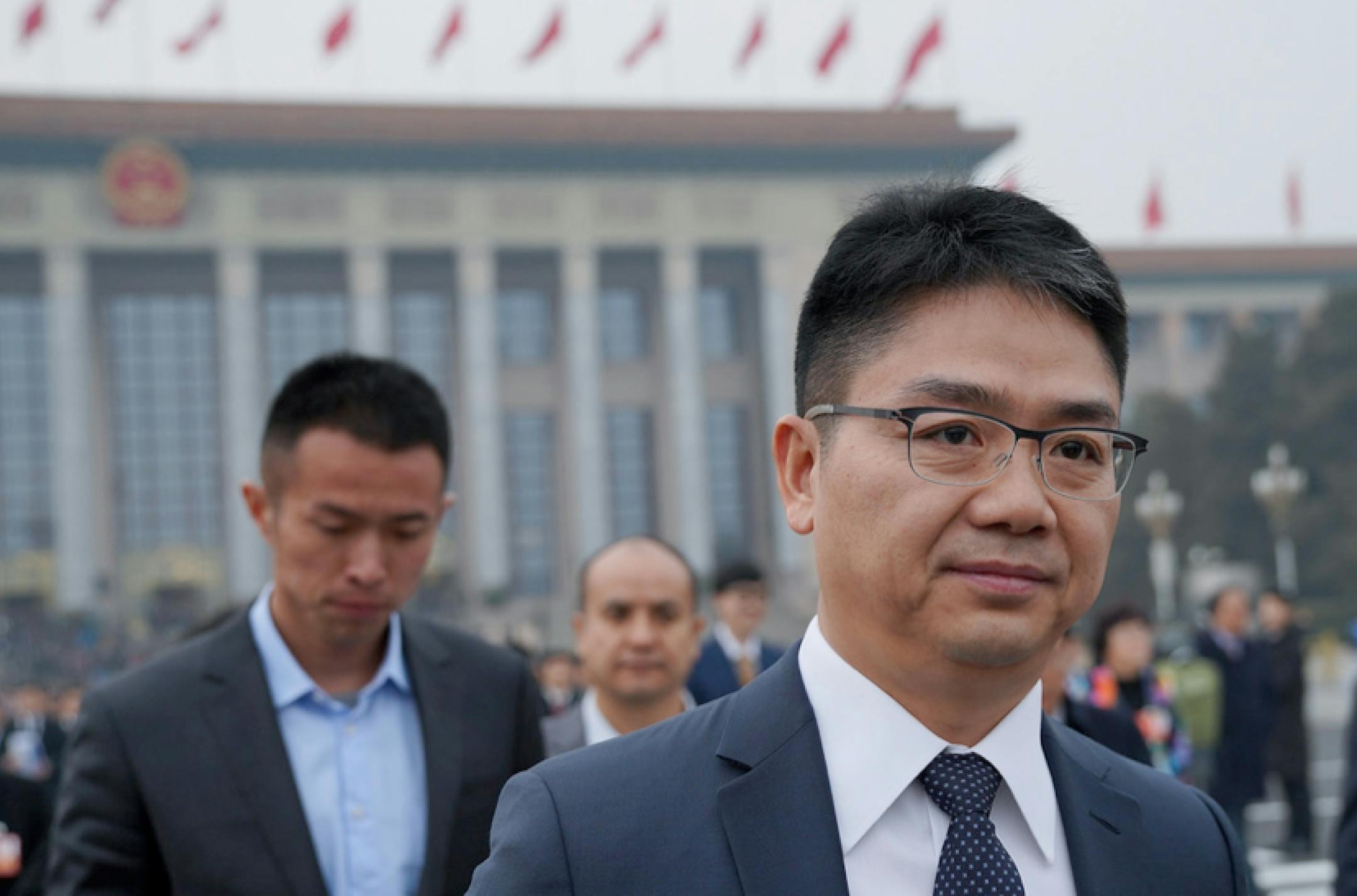
A Hennepin County district judge has rejected a motion to dismiss a giant Chinese internet retailer as a defendant in a lawsuit brought by a University of Minnesota student who alleges the company's CEO, billionaire Richard Liu, raped her.
Judge Edward T. Wahl also ruled that the student cannot seek punitive damages against the retailer, JD.com. But Wahl said in his ruling Friday that the student, Jingyao Liu — no relation to Richard Liu — can seek punitive damages from the defendant personally.
Wahl's decision sets the stage for an Oct. 3 trial in which both Richard Liu and JD.com, a company that has an e-commerce site with more than 400 million customers and is often compared to Amazon, will be defendants.
Jingyao Liu alleges that Richard Liu got her drunk on Aug. 30, 2018, at a company-sponsored party in the Uptown section of Minneapolis attended by a group of billionaires who, like him, were taking a doctoral course at the U's Carlson School of Management. She says that he drove her back to her apartment, where he allegedly raped her.
Richard Liu denies he got her drunk and says the sex was consensual. He was initially taken into custody by Minneapolis police but later released. Nearly four months later, Hennepin County Attorney Mike Freeman declined to charge him, saying there were "profound evidentiary problems" that would make it difficult to ensure a conviction.
Wahl had earlier ruled against a JD.com motion to dismiss it as a defendant based on the allegations in the suit. This time JD.com sought dismissal based on the depositions and court record. Because Wahl declined to dismiss the case against the company, it will be subject to compensatory damages.
While Wahl said he won't allow punitive damages against JD.com, he will allow them against Richard Liu. That opens the door for a large payout, should the plaintiff win at trial; Liu, who founded JD.com, is worth $10.5 billion, according to Forbes magazine. It was announced in April that he was stepping down as CEO but would remain board chair.
Wahl said in his ruling that he will issue a memorandum later that sets forth his analysis of the motions.


