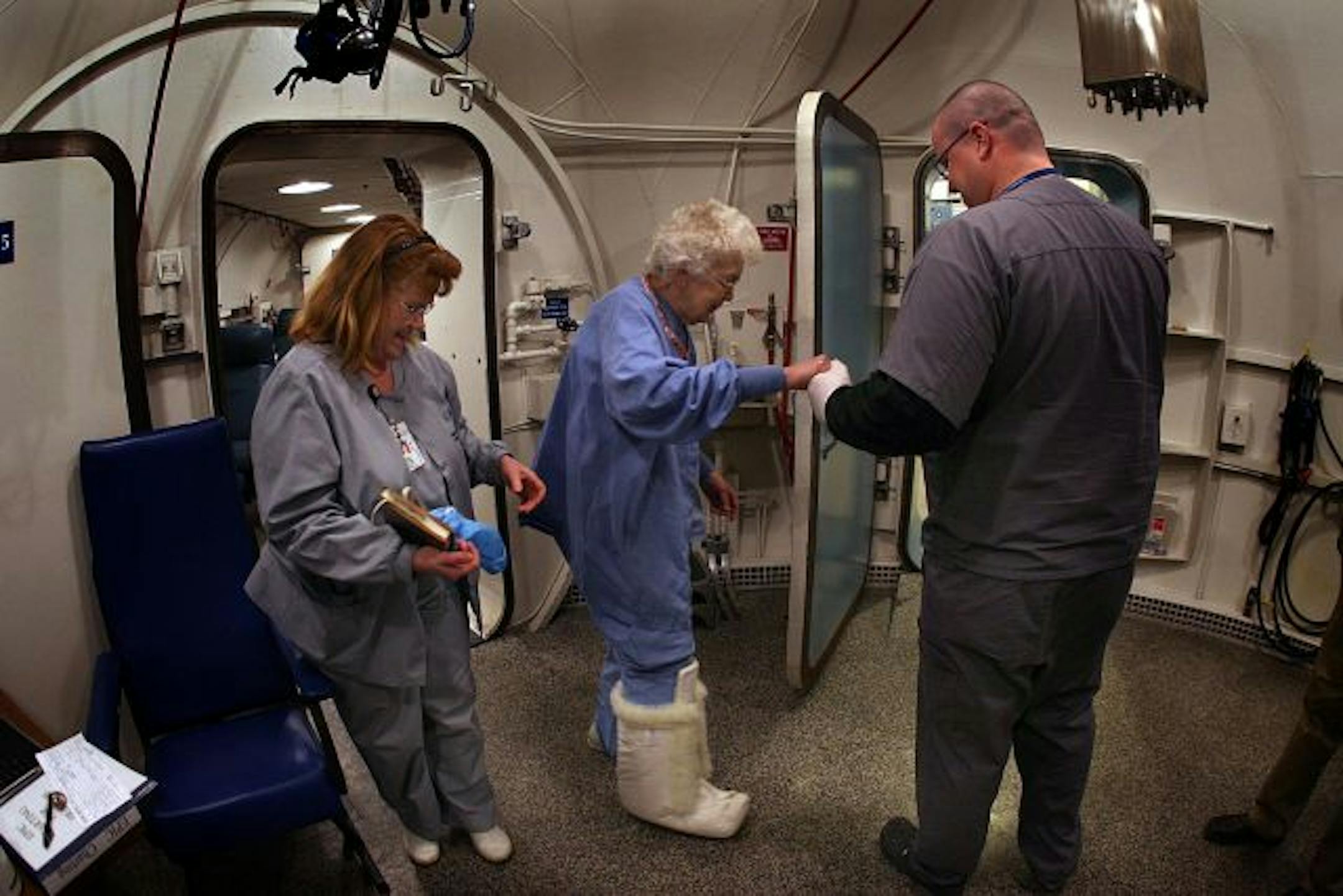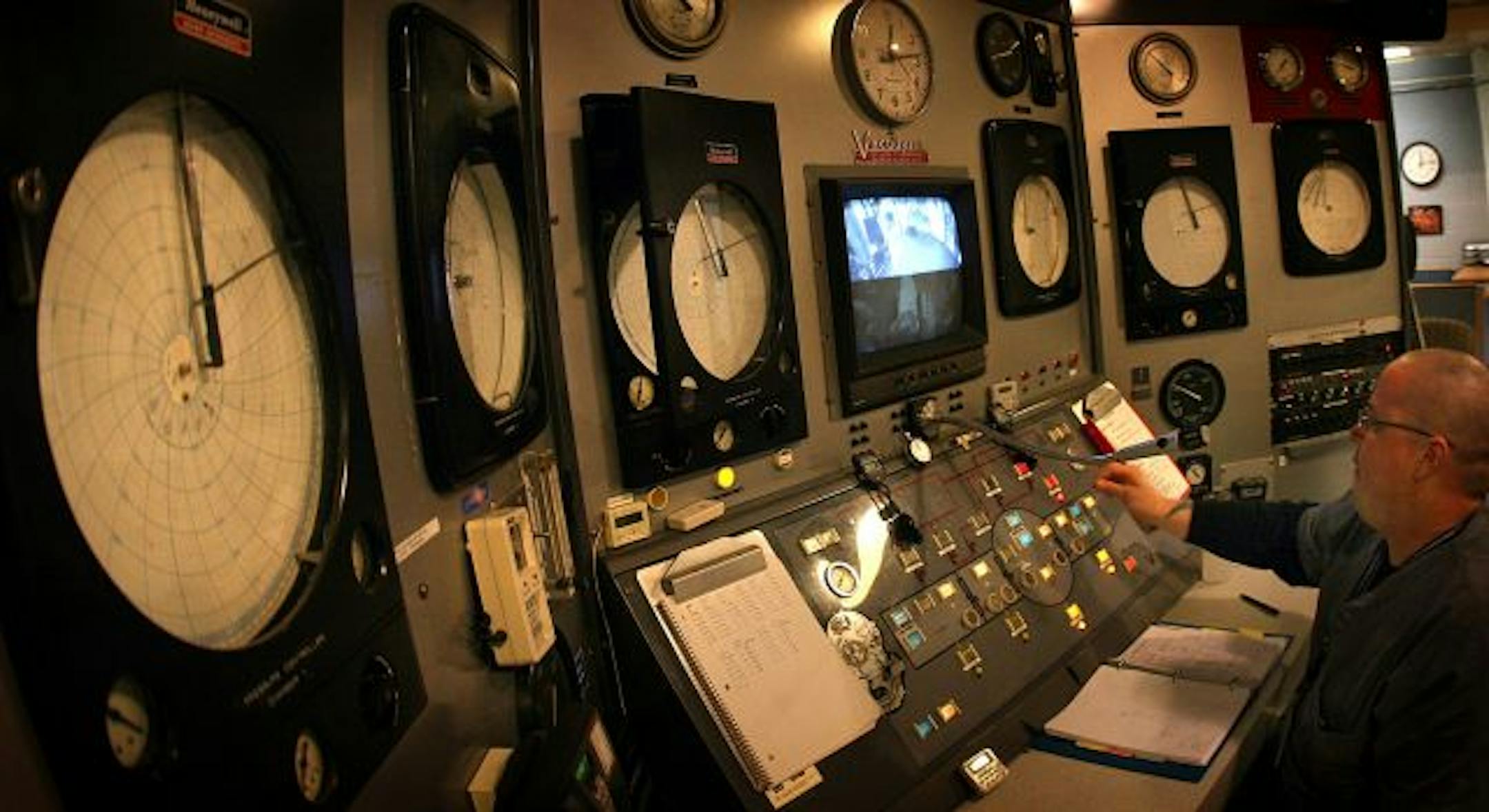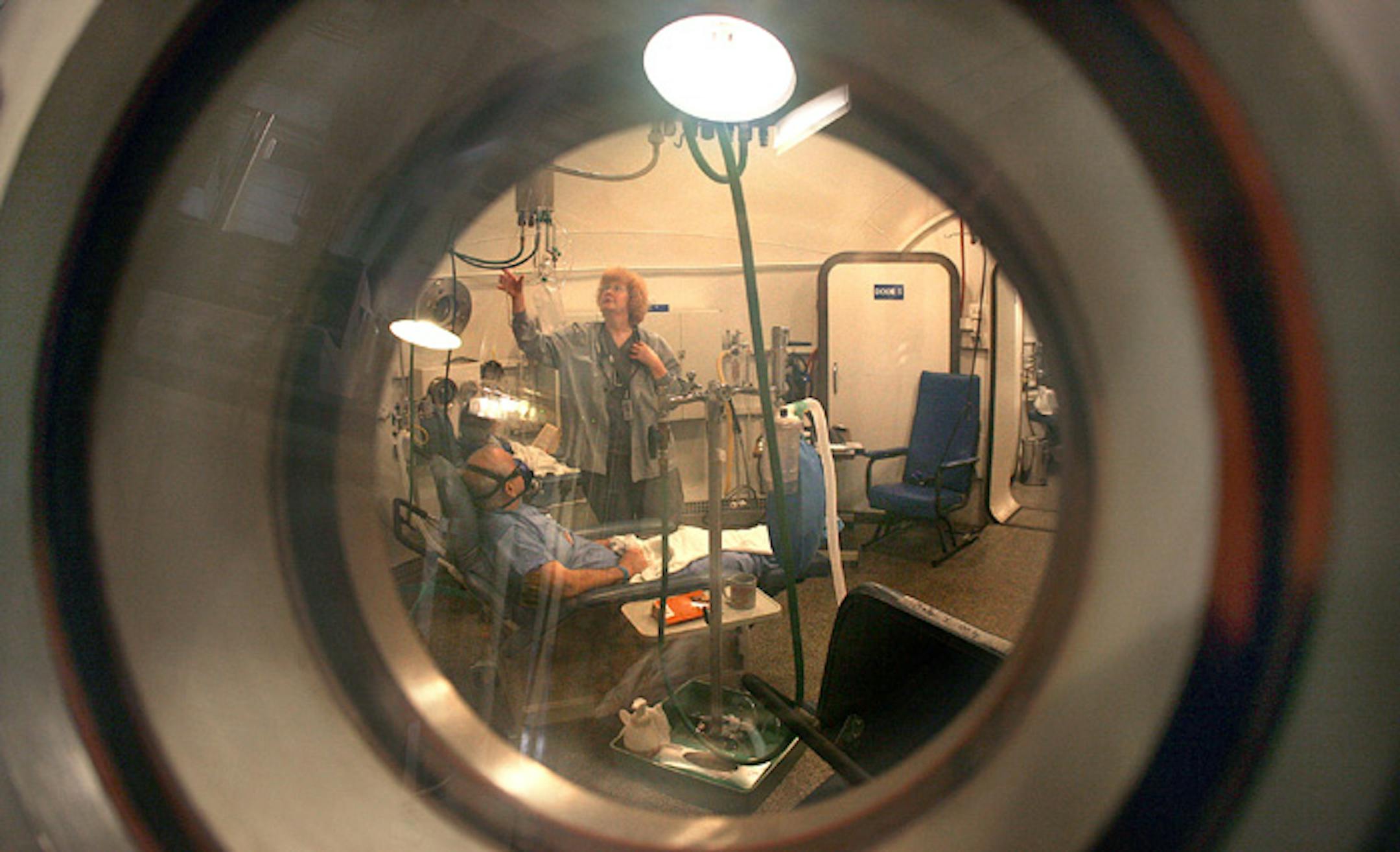
The hyperbaric chamber at Hennepin County Medical Center (HCMC) in Minneapolis looks like a relic of a mad scientist movie.
Simple illuminated buttons and wall monitors that track temperature and humidity with quivering styluses are mounted on a hulking gray control panel. The cylindrical treatment chambers look and feel like a submarine, with 3-inch-thick steel walls, curved 2,000-pound doors, giant seams and bolts, and windows that look like the portholes of a old ship.
For almost 45 years the big machine reliably did its work, using pressurization and pure oxygen to save lives and heal the persistent wounds of people from all over Minnesota as well as Wisconsin, Iowa and the Dakotas. But in February, the chamber had to close for nine days when a backup compressor died and couldn't be fixed. This week, one of the chamber's compressors was a rented unit, supplied by a pulsing truck parked outside the building.
That's why Hennepin County commissioners are seeking $9.7 million to replace the hyperbaric chamber, which is the only such facility in the state used to regularly treat such emergency cases as people with carbon monoxide poisoning and/or divers with "the bends." It also offers therapeutic treatments for conditions such as wounds that won't heal, diabetic ulcers and tissue damaged by cancer radiation treatments.
"This has been used to provide unique services as part of the hospital mission for almost 50 years," said Mike Opat, a member of the HCMC board and chairman of the Hennepin County Board. "They treated 180 emergency cases in the last year -- that's an emergency every other day. In these tough economic times, this is not an investment a private hospital is going to make."
The Mayo Clinic in Rochester added a large hyperbaric chamber last year, but so far it has been used mainly for research and therapeutic treatment, an official said. The Hennepin County Board has requested federal stimulus money to replace the HCMC chamber and is also making a pitch for state bonding money at the Legislature. A new machine would cost an estimated $3.5 million; most of the rest of the money would be spent remodeling an area of HCMC to house the new chamber.
The existing hyperbaric chamber is a marine-blue steel hulk that has its own building at the corner of 5th Street and Portland Avenue, a block north of HCMC's main campus. While it looks like a period piece with its bulky monitors and igloo-like center node, the science behind the chamber hasn't changed since it was built on site as a research facility in the mid-1960s. The hospital bought it in 1991, though it had used it earlier than that.
When people breathe, they take in air that is about 21 percent oxygen, with nitrogen making up most of the rest, said Dr. Cher Adkinson, HCMC's director of hyperbaric medicine. In the chamber, patients wear masks that deliver pure oxygen. Pressurization -- the three treatment chambers can push pressure up to the level you would experience if you dove 198 feet deep in the ocean, though the maximum used for treatment now is the pressure you'd experience at a depth of 165 feet -- helps oxygen flow freely through blood and tissue.