

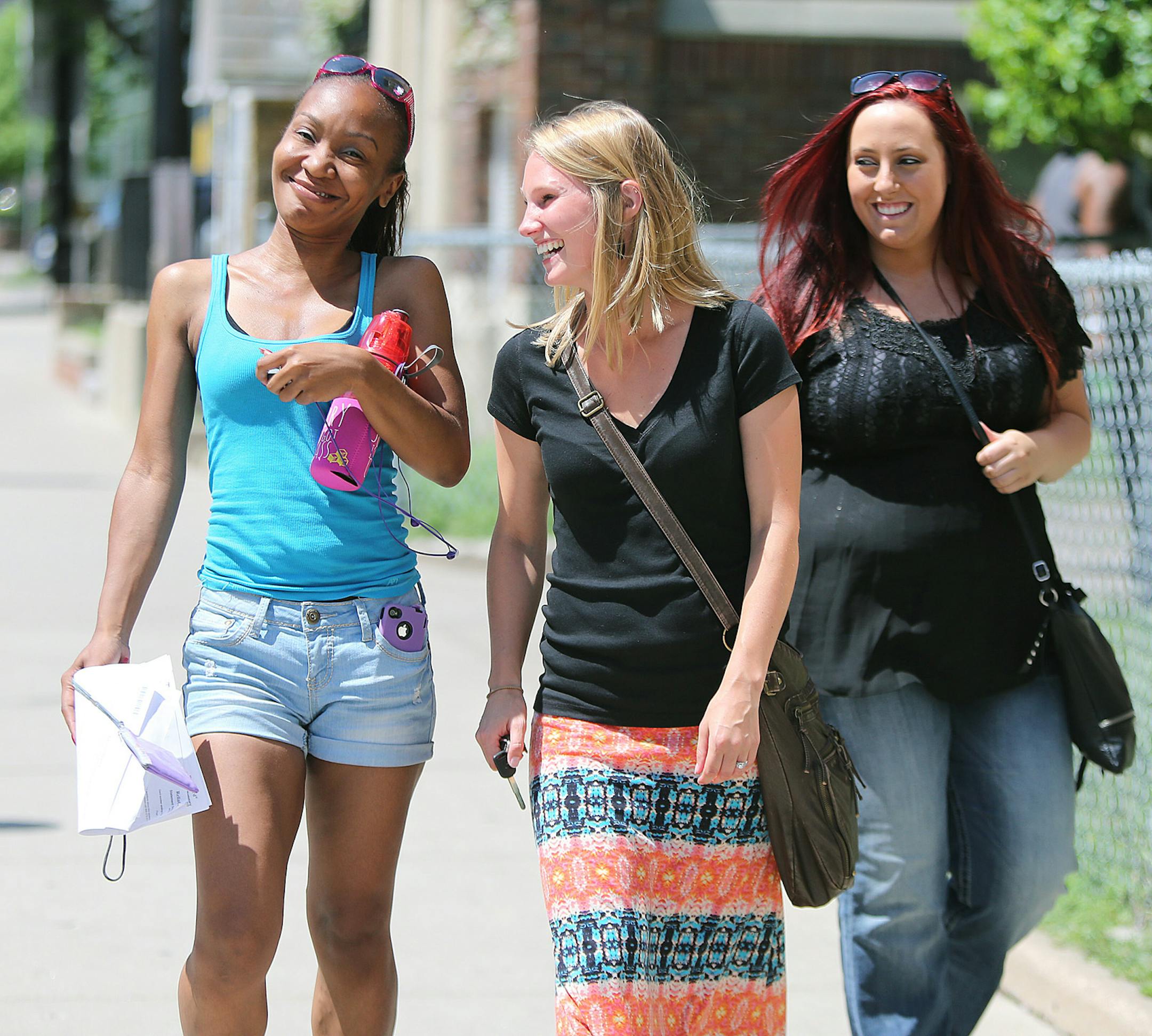
Nita Wagner was starting to feel more hopeful about her life. She'd been sober for two years, was collecting $800 in monthly child support payments from her toddler's dad and had settled into a one-bedroom apartment in northeast Minneapolis.
But then the payments abruptly stopped, leaving her scrambling to find a way to pay her August rent.
"For this to be happening and stay straight, this is a challenge," said Wagner, who at 37 has drug addiction, prostitution and domestic violence in her past. "I won't cave. I won't give up, but it sickens me to know we might be going backward."
Such abrupt and wrenching setbacks are all too familiar to families such as Wagner's. Now they're getting extra help from an intensive Hennepin County housing program administered through St. Stephen's Human Services. To meet demand, the County Board recently boosted the Rapid Rehousing program's $1.2 million annual budget by $400,000 to help "Level 4" families — those with a history of legal problems and other roadblocks to stability.
The effort has taken on special urgency because the number of homeless families is climbing at a pace not seen in a decade, advocates say. Compounding their concerns: It isn't even the high season for homelessness yet. That begins in August and runs through October.
"We're falling really far behind," said Kristen Brown, interim executive director at St. Stephen's Human Services, located at 2309 Nicollet Av. S. in Minneapolis.
Rapid Rehousing, a national model that started here in the 1990s, aims to quickly move families out of a shelter, then to provide intensive, longer-term support, including help finding work, food, schools and transportation.
The program focuses on families, which means anyone with at least one dependent. Most families get six months of work with a case manager. Those in Wagner's category get nine months. The average family gets $1,000 in direct assistance, Brown said.


