

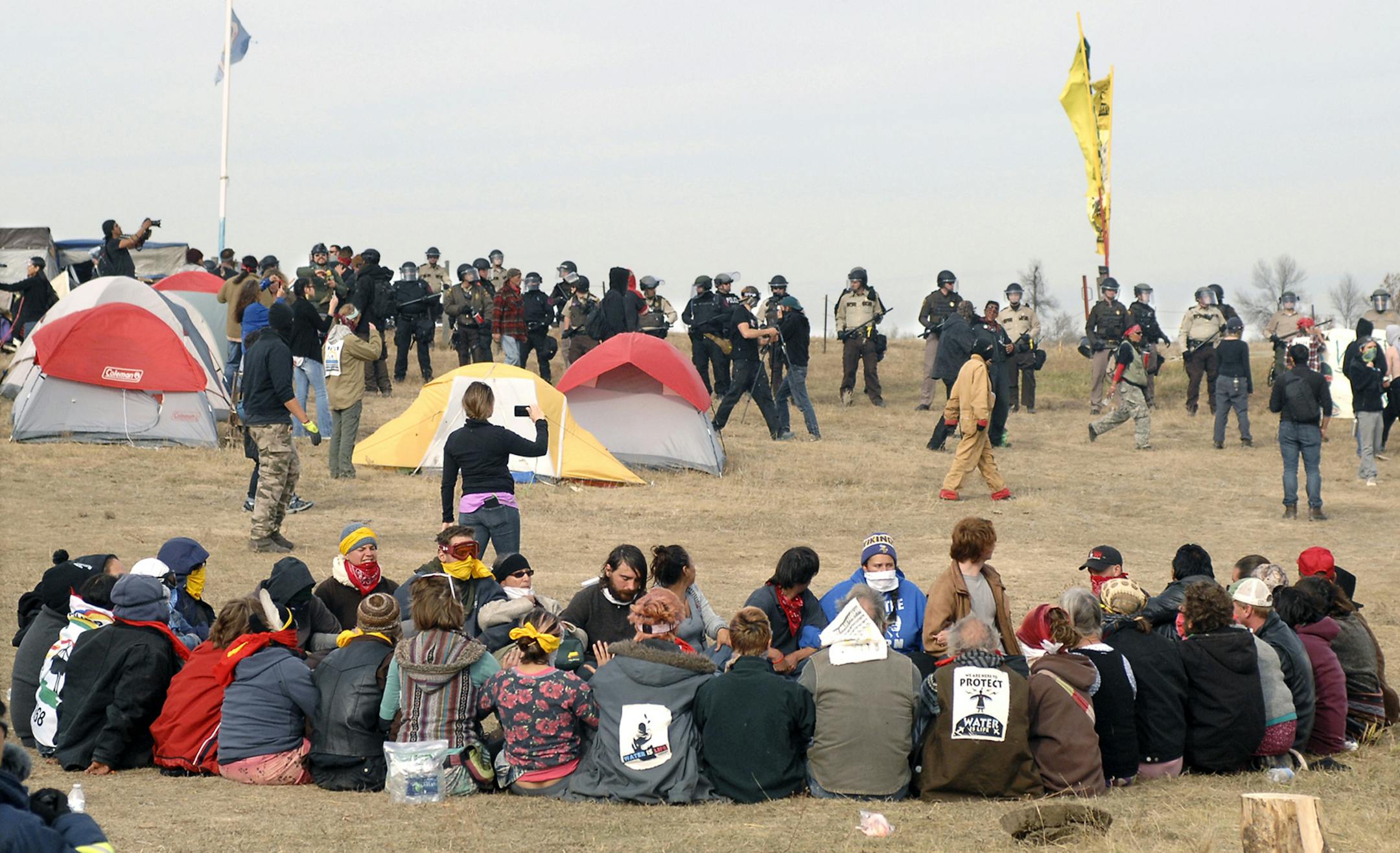
Hennepin County sheriff's deputies have left the front lines of the Dakota Access Pipeline protest in North Dakota and are headed back to the Twin Cities, where protesters have been demanding their withdrawal for a week.
State Rep. Susan Allen, DFL-Minneapolis, said Hennepin County Sheriff Rich Stanek confirmed at a Monday afternoon meeting that 30 of his deputies were en route to Minnesota after fulfilling their part of the Emergency Management Assistance Compact, a national system for sharing personnel during a state of emergency.
Allen said she is unsure whether sheriff's deputies from Anoka and Washington counties also were headed home.
All three agencies were deployed Oct. 23 to assist in maintaining public safety in Morton County, N.D., where hundreds have gathered to oppose the pipeline's potential negative effects on drinking water and sacred sites on the Standing Rock Sioux Indian Reservation.
At Monday's meeting with the sheriff, DFL legislators including Reps. Karen Clark, Peggy Flanagan, Frank Hornstein and Sen. Scott Dibble questioned the process that allowed deputies to "disrupt a peaceful protest in a neighboring state," Clark said in a statement before the meeting.
Several lawmakers disagree that emergency assistance protocols should apply here. Allen said there should have been a higher level of scrutiny.
"There has to be some weighing in of public policy," she added.
Flanagan said discussion at the meeting revolved around "rebuilding trust in the community." She mentioned videos and photos of law enforcement officials at the protest site that have been "pretty traumatic."


