
Hennepin County coloring its message on invasive species

Flashing lights and large signs on Lake Minnetonka are part of the latest effort to get boaters to help stem invasive species.

July 13, 2012 at 2:41AM
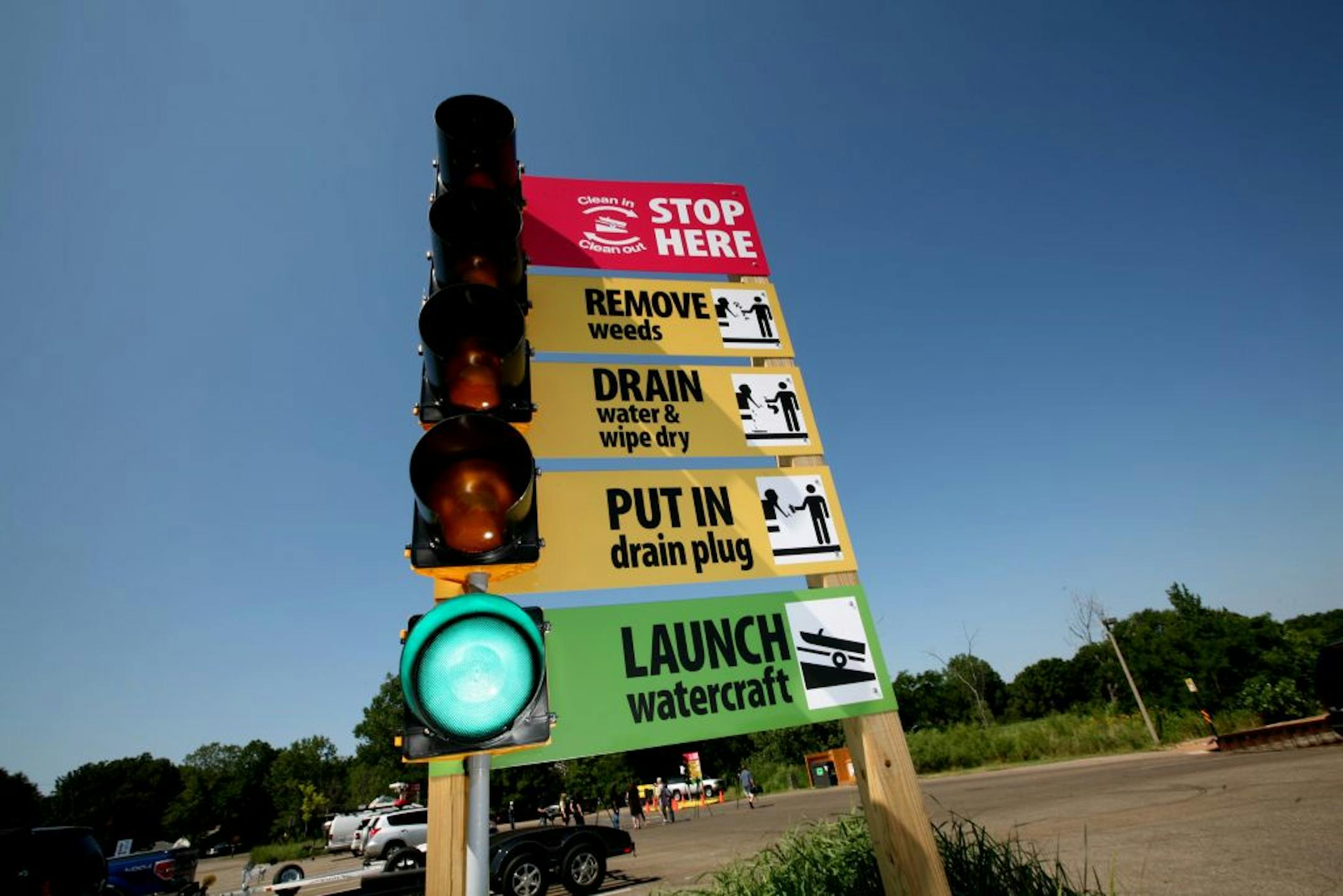
Large signs with blinking lights are part of a new pilot program to prevent the transport of invasive species at the North Arm Public Boat Access in Orono July 11, 2012. Rather than focus on education, the first priority of the project is to grab attention, prompting action.
Large signs with blinking lights are part of the program to prevent the spread of invasive species. (Star Tribune/The Minnesota Star Tribune)

In the latest effort to stop the spread of aquatic invasive species, Hennepin County is relying on psychology and a little peer pressure to alter the mindset of boaters and transform Lake Minnetonka boat launches.

Instead of a bare parking lot with brown signs, boaters now are greeted by tall signs replicating red, yellow and green flashing stoplights and listing simple prompts to remove weeds. Bright signs in blue -- thought to be a more empowering color -- reinforce positive messages such as "You can protect these waters."

And large, colorful markers on the pavement direct boaters to specific inspection areas.

"This hasn't really been done before," said Tony Brough, a senior environmentalist who has seen more boaters complying with state invasive species prevention laws since the signs were installed. "That proves to be more effective than 'Do it or else.'"

Not only are the signs the first of their kind, they're the first step that Hennepin County has taken in the invasive species prevention movement. That effort has recently been ramped up as local governments take things a step beyond education, from Minneapolis closing lake launches during specific hours to Shorewood's Christmas Lake hiring private boat inspectors.

The county took a different approach, Brough said, "not treating you like a criminal right when you come to our access."

Instead, it enlisted help from experts at the University of Minnesota to scrutinize the language, color and design of signs at boat accesses, in search of new and positive ways to catch boaters' attention and change social norms.

In turn, it hopes it will increase compliance of regulations such as pulling drain plugs, which one in five boaters ignore.

The $40,000 pilot project was installed a month ago at the North Arm access in Orono. It's the third-busiest access point on Lake Minnetonka, drawing 6,000 boaters a year.

Will changing signs really change boaters' behavior?

Boater John Krohn of New Hope said he thinks the signs are a good idea, but he was skeptical that noncompliant boaters he sees will stop and take the time to follow the rules.

"If you're in a hurry, it's easy to forget," he said as he entered the North Arm launch on Wednesday with his wife to fish.

Research by the University of Minnesota last year showed that one in five boaters neglected to follow rules, a statistic reaffirmed by Minnesota Department of Natural Resources' statewide estimates.

Boaters cited reasons such as not having enough space to pull over or simply not feeling like they could slow the spread of invasive species.

That's why county officials hope that reinforcing simple steps and positive messages will help change minds. The access also has designated lanes to stop in and space to compost weeds or bait water, helping to create a social norm -- and perhaps a little peer pressure.

It comes just ahead of similar measures the DNR soon will be taking statewide -- installing pavement markers, boat-cleaning areas and weed disposal bins at some 50 public boat accesses in infested lakes statewide.

"We get hung up on the traditional look [of lake accesses] ... and it's hard to change that," said Nancy Stewart, the DNR's public water access program coordinator. "It's really a parking lot. They don't spend a whole lot of time at the access site. We wanted to do something to catch their attention."

The DNR changes to public accesses will likely occur before the end of the summer. In the meantime, Hennepin County officials will be evaluating their project to see whether the new signs signal any changes to boater compliance.

"We're trying to make it a positive message," said Rosemary Lavin, assistant director of environmental services. "What our hope is ... that others may learn from it and see if we can be a leader in it."

Kelly Smith • 612-673-4141; Twitter: @kellystrib

about the writer

about the writer

Kelly Smith

News team leader

Kelly Smith is a news editor, supervising a team of reporters covering Minnesota social services, transportation issues and higher education. She previously worked as a news reporter for 16 years.

See Moreicon

More from No Section

See More
FILE -- A rent deposit slot at an apartment complex in Tucker, Ga., on July 21, 2020. As an eviction crisis has seemed increasingly likely this summer, everyone in the housing market has made the same plea to Washington: Send money — lots of it — that would keep renters in their homes and landlords afloat. (Melissa Golden/The New York Times) ORG XMIT: XNYT58
Melissa Golden/The New York Times

It’s too soon to tell how much the immigration crackdown is to blame.