

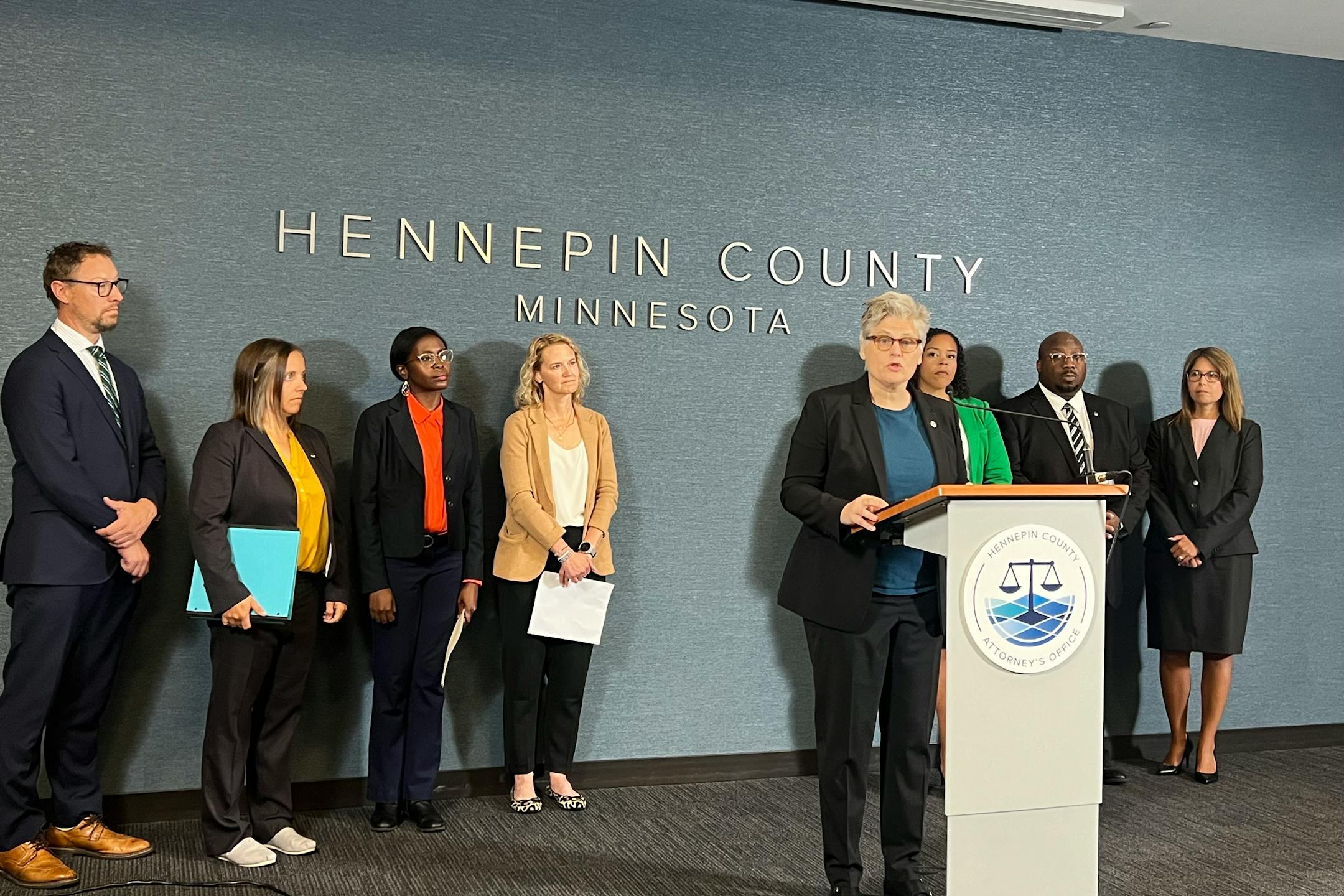
Hennepin County Attorney Mary Moriarty announced Tuesday that her office will no longer criminally charge pregnant women who engage in drug use.
Touting the reform as a public health initiative as much as criminal enforcement strategy, Moriarty said the hope is that pregnant women who are addicted to drugs will now feel more confident to seek prenatal care without fear of arrest.
“What we would like to do is provide the support and treatment that both the baby and parent need,” Moriarty said. “The key here is to encourage people who are pregnant to come forward for care that will help the health of the baby and the parent.”
The county will not only cease prosecution of cases involving drug use by pregnant women, Moriarty said she will dismiss about 40 cases that are either pending or submitted and will seek to support expungement of prior cases.
Charges were typically submitted by the Minneapolis Police Department after they were alerted by hospital staff. Hennepin County in the past has used diversion programs to help pregnant mothers seek treatment, but Moriarty said the change here is meant to get more women who are addicted to drugs to come forward and ask for help during pregnancy.
“It is very much a public health initiative, and that is how we have been trying to approach substance use across the board,” she said. “We know that criminalization does not deter substance abuse and what we need to do is help people.”
Joining Moriarty were several lawmakers and public health experts including Dr. Cresta Jones, an associate professor at the University of Minnesota who specializes in high-risk pregnancy care. She said this change can help pregnant women dealing with substance abuse potentially find help through family-centered treatment programs in a time of tremendous personal change.
“Someone has just given birth, they have a new baby, they’re in a supportive environment that helps them learn parenting skills, how to best manage their substance use disorder, how to remain in recovery, setbacks they might have if they return to use,” Jones said. “We need those programs and we need to expand them.”


