

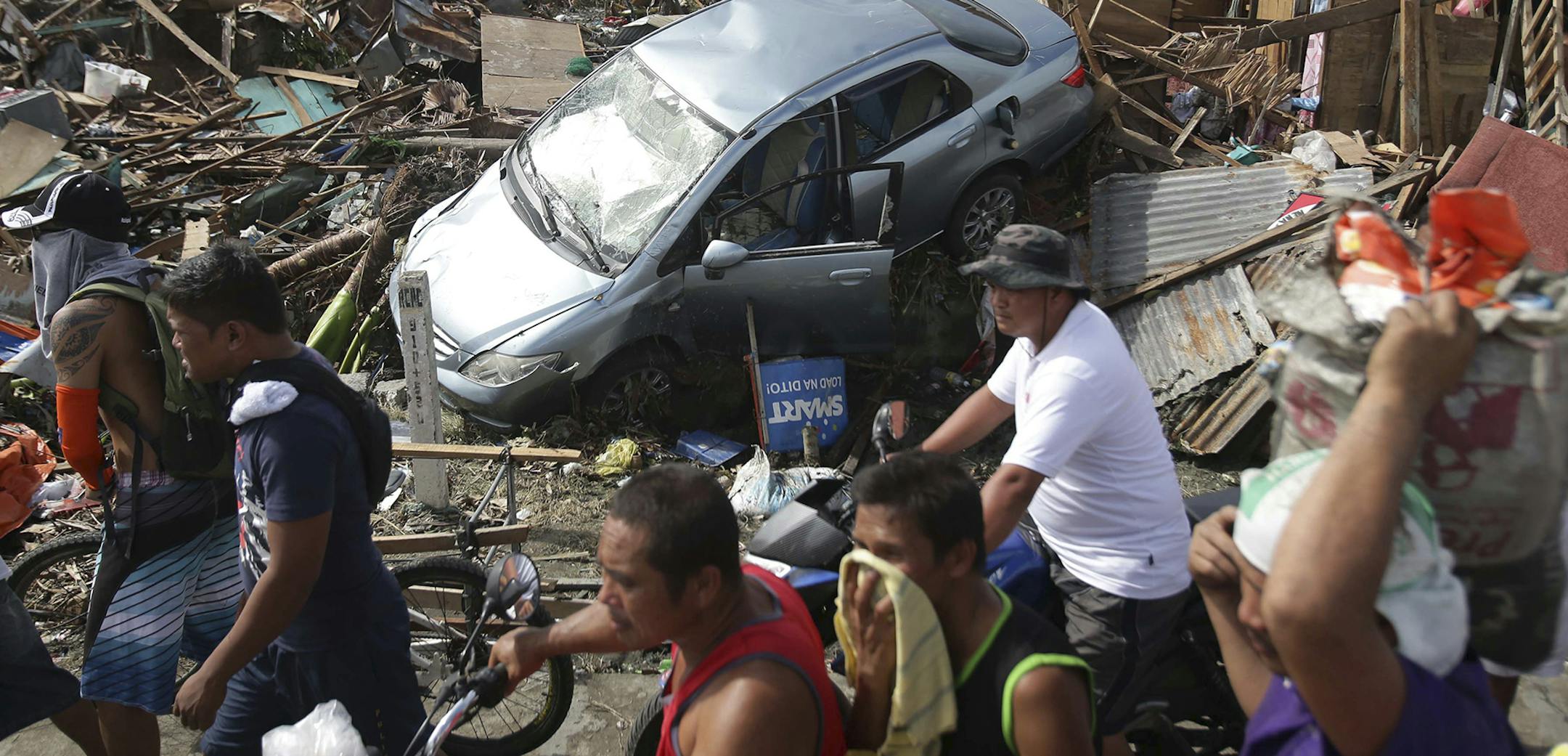
Filipinos are no strangers to natural disasters. Earthquakes, volcanoes, typhoons and floods all have afflicted the archipelago of 7,000 islands that comprises the Philippines.
None of those events, however, caused the level of death and damage seen in the wake of Typhoon Haiyan.
With wind gusts up to 170 miles per hour, a deluge of rain and a 20-foot storm surge, so much destruction took place that for now it is impossible to accurately assess the wreckage, let alone address its affects.
Reports from eyewitness accounts and the few Filipino authorities available suggest staggering losses. Early estimates are that as many as 10,000 people may have lost their lives, with many others injured. And even though nearly 800,000 Filipinos evacuated in advance, up to 4 million people were directly affected, according to officials.
Typhoon Haiyan is "a category-one disaster," said Daniel Wordsworth, the president and CEO of the Minneapolis-based American Refugee Committee. "It's in the same realm as the Haiti earthquake and the 2005 tsunami."
Just as it was difficult for governments in Haiti and many of the nations afflicted by the catastrophic tsunami to immediately and effectively respond, there are limits to what can be done in the Philippines. The government of President Benigno Aquino III has been focused on fighting insurgents, and many Filipinos were already living at the economic brink in a region plagued by poor infrastructure.
Filipinos clearly need the world's help, and many nations and nongovernmental organizations have rushed to provide it. Asian neighbors including Japan, Taiwan and Australia have rushed medical teams and have sent money. The United States will surely show its customary generosity. On Monday, Secretary of State John Kerry pledged "our full commitment to providing all necessary assistance."
And international institutions such as the United Nations World Food Program, UNICEF, the Red Cross, World Vision, Doctors Without Borders and others have sent staff and supplies as quickly as possible.


