

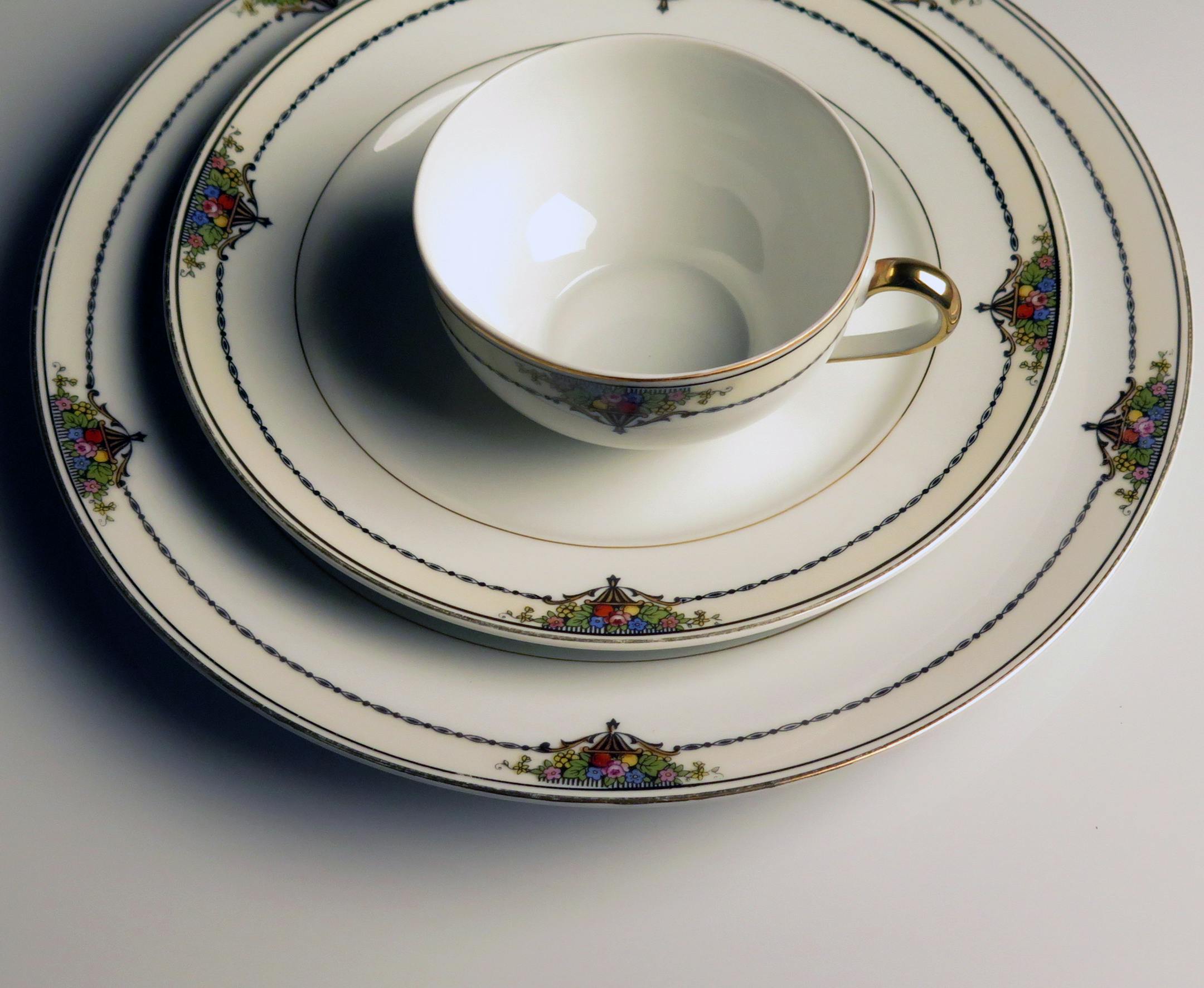
In the back of the buffet at home, nestled safely in the farthest corner, lies an entire set of Noritake dishes that my grandmother received as a wedding gift in 1923, the plates cushioned by pieces of felt. This weekend I will set them on the tablecloth she had embroidered (white with baby-blue finely crocheted lace on the edges, French knots galore making up the embellished flowers at each corner). Danish Princess flatware from Holmes & Edwards will finish off the plate setting.
Before we pick up so much as a salad fork, I will let my guests know — as I always do — that the tableware, now more than 90 years old, was hers.
I am not alone in this reverence for family heirlooms, especially those used at the table. Many of us who do so are of a particular age, one that need only be described as "with adult children."
We hang onto this tableware through one move or the next, whether or not it holds monetary value. For us, the inherent meaning of crystal, china and silverware lies in those who dined off the dishes before — or perhaps with — us. Some might consider this to be simply "clinging to the past." For those of us who reach for the lovely patterns of yesteryear, it's more like reliving fond memories.
Rebecca Jorgenson Sundquist of Deephaven is one such cook who is beguiled by beautiful dishes and, not surprisingly, entertains often and with great exuberance. She admits she has the "dish bug." In her cupboards, Sundquist has accumulated at least one complete set of dishes for each decade of her adult life: Dansk White and Royal Copenhagen blue half lace for her 20s, Mary Hadley pottery for her 30s, Simon Pearce Belmont crackle celadon for her 40s, Atticus Blue Pacific for her 50s, and now Juliska Pewter stoneware for her 60s. Then there are the other collections of dishes — a set from Salzburg, Austria, another of Peter Rabbit Wedgewood and her mother's best dishes.
"When my parents passed away, Mother had 20 place settings of china in a Yellow Rose pattern. She used that china almost every week. No one else wanted them, except one brother who wanted a single place setting as a memory. So I have the dishes and take them out when they all come over. They love it."
As she has moved from one home to another, storage for those dishes was always a priority. "I keep them handy so I can use them," Sundquist said.
"They are meant to be used. We create wonderful family memories with them. It's an anchor of home."


