

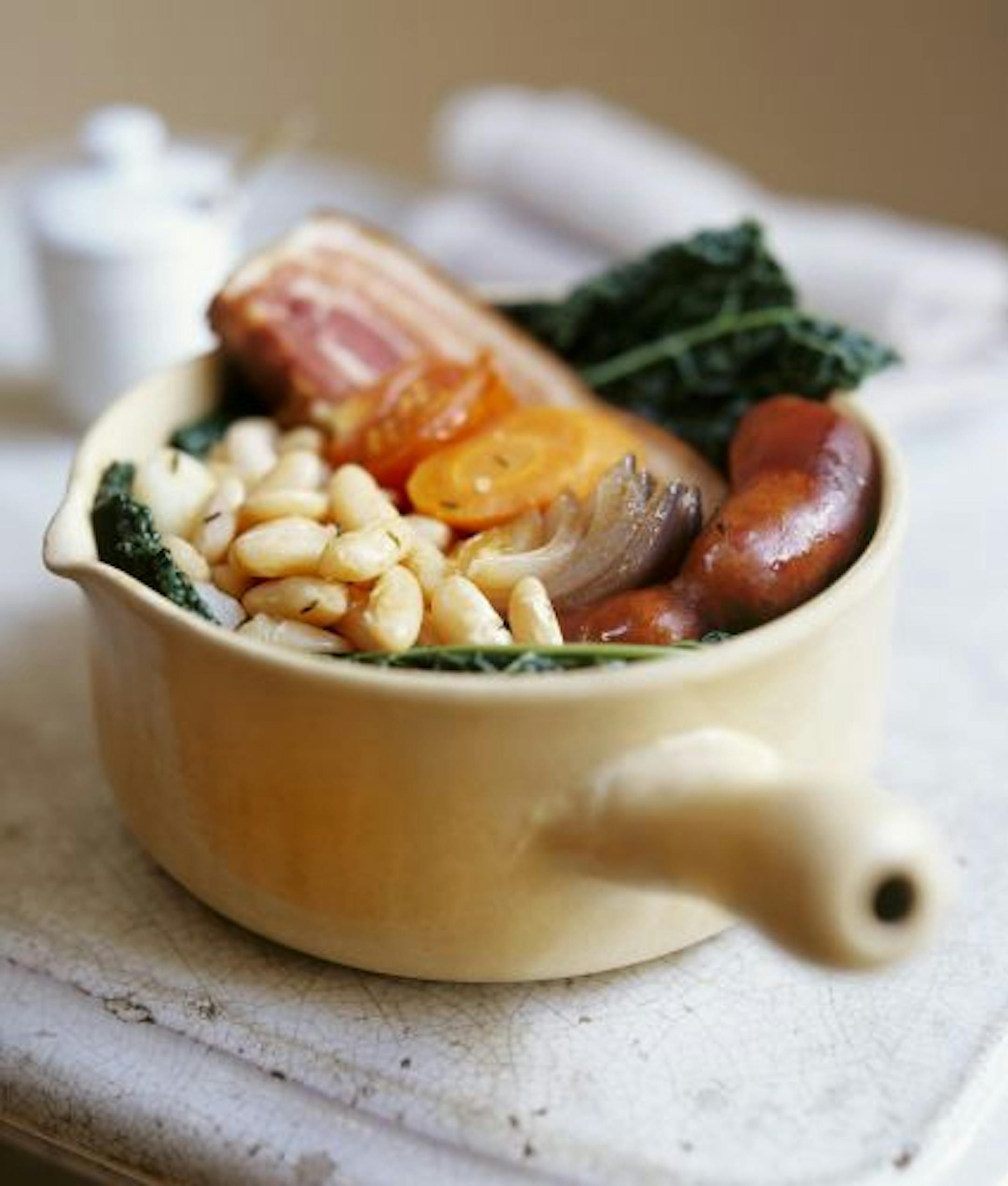
The Frenchmen who were among Minnesota's first white settlers must not have been from Carcassonne, Castelnaudary or Toulouse. Otherwise, we'd be eating a lot more cassoulet once winter's chill sets in.
But this hearty, multi-meat stew is making inroads in a region that has no shortage of weather perfect for cassoulets, increasingly enjoyed either at home or at local French restaurants.
"We're Minnesotans, and we like to have that food that sticks to your sides," said Corey Shovein of Burnsville, who started making cassoulet two years ago and just purchased a big stoneware pot resembling the medieval earthenware cassoles that gave the dish its name.
The offerings could be "original" versions from the three cities mentioned above, or variations that include other ingredients and reduced cooking time. But "real" cassoulet not only must have certain elements such as duck or goose fat and white beans, but also takes at least two days to prepare.
And even then, the arguments over a rendition's "purity" are many and varied. Like most anything French, cassoulet is the subject of fierce debate in its homeland, especially among the towns that claim to have made the dish their own.
"It's more contentious than rugby," said Vincent Francoual, chef/owner of Minneapolis' Vincent A Restaurant, "It's like la bataille des cloche, the battle of the church."
Russell Klein, chef/owner of St. Paul's Meritage (which, like Vincent, serves cassoulet daily during winter months), called it "the French equivalent of barbecue, with different people arguing for Carolina barbecue or Memphis or Texas or Kansas City-style."
The two agree on one important aspect of cassoulet: Both insist on using Tarbais beans.


