

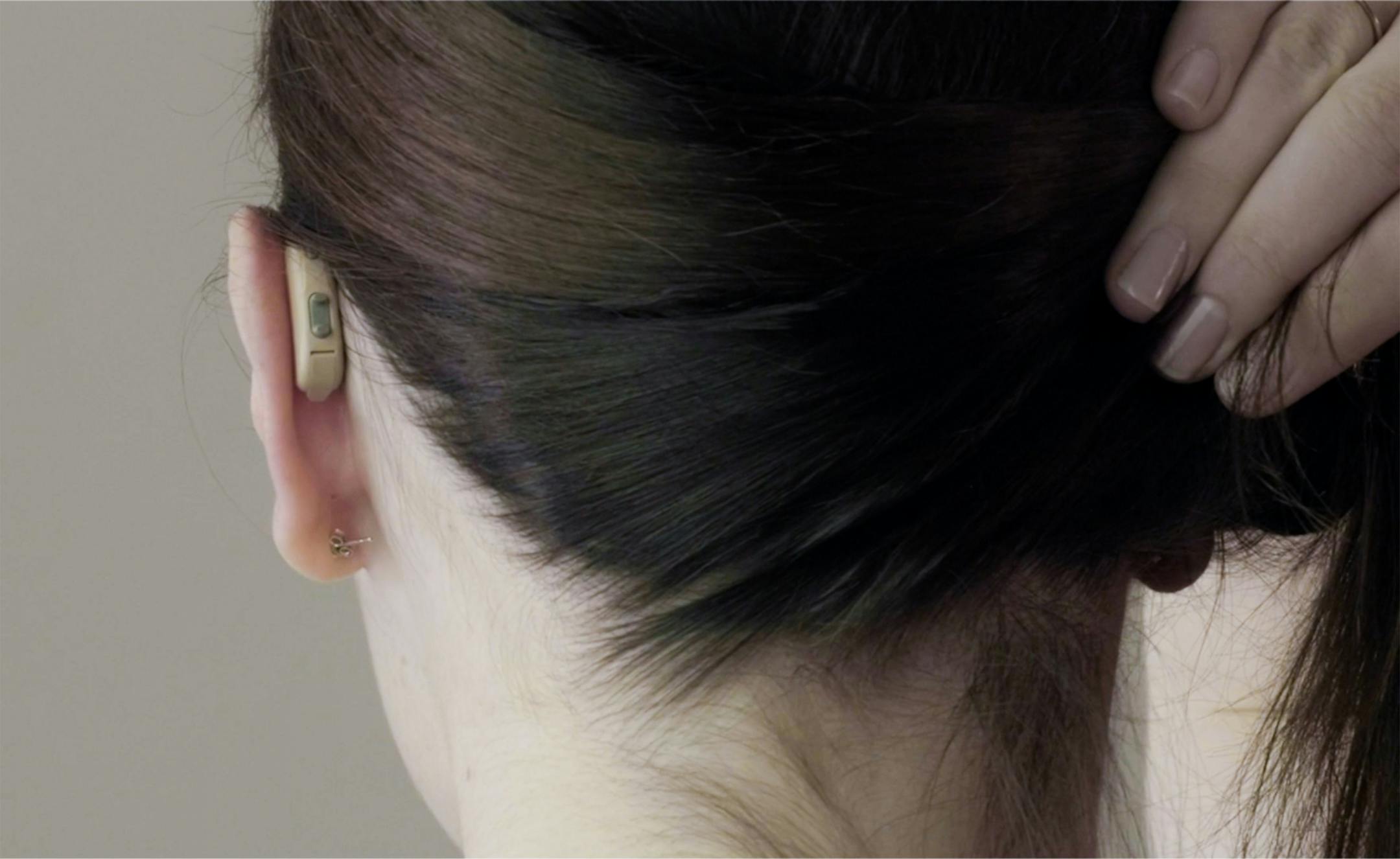
A new federal rule will make it easier for people with mild to moderate hearing loss to buy hearing aids over the counter, without a prescription or custom fitting.
The new rule from the U.S. Food and Drug Administration goes into effect Monday, and experts have called it a game changer that is expected to make the devices more affordable and accessible for millions of people.
With a variety of brands, styles and features to choose from, picking the right one may be daunting. Here's some expert advice for buying a hearing aid that works for you.
Who are over-the-counter hearing aids for?
Over-the-counter hearing aids are only for adults with mild to moderate hearing loss. To ensure safety, the FDA rule has limited the peak sound output of over-the-counter hearing aids.
A good rule of thumb is that if you have the technical expertise to figure out an update to your phone's software settings, then you are tech savvy enough to manage a self-fitting hearing aid, according to Nicholas Reed, an audiologist and assistant professor in epidemiology at the Johns Hopkins Bloomberg School of Public Health in Baltimore.
How do I know if my hearing aid fits correctly?
Putting on a hearing aid and ensuring that it fits correctly can be tricky, especially for first-time wearers, according to Elizabeth Convery, a former National Acoustic Laboratories researcher who studied self-fitting hearing aids. In general, if a hearing aid falls out when you perform a routine action such as bending over to pick something up, it probably is not fitted correctly.
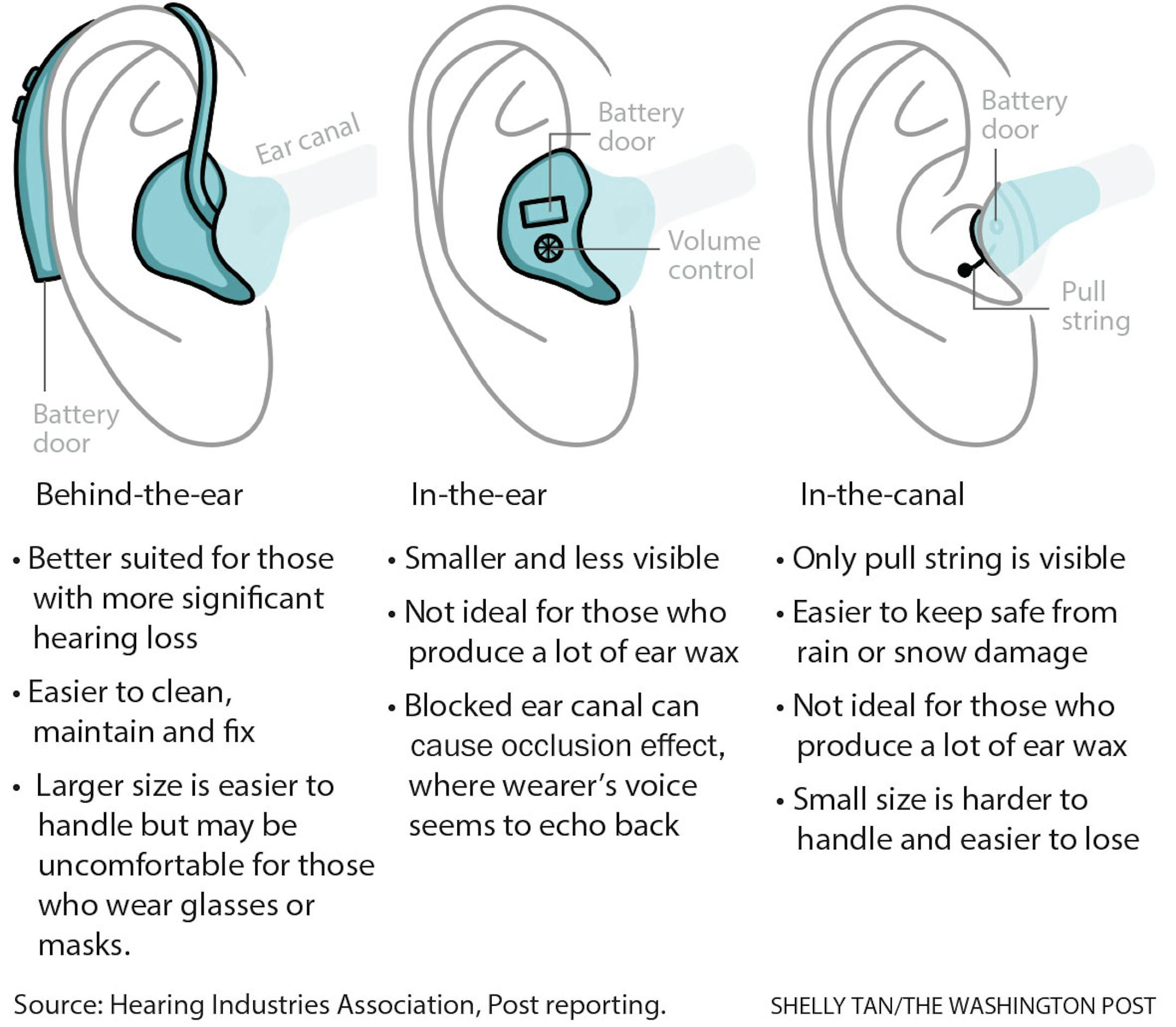
What features should I look for?
A 30-day return policy: You'll need to wear a hearing aid for a while to determine whether it works well for you. FDA regulations require the return policy to be printed on the outside of the box.
Customization: A good hearing aid will allow users to adjust wires, tubes and tips to fit small, medium and large ears.


