

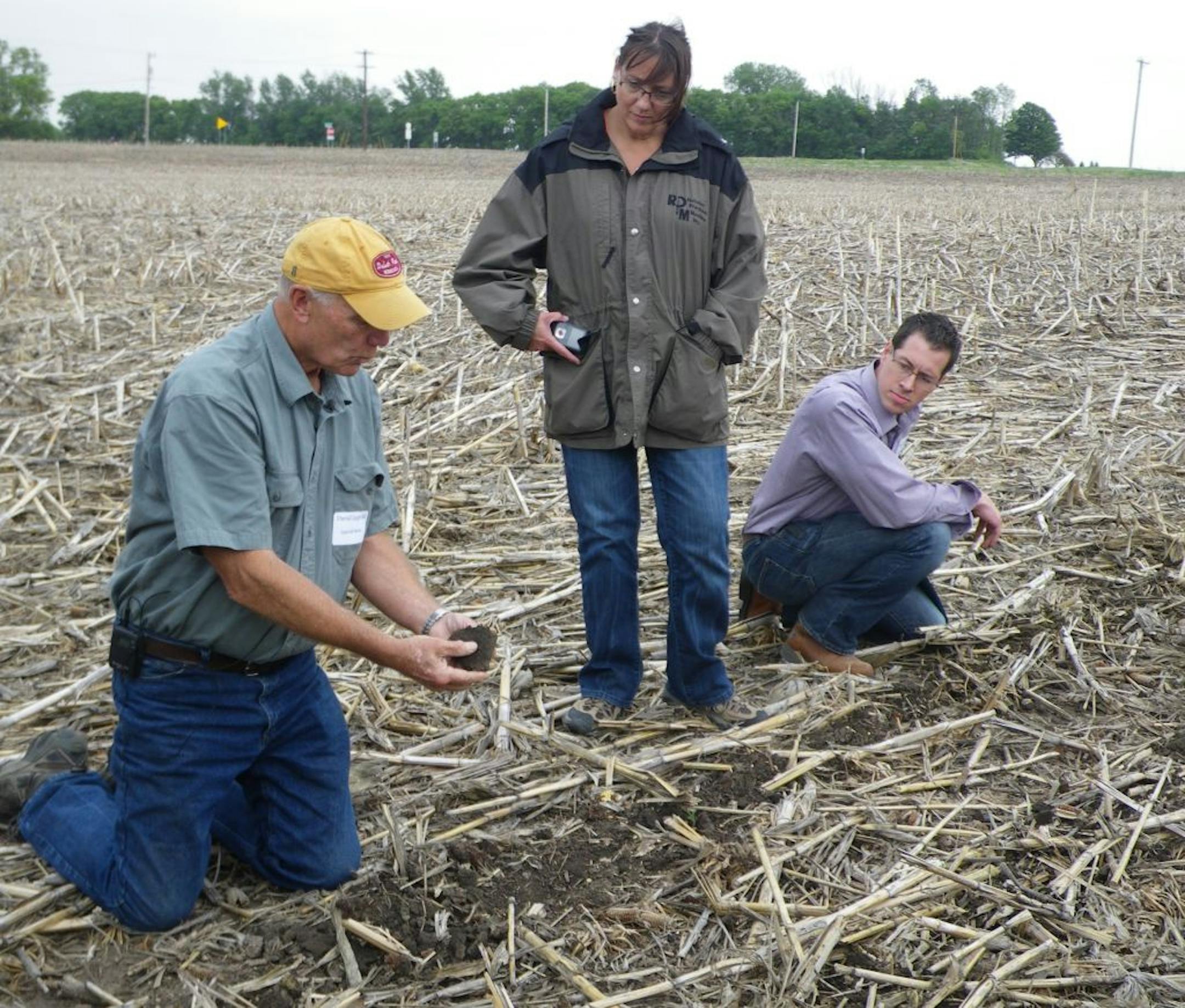
Educator and long-time Dakota County farmer Dave Legvold is doing more than his share to keep farm fertilizer runoff out of the nearby Canon River and other tributaries of the Mississippi River.
Legvold, a former Richfield science teacher and principal, believes in using fact-based information to determine how much fertilizer and plowing is needed. Working with St. Olaf College in nearby Northfield, Legvold measured fertilizer application rates per acre and corn yields on his farm about five years ago. He learned he could save hundreds of dollars by reducing nitrogen fertilizer rates and, combined with minimal plowing, was able to reduce nitrate-nutrient runoff more than 70 percent, he said.
Legvold, 70, speaks about what he's learned on his land to farmers and other groups, including a Mississippi River preservation conference sponsored by America's Wetland Foundation this month in Minneapolis.
"We need data-driven farming practices on farms all the way to the Gulf of Mexico," Legvold told the conference of local, state and national agency and business leaders.
The Louisiana-based Wetland Foundation fosters cooperation among political leaders, scientists, businesses and other stakeholders in the 10 states along the Mississippi. The goal is to promote river sustainability by balancing commercial, recreational and environmental needs.
Conference speakers noted that the Mississippi River watershed drains 31 states and carries 92 percent of the nation's farm exports worth about $50 billion a year. The river flows 2,320 miles south from Lake Itasca in north-central Minnesota to New Orleans, providing drinking water for 18 million people along the way.
A coalition of river advocates needs to be built to push for protection from invasive fish species and other threats to river health, said Paul Labovitz, National Park Service superintendent of the Mississippi National River and Recreation Area, which runs through the Twin Cities.
"We are managing the transition of how we use and value the river," Labovitz told the conference attendees. "We are introducing an urban audience to the river." He noted that the Urban Wilderness Canoe Adventure program has attracted 30,000 students and others to paddle on the Twin Cities stretch of the Mississippi in the past four years.


