

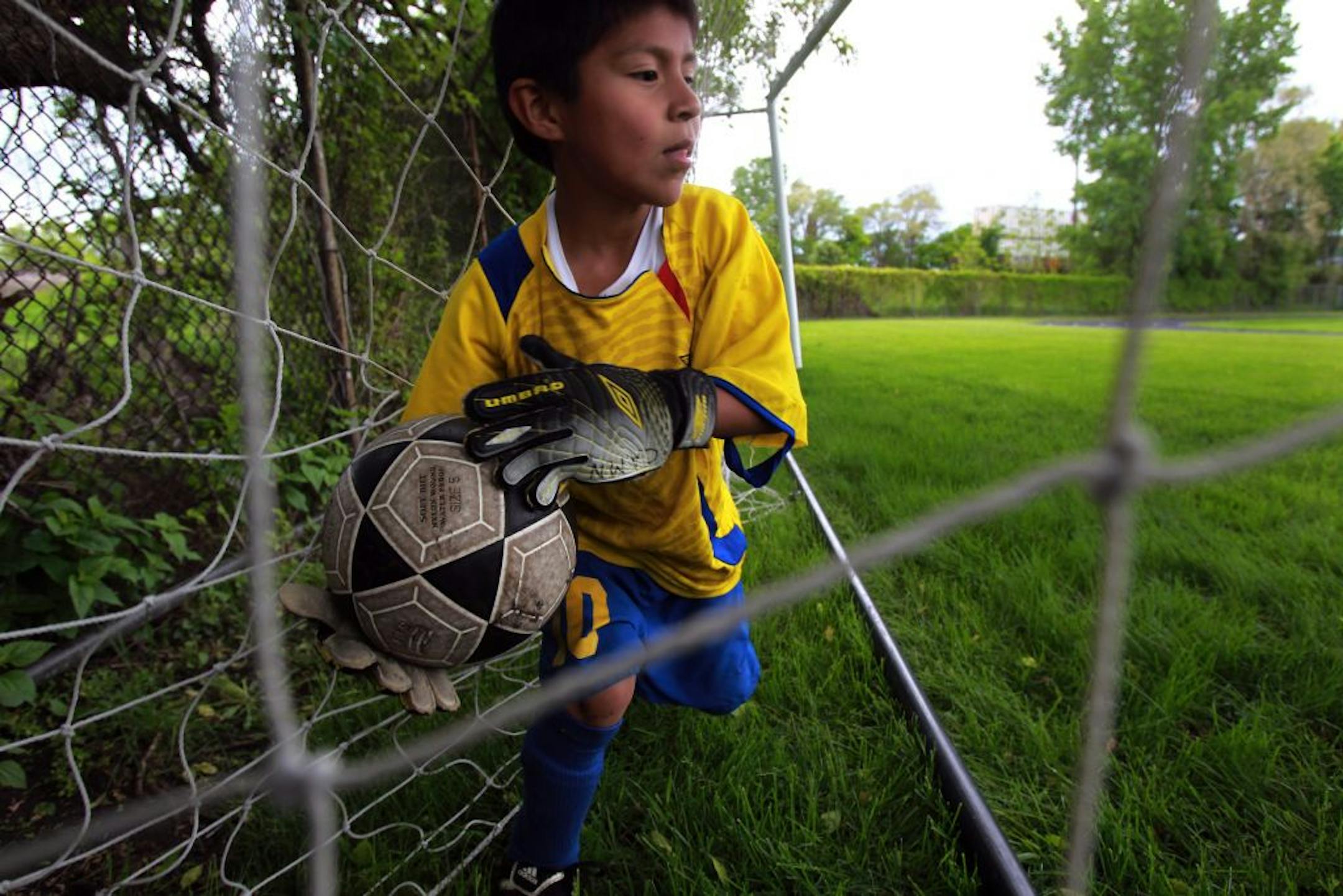
Carlos Riera and his family used to spend their Sunday afternoons strolling around the mall or gathered around the television set in their northeast Minneapolis home. But this spring they traded their shopping bags and couch for a pair of cleats and a field of green grass.
Every Sunday, the Riera family plays soccer with the North East Independent Soccer League, as part of a larger community project to reduce tobacco use, increase exercise and improve health in the Latino community.
"Playing soccer is a different way for us to be entertained," Riera said. "It's a way for us to get out of the house, and another way for us to exercise."
Unlike the Riera family, however, many Hispanics and members of other Twin Cities minority groups get very little exercise -- especially compared to the nonminority community.
Federal health statistics show that residents of Hennepin and Ramsey counties get far more exercise than the national average -- but that minority communities in the two counties lag far behind.
Those numbers are a small window into the larger problem of health disparities between Minnesota's white and minority populations -- a gap that has troubled the state's health authorities for years.
"[Minorities] have grown from 5 percent [of the state's population] 20 years ago to almost 15 percent now, yet we have the largest health disparities in things like diabetes and cardiovascular disease," said Jose Gonzalez, director of the Minnesota office of minority and cultural health. "It's our populations of color that get impacted the most."
Hennepin County, for example, had the state's lowest obesity rate in 2006, at 23 percent. Yet its obesity rates for Hispanics, American Indians and blacks are above the national averages for those groups.


