

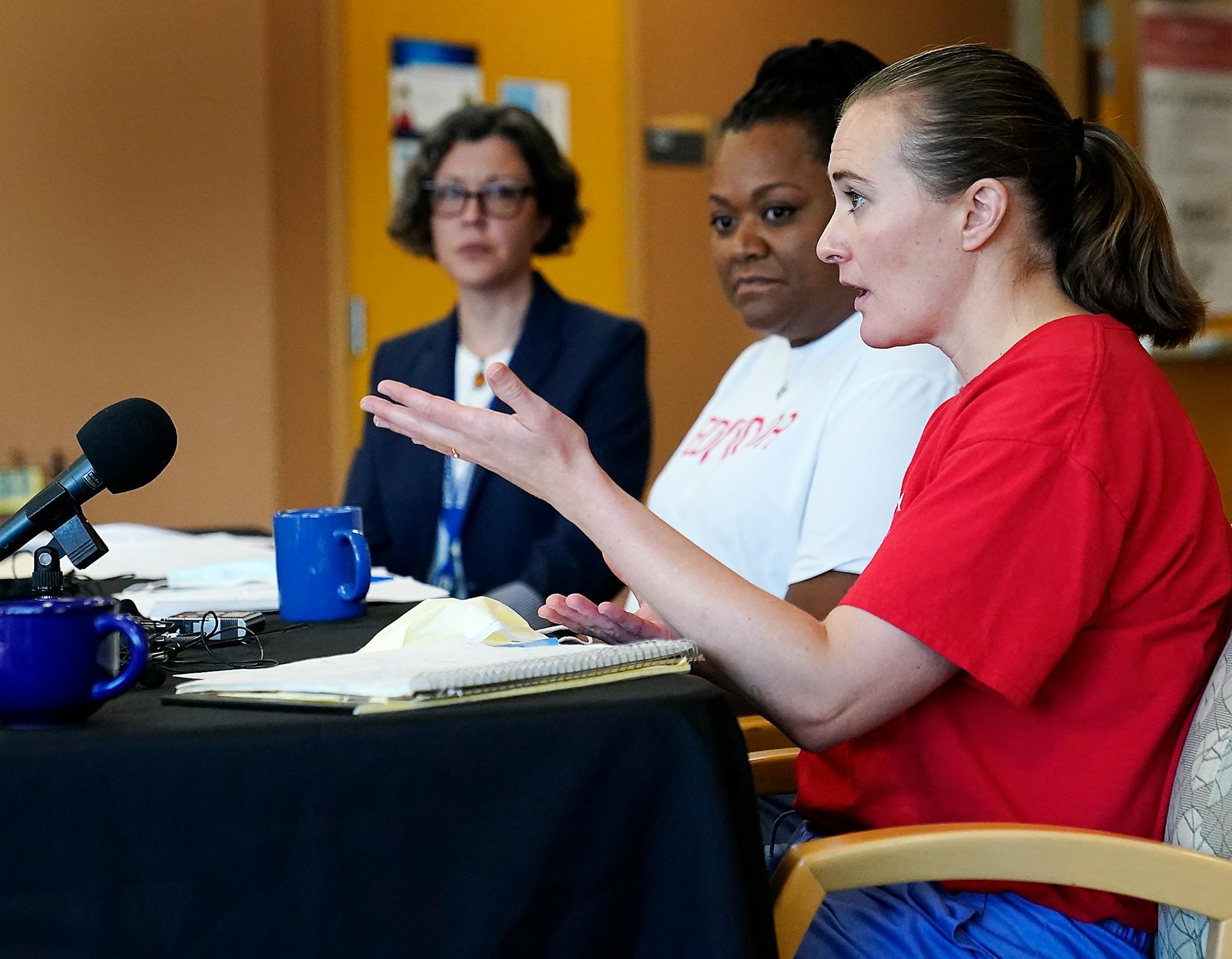
The staff at Hennepin County's Red Door Clinic have a simple message for people wondering if they have monkeypox: Come in to see us.
The first Minnesota case of the newly emergent disease was diagnosed at the clinic a little more than a month ago, on June 24, and nurses and doctors there want to help prevent its spread. As of Thursday, there have been 44 confirmed cases of monkeypox in Minnesota, according to the state Department of Health.
"I really care about my patients," said nurse practitioner Bridget Daniels, and she wants people to know there's a place they can go for help if they have concerns about a rash, questions about how monkeypox spreads, or worry that they might be stigmatized if others learn of their infection.
The clinic in downtown Minneapolis offers public health services regardless of people's ability to pay. Daniels and her colleagues say they're seeing more cases and fear people may be reluctant to talk about it because many patients have been infected through sexual contact. Plus, the disease's recent arrival on top of the 2 1/2-year COVID pandemic makes it harder to get a clear public health message out.
Even the medical staff is learning about the disease, which does not occur naturally in the United States and until this year was limited to regions in Africa. "It's really difficult to be an expert on monkeypox right now," said nurse practitioner Pamela Layton. "It feels like we learn something new every day."
The World Health Organization has recorded cases of monkeypox outbreak in more than 85 countries and has called it a global emergency. The United States has seen 6,617 confirmed cases, according to the federal Centers for Disease Control and Prevention.
The clinic has not seen asymptomatic cases, nor has it seen any evidence that monkeypox spread through the air like COVID. The lesions tend to start out flat, and then rise up but with an indented center. People infected with the disease may experience chills and headache, body ache, swollen lymph nodes and fatigue. Rashes and lesions can last two to four weeks before they completely heal.
The lesions should be covered to protect others. Treatments for the disease include an anti-viral medication along with treatments to make the itchy lesions more bearable. The clinic does have some of the Jynneos monkeypox vaccination, but there's a limited supply nationwide and its use has been restricted.


