

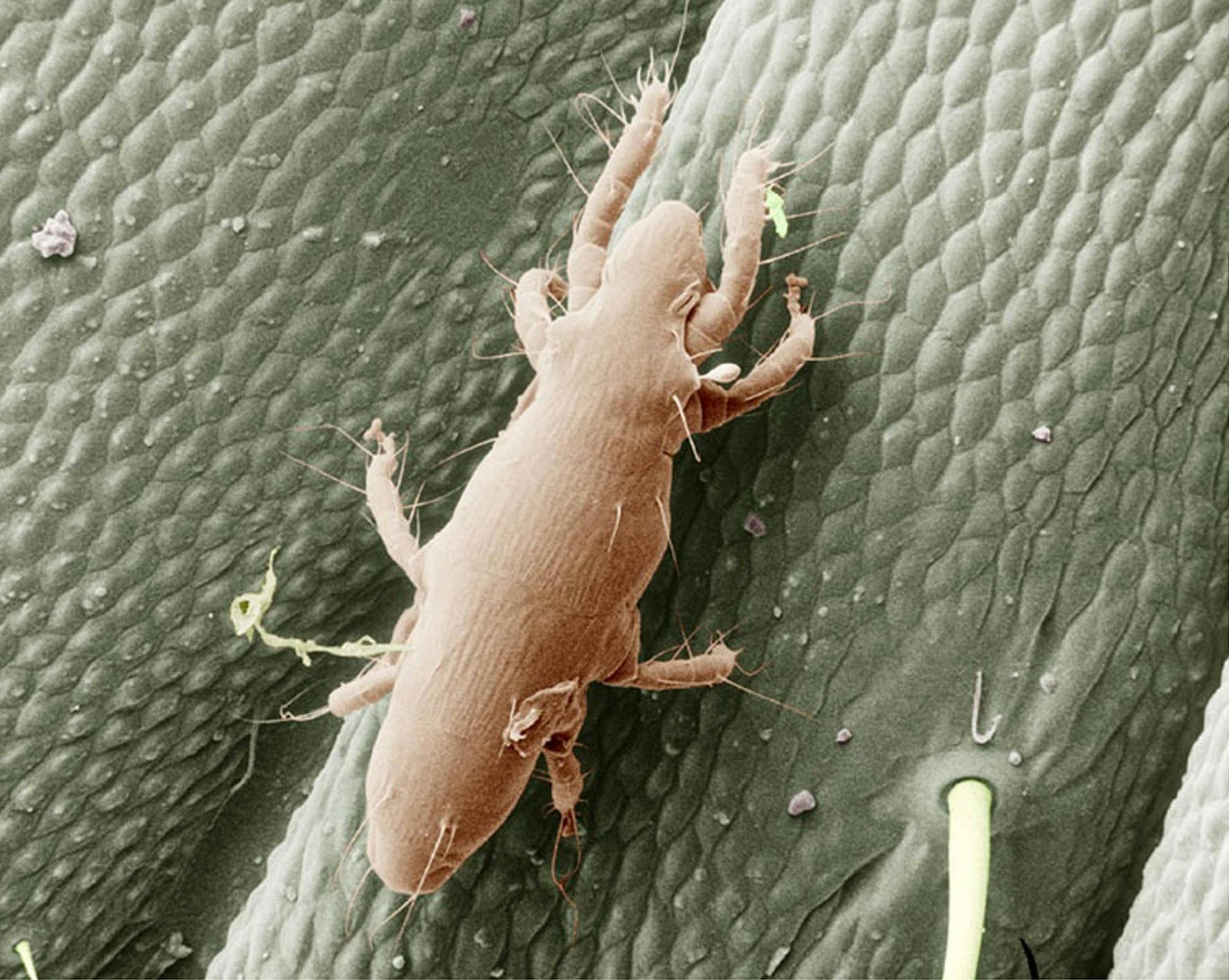
Countless victims in the lower Great Plains this year have fallen prey to a bizarre, accidental predator that is not well-known to Midwesterners and not widely tracked by scientists or health officials.
Experts suspect the nearly invisible invader, measuring 0.00787 of an inch, is the oak leaf itch mite.
Scientists didn't even know the oak leaf itch mite existed in the United States until 2004. The mite can live on the leaves of oak trees, and it's so small that experts believe it can be carried in the wind and even blow through window screens to bite people indoors.
The good news is that the mite gets its nourishment from other insects and not from humans. The bad news is that when the mite sheds off the trees in the late summer and fall, it can shower onto people and decide to take a bite anyway, and there is not much you can do.
"When you really talk to people, almost everybody has had a few or a lot of these mite bites this year — I can even say myself, my wife," said Douglas Dechairo, a physician and head of Watkins Health Services at the University of Kansas in Lawrence, which is seeing more than 10 students a day complaining of bites. "It's pretty much a universal problem."
Cancer survivors may not eat better
Surviving cancer doesn't always inspire people to eat healthier, according to a new study. In fact, it may do just the opposite.
Researchers report that on average, cancer survivors eat a less nutritious diet than the overall population, including less fiber and more empty calories. Fang Fang Zhang, an epidemiologist at Tufts University who co-wrote the study published in the journal Cancer, said the results came as a surprise. "Cancer survivors are usually motivated to improve their health, so I think it is remarkable that they are still burdened by a suboptimal diet," she said.
Zhang and her colleagues compared the dietary intake of 1,533 cancer survivors and 3,075 individuals who never had cancer. After adjusting for age, sex and ethnicity, the team found that cancer survivors had a lower mean score (47.2) on the Healthy Eating Index, which is based on the U.S. government's 2010 dietary guidelines, than individuals in the non-cancer group (48.3). Cancer survivors also ate less fiber than those who had never had cancer (15 grams per day vs. 15.9 grams). They also ate more empty calories, which means more refined sugars and fat.
News services


