

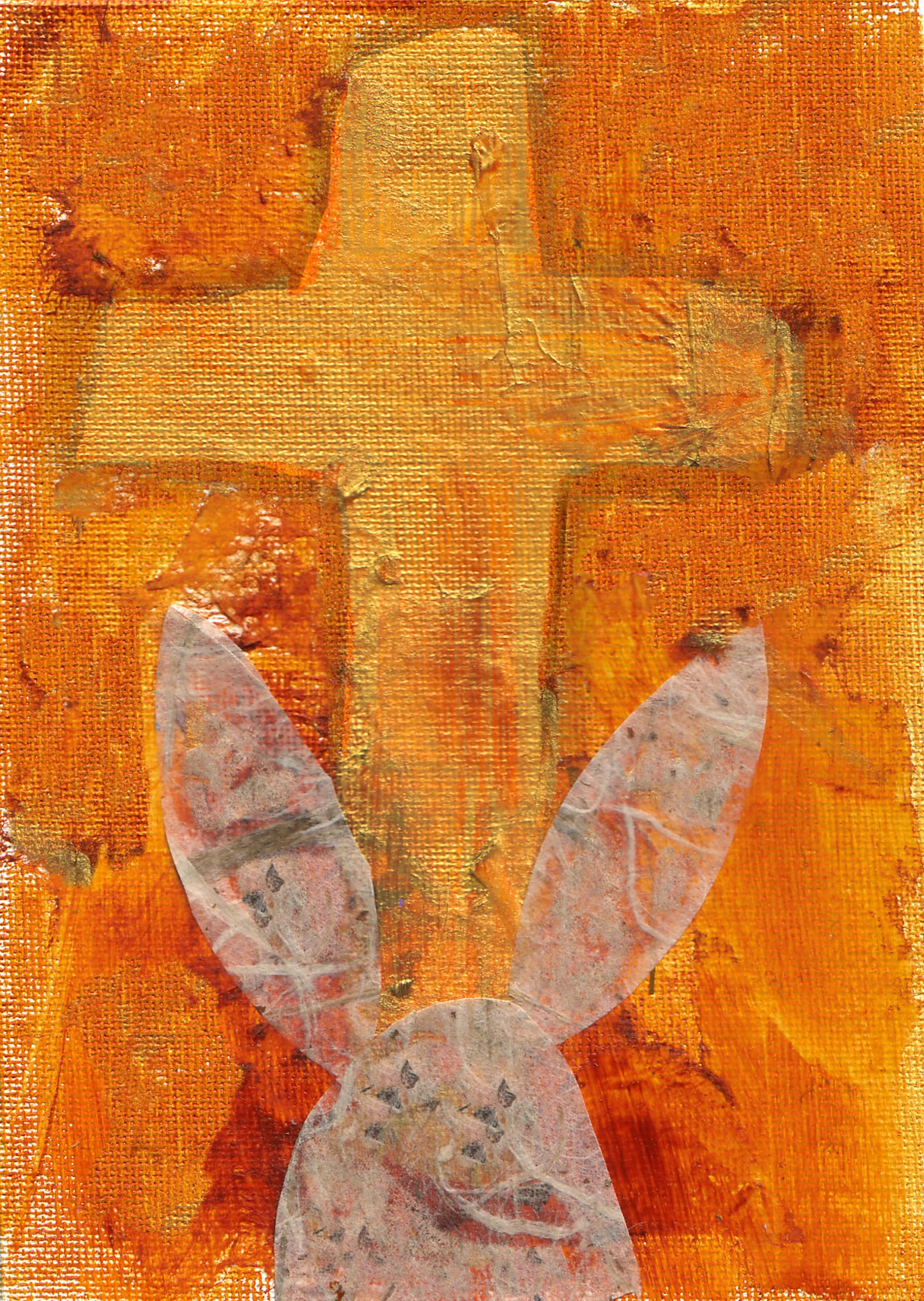
The Easter bunny has become a sacred cow.
While Santa Claus is criticized for the commercialization of Christmas, and trick-or-treaters who dress up as the devil or Britney Spears (excuse us if we're repeating ourselves) are scorned in some circles for diverting the focus of All Hallow's Eve, the Easter bunny just keeps hopping along, lumped in with folklore mainstays such as the tooth fairy and Bigfoot. People who don't believe in them tend to ignore them rather than complain about them.
The irony of this free pass is that, unlike St. Nick -- who at least traces his roots to a religious figure, a third-century Roman Catholic bishop who is the patron saint of, among other things, merchants and children -- the Easter bunny has its roots in paganism. Researchers have traced its family tree to ancient fertility rites.
Christian missionaries discovered that many of the tribes they were trying to convert already had spring festivals celebrating fertility. The rabbit was one of these celebrations' main symbols, so the missionaries simply co-opted it to fit their needs.
"The Christian church did not try to eliminate the cultures it became part of," said Rolf Jacobson, a professor at Luther Seminary in St. Paul and an ordained Lutheran minister. "Rather than being intrusive and imposing itself, the church would analyze the holidays that already existed and incorporate them as they could. One of the things they would do is borrow the symbols that already were in use."
Even the name Easter was "borrowed" from the ancient Saxons, who marked spring with a festival honoring the goddess Eastre. One of her earthly symbols was -- you guessed it -- a rabbit.
There is a Christian group called the United Church of God that is opposed to Easter in its entirety. On its website, gnmagazine.org, the Ohio-based denomination argues that since Jesus never specifically endorsed Easter as a holiday, it remains a pagan rite and all the symbols associated with it, including the Easter bunny and Easter eggs, are irreverent.
But beyond people like these -- and perhaps Elmer Fudd -- it's hard to find someone who speaks poorly of the Easter Bunny. If you feed "anti-Easter bunny" into an Internet search engine, you'll get several hundred hits, but most of them turn out to be satires. For comparison's sake, feed "anti-Santa" into the same search engine and you'll get more than 70,000 hits.


