

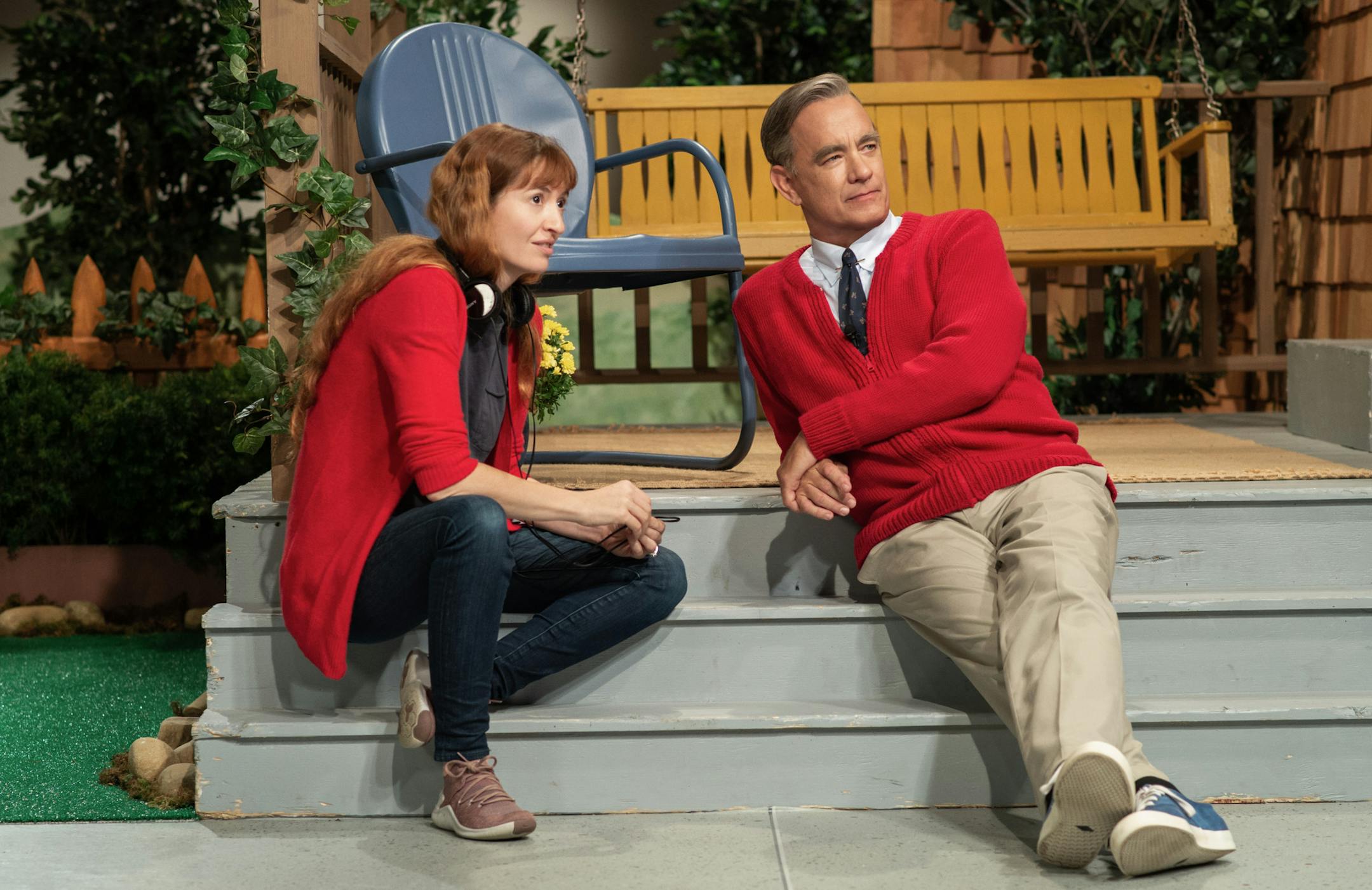
Right now, director Marielle Heller thinks making a movie about kindness and decency is a revolutionary act.
"I'm the mom of a very young son, so I've been getting reconnected with Mister Rogers, and it reminded me of his mission, which is so sweet and helpful," said Heller, whose "A Beautiful Day in the Neighborhood," with Tom Hanks as Mister Rogers, opens in November. "Also, I'm a person in this world, with the political disconnects we have and just how hard it all feels now. Aaaargh! So getting to live with Fred Rogers' voice in my head for a couple of years sounded great to me, honestly."
The main character of "A Beautiful Day in the Neighborhood" is not Mister Rogers, but the fictional journalist Lloyd Vogel, based on Esquire writer Tom Junod. During a rough patch in his life, when Vogel is wary of the demands of fatherhood, he interviews the TV legend for a magazine profile. The two become friends and Rogers helps the writer, played by Matthew Rhys, become a better man.
"Fred Rogers makes you strip away your cynicism and get real very quickly. In many ways, this movie is almost like an episode of 'Mister Rogers' Neighborhood' aimed at grown-ups, asking you to let go of your cynicism," Heller said. "It's definitely very different from the movies I wanted to make under the last president."
Actually, Heller thought she was going to keep directing movies about complicated women, as she did with "The Diary of a Teenage Girl" and last year's Oscar-nominated "Can You Ever Forgive Me?" But Rogers, with his insistence that children and their feelings are important and his belief in addressing issues such as violence and bigotry, sucked her in.
"He believed in telling the truth, which is a weirdly subversive act right now. And it feels right for me to be making a movie about men who are trying to be good men, good fathers, good partners to their spouses, men who are trying to work on anger and toxic masculinity," Heller said. "To make a movie about trying to deal with being a human is sort of revolutionary in a time when that is not the message we are getting."
Heller is on the leading edge of a revolution in Hollywood, as well. After years in which the number of big movies directed by women hovered around zero, an exasperated Heller was told last year that none of the female possibilities for best director Oscar nominations made the cut because there were too many to choose from. Aside from the fact that no one would ever make that argument about men, Heller says the way to fight back is to continue to make sure Hollywood decisionmakers must deal with more than one good female filmmaker at a time. (This fall alone, we'll have Elizabeth Banks' "Charlie's Angels," Kasi Lemmons' "Harriet," Alma Har'el's "Honey Boy" and many more.)
"That kind of — I don't know the word — false inclusivity? It's a symptom of where we are now, which is that a lot of change is happening and some people believe in it wholeheartedly, but some other people are supporting it for the wrong reasons, which can lead to people in charge feeling like, 'OK, we checked that box,' " Heller said. "But a lot of wonderful women are making movies this year, so I hope we get to show everyone there's not only room for one of us at the table."


