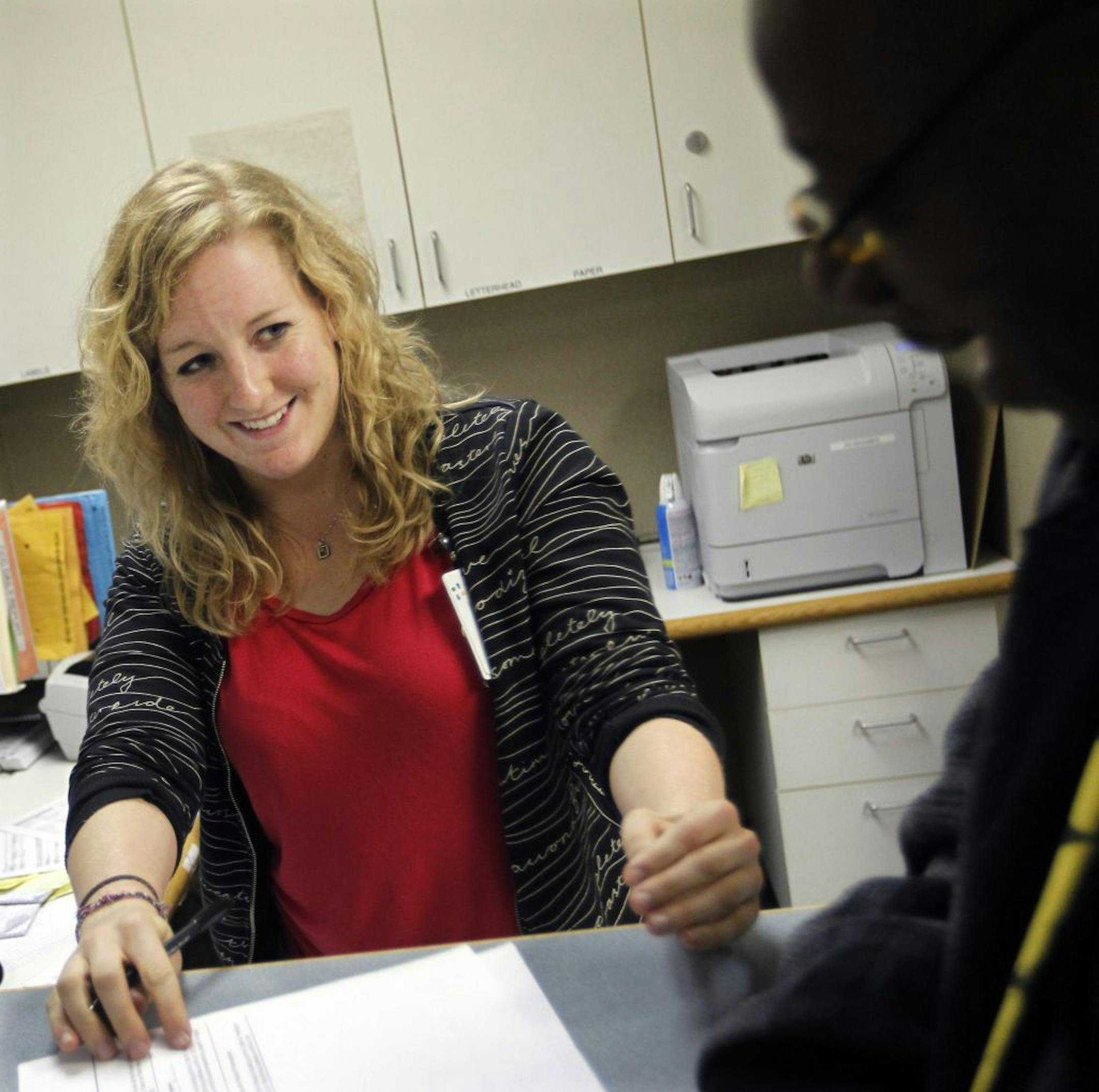
The first thing people see when they enter the small clinic inside the Hennepin County Medical Center is Sarah Bruemmer's smile.
And that's by design.
"I know their stories, and they know mine," said Bruemmer, the receptionist and "patient care guide" at HCMC's Coordinated Care Center in downtown Minneapolis.
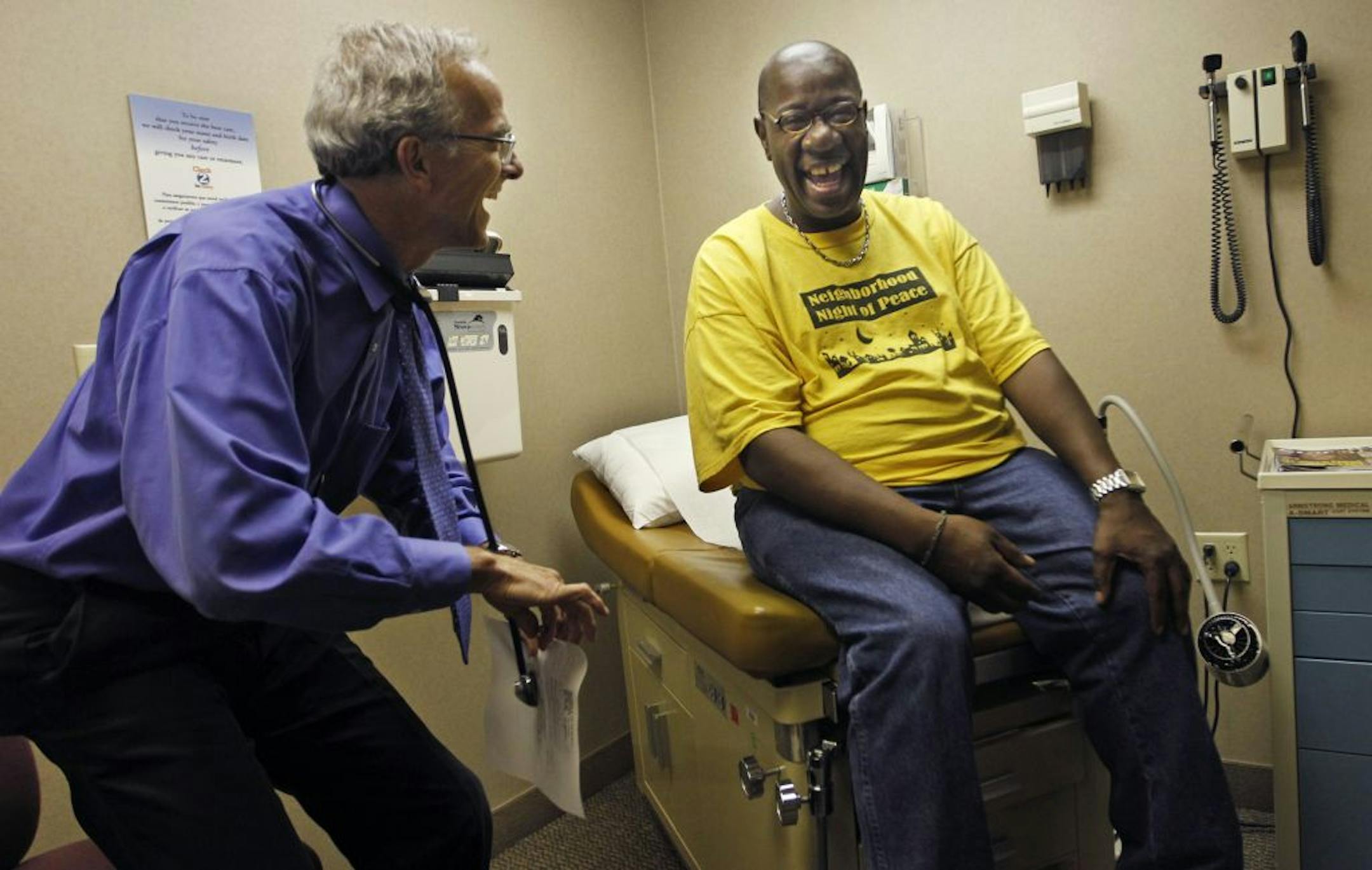
It seems obvious, having a receptionist who recognizes patients and greets them by name. But Bruemmer is part of a trailblazing effort taking shape across Hennepin County, in which clinics are using an intensely personal approach to keep the poorest and neediest patients from bouncing in and out of the hospital.
Teams of social workers and case managers have set up shop at places like HCMC's Coordinated Care Clinic to focus on getting patients the social services they need -- such as housing, transportation or mental health care.
The new approach comes at a time when federal health care efforts are pushing hospitals to put prevention ahead of costly treatments. But Hennepin County will move forward on its own, with or without government prompting, said Jennifer DeCubellis, the county's director for Human Services and Public Health.
That's because tapping into county services at the front end has proven to be a cost-effective way to keep people healthier and out of the emergency room. Among the 150 patients the Coordinated Care Clinic sees, emergency room visits were cut in half in the first year. Hospital visits, which can cost $20,000 to $40,000, have declined from an average of five to three.
"If you want to look at the future of health care, look at what they're doing at Hennepin County," said former Republican U.S. Sen. Dave Durenberger, senior health policy fellow at the University of St. Thomas. "You've got the biggest hospital in the state, it happens to be a public hospital, and it happens to be quasi-owned by the county. Who else is going to see the impact of failed programs and failed health care than the county?"