

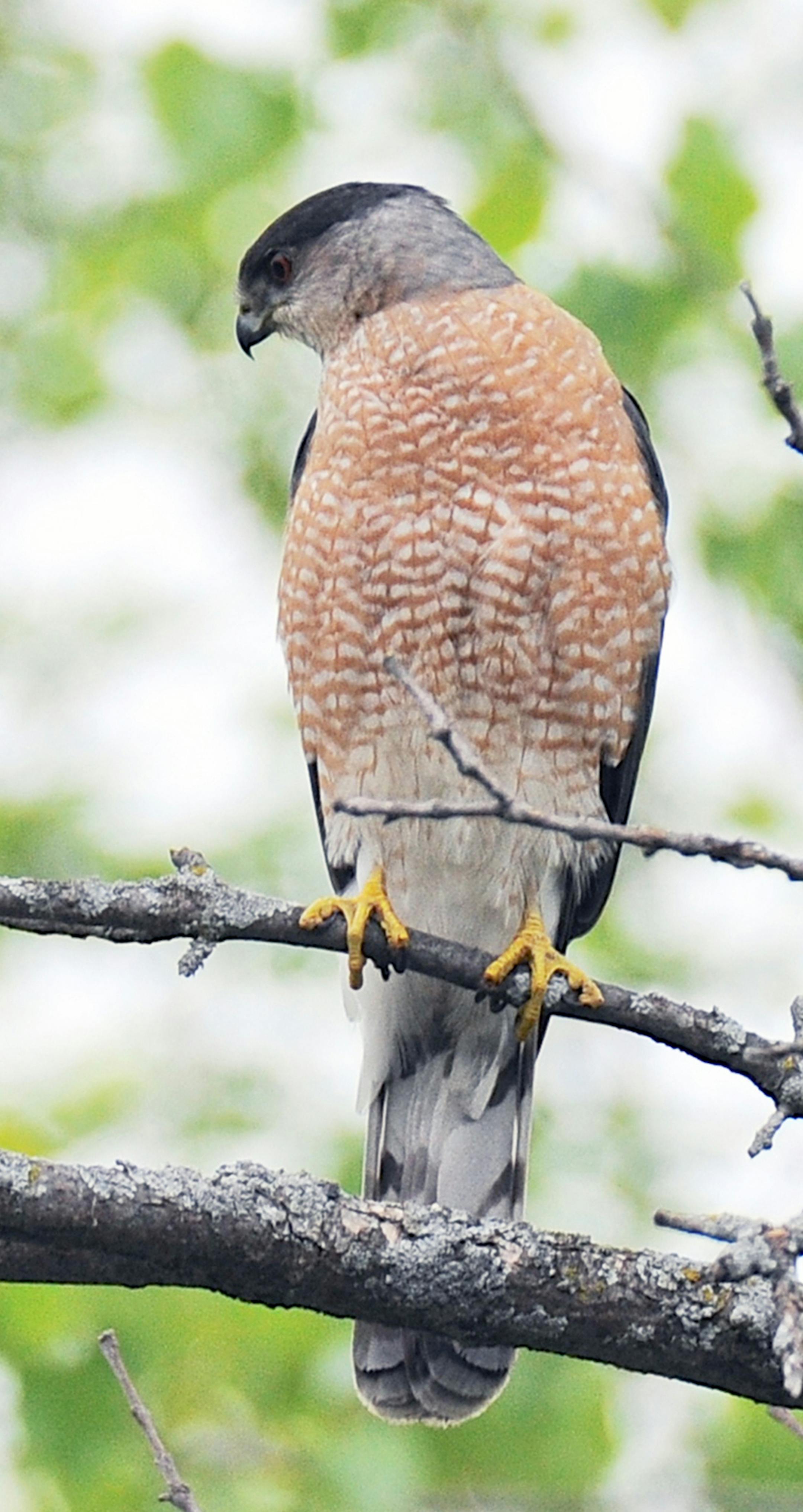
Q: I occasionally see a Cooper's hawk taking a bird in our yard, and it seems they get juncos more often than sparrows. Do you think city birds are more alert to hawks than juncos?
A: Cooper's hawks prey on smaller birds, as you've noticed, and several studies indicate that European starlings make up a significant portion of their diet.
I've observed Cooper's hawks catching cardinals, flickers, chickadees and blue jays, and signs (piles of feathers in the backyard) indicate that they catch juncos, woodpeckers and robins, as well. Hawks have greater success with young birds that haven't yet fully developed their survival skills. Juncos have another handicap in that they're migrants, visiting our area only in winter, so early in the season they haven't developed a good sense of where to hide for safety. Sparrows seem to be more wary and often feed in large groups, so they can warn each other if danger approaches.
Rock hounds
Q: I know this isn't about birds, but we've been experiencing some strange gray squirrel behavior: Our limestone rock mulch ends up all over the yard and I've seen a squirrel carrying a rock, stopping to nibble it, then attempting to bury it. When I paid close attention I could see that there were multiple squirrels doing this. After months of finding rocks in the lawn and gardens, I live-trapped the squirrels and relocated them. But new squirrels moved in and have now adopted the behavior. A squirrel obviously knows the difference between a nut and a rock. Have you ever heard of this behavior?
A: No, rock-stealing squirrels are news to me, and it must be frustrating for you. I contacted Jason Abraham, a furbearer specialist at the Minnesota Department of Natural Resources, for his thoughts. He found a paper that suggests urban squirrels could have a calcium deficiency, if they're eating a mostly nut-based diet. In the wild they gnaw on the bones of dead creatures and also find calcium in the soil, but city environments lack these calcium sources. Your limestone rocks would be a handy source of calcium for them.
Chilly heron
Q: Could I have seen a great blue heron near White Bear Lake in the early part of January?
A: It's entirely possible, especially if this big wading bird had found a spring-fed area to forage in. A few great blues are reported during metro-area Christmas Bird Counts each year, always around open water. I hope this bird flew over to the Mississippi River and found some open water, maybe near Kaposia Landing in South St. Paul.
Backyard crows
Q: Three crows, maybe a family, show up at almost the same time every day, perching in a tree and watching our feeders, occasionally coming into the yard before they fly away. Do you think an internal clock or food memory tells them to check our yard every morning?


