

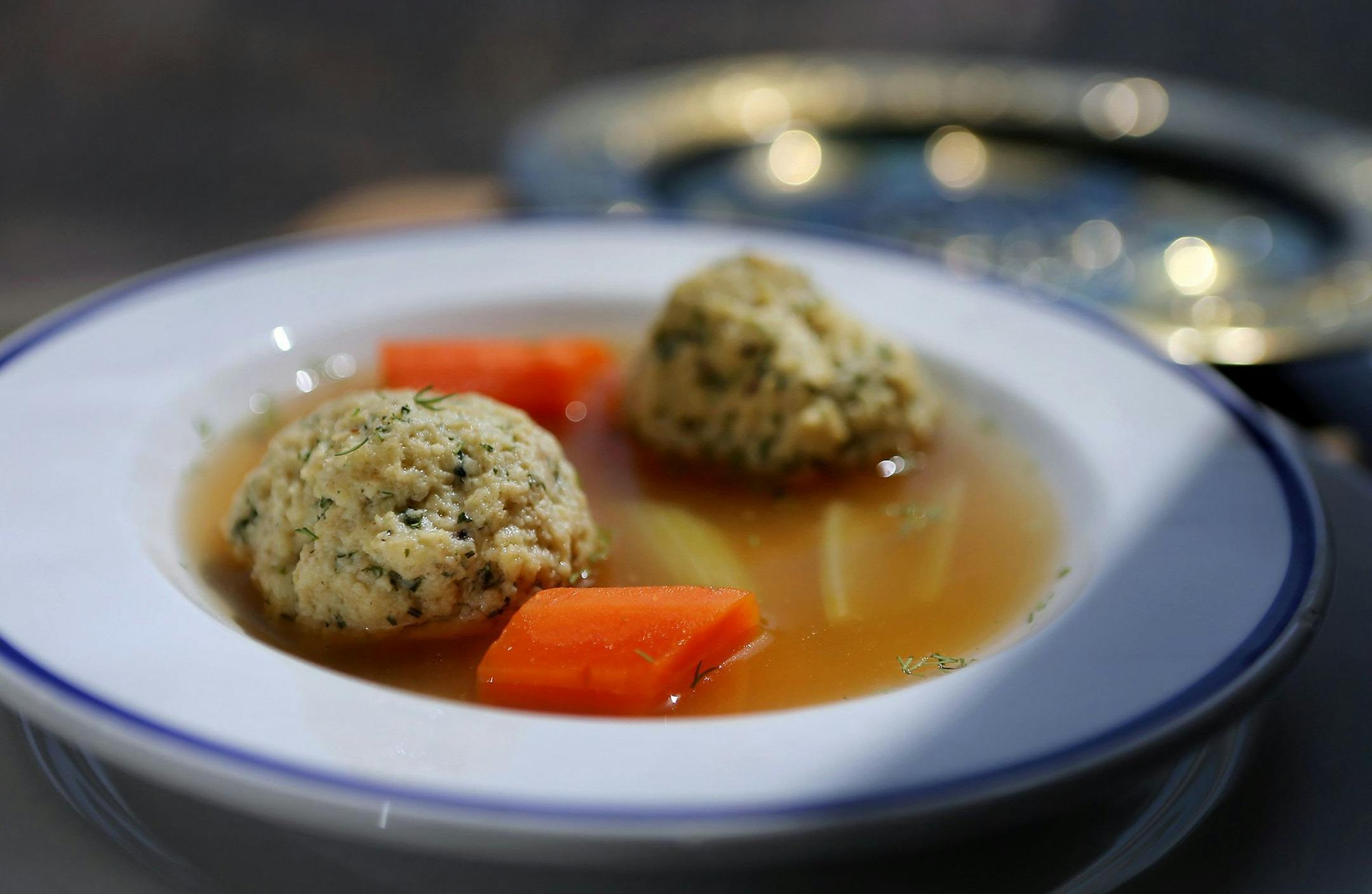
Passover is a time of joyous celebration and somber remembrance, but mostly it's all about the matzo balls.
The eight-day Jewish holiday begins at sundown Monday with a combination religious ceremony and feast called a Seder. The ceremonial part of the evening is a description of the purpose of the holiday, a recitation of the biblical story of the Jews' exodus from Egypt, where they had been kept as slaves.
Then comes the dinner. And with the dinner, in most cases, comes the matzo balls.
To remember their ancestors' hurried flight to freedom, Jews during Passover traditionally refrain from eating bread that has risen. In its place, they eat matzo, a crackerlike food made from flour and water that has been cooked so quickly it has not had a chance to rise. To ensure that it has not, matzo must be fully cooked within 18 minutes of the time the flour is mixed with water.
Matzo balls are one of the unofficial joys of the Passover Seder. There are (almost) as many ways to make them as there are people who eat them, but all of the possibilities boil down to one essential question: How did your mother or grandmother make them?
By and large, matzo ball fans are divided into two camps. One prefers the balls to be light and airy, floating on top of the chicken soup in which they are served; they are colloquially known as "floaters." The other group likes the balls to be chewy but dense, lying gracelessly on the bottom of the bowl; these matzo balls are known as "sinkers."
I am in the floater camp. Why would you want to eat anything that can be described as "leaden"?
My theory is that people who prefer sinkers had mothers or grandmothers who did not know how to make them light and airy. Or perhaps their mothers and grandmothers had mothers and grandmothers who did not.


