

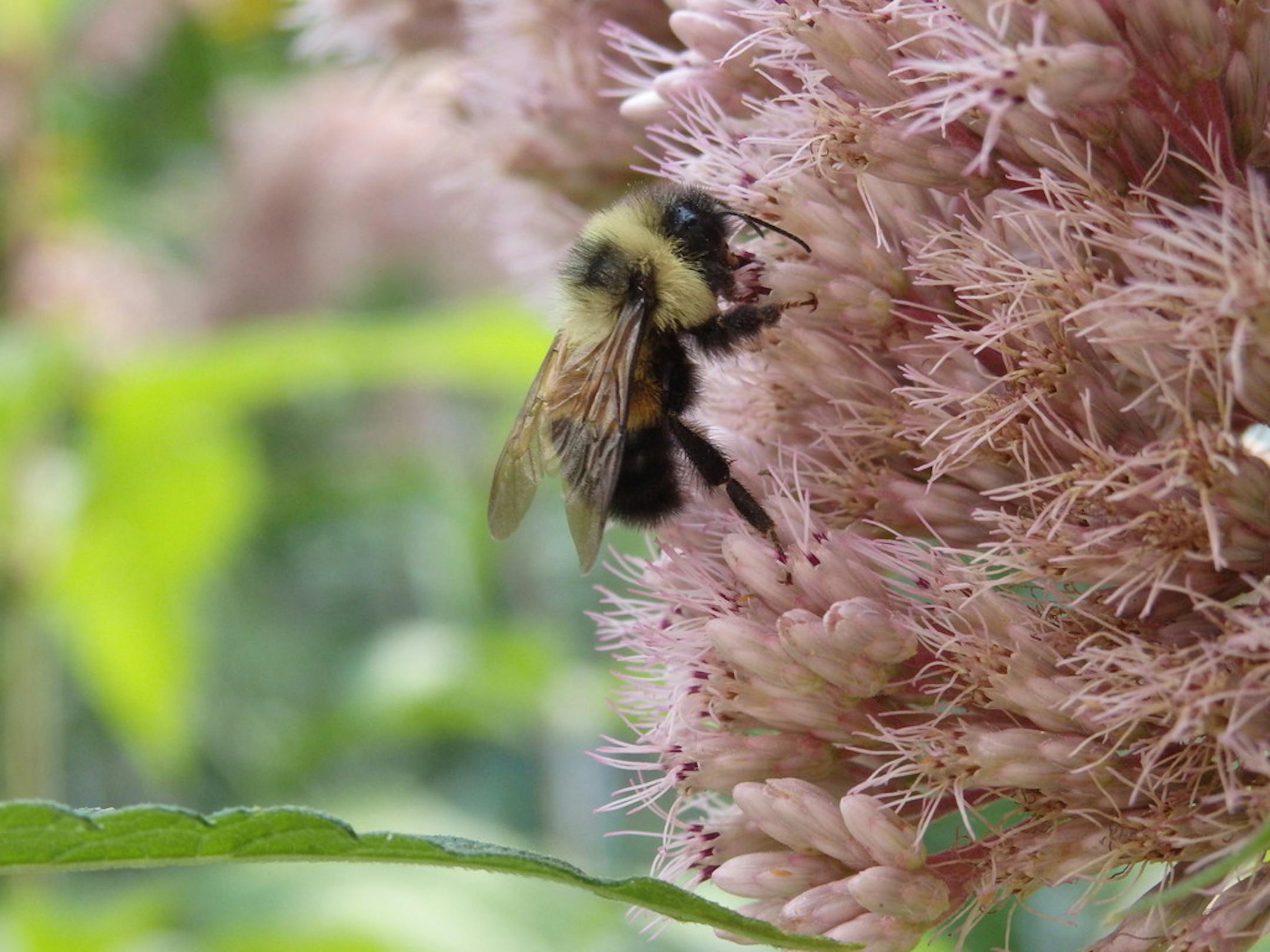
A shady garden doesn't mean you can't plant for pollinators. Sure, it's easy to lure them into a sunny garden filled with loads of colorful blooms; after all bees, butterflies and hummingbirds are solar-powered creatures themselves. Yet there are plenty of options for shade, and, in my opinion, it shouldn't prevent you from enjoying and supporting pollinators. Besides, I love a challenge.
While volunteering at "Ask a Master Gardener" tents at various local farmers markets, I get the shade/pollinator question quite often. I always give a few solid plant suggestions each time, but I felt there had to be more and was inspired to dive deeper.
To begin with, a little background: bees, butterflies and hummingbirds prefer the sun so they don't have to expend precious energy maintaining their body temperatures. In sunny gardens where you see lots of bees in large numbers, look closer and you'll notice lots of honeybees. They're out and about throughout the growing season. Honeybees tend to be fair-weather foragers, needing warm temps and dry weather to gather nectar and pollen for their hives. Bumblebees are tougher and can soldier on through cooler, rainier and windier weather. Bumblebees emerge earlier in spring looking for food and will venture into shadier gardens throughout the season.
There are a host of other pollinators that may go unnoticed if you aren't looking for them. Lots of native bees, or as they are also known, solitary bees, are out there, too. Different species emerge at various times throughout the summer. Many are much smaller than expected or don't have typical bee coloring and markings. Even with my best bee-senses, I still have to focus tighter to see some of the tiny sweat bees or drab mining bees buzzing about my garden, many times in the shadier areas, depending upon what's blooming. A hint: Native bees are looking for native plants.
Butterflies need warm weather to fly, so they flock to sunny flower beds, but you'll see them patrolling lightly shaded areas, too, stopping briefly to feed on various blooms, before recharging in sunnier areas.
Hummingbirds seeking spiders and other insects (surprisingly, their main diet) will stop and sip shade-loving flowers while they're at it. Hummingbirds like good old hosta flowers, too.
While you won't experience the same level of pollinator activity in a shadier garden, plant wisely and look closer, and you will be rewarded for your efforts.
To choose plants for shade, you should know that lots of plants will survive in shade. But to be of use to pollinators, you want healthy plants that thrive, not just survive. Be sure to check out the labels for sun-exposure requirements. Ask questions about soil preferences, too.

