

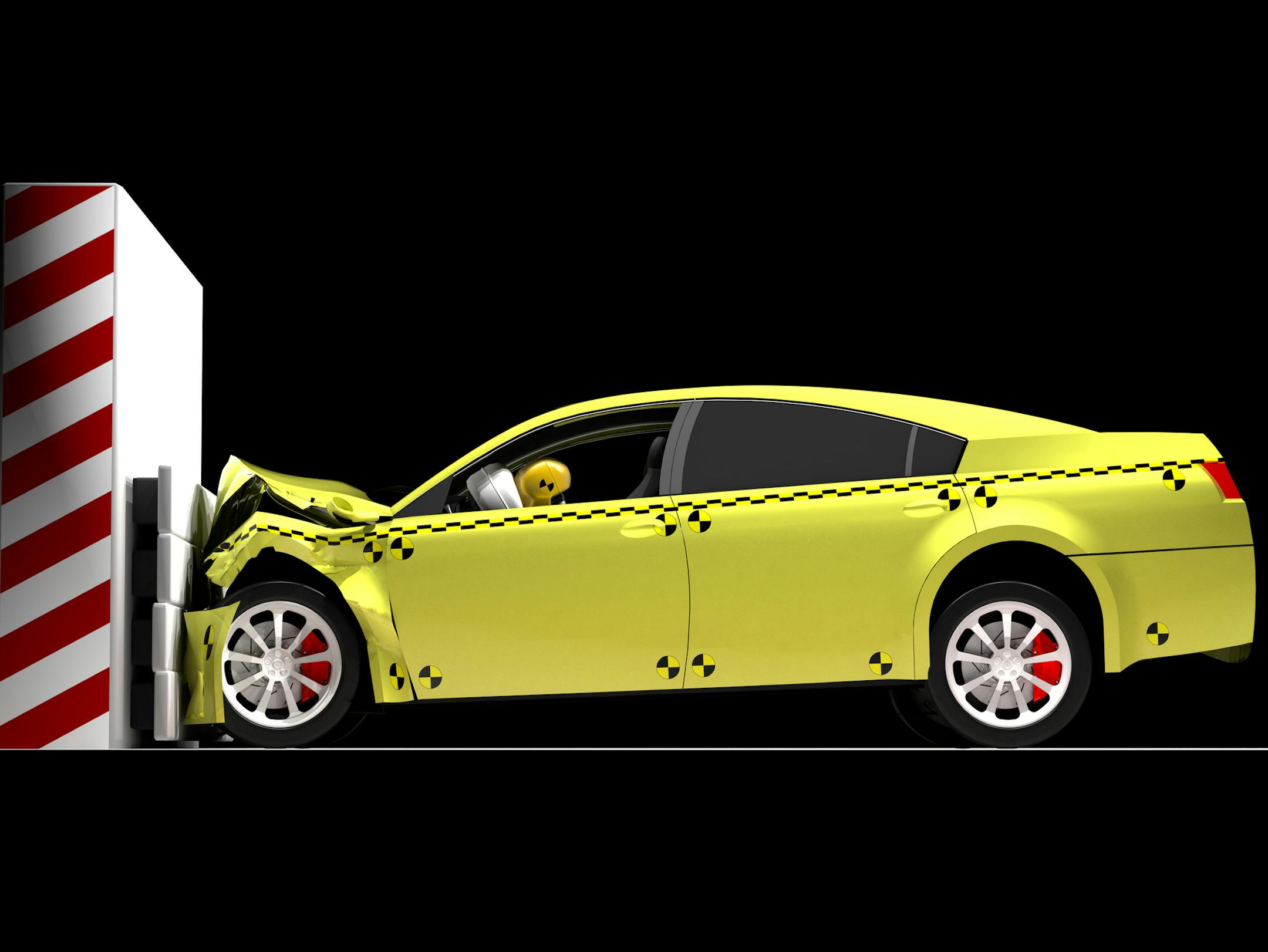
WASHINGTON – The federal government's crash test standards have not been updated for a decade, but safety technology has evolved in leaps and bounds during that time. That has motivated an industry group representing leading automakers to call on the government to bring its program up to par with current practices.
The New Car Assessment Program (NCAP) evaluates the safety of new vehicles and provides public ratings for consumers. As the industry has outpaced regulators in safety technology, critics have argued that the ratings have become close to meaningless, with the majority of 2020 model vehicles receiving five-star ratings and the rest receiving four stars.
The Alliance for Automotive Innovation, which represents automakers selling vehicles in the United States, recommends that the National Highway Traffic Safety Administration (NHTSA) include technology now commonly included in new vehicles in those tests.
Forward collision warnings, automatic emergency braking, pedestrian automatic emergency braking, lane departure warnings and assistance technology for staying within lanes, and automatic high beam headlamps should all be evaluated by regulators, the group said.
"We are moving from not only just a focus on crashworthiness, but a focus on crash avoidance, and it's important that the NCAP program do the same," said John Bozzella, CEO of the Alliance. "It's really important that the NCAP program remain modern, and we think it's ideal for us to start by kick-starting this modernization with key technologies that have proved safety benefits."
NHTSA has said it plans to update the program to include similar technology and announced earlier this year, shortly before President Joe Biden took office, that it was seeking public comment on the proposed changes.
But the Alliance recommends that the agency consider including more than updated tech in its new rules: NHTSA should regularly identify new safety technologies to be included in the rating system in the long term; meet with automakers and other relevant groups annually to discuss research and development; regularly evaluate how effective the program is, and update the program every three years, like similar programs in Europe, the group said.
"We're taking a broader, more strategic approach," Bozzella said. "There is an opportunity to establish midterm and long-term road maps, as well as a process to continually make sure that NCAP stays updated."


