3:35
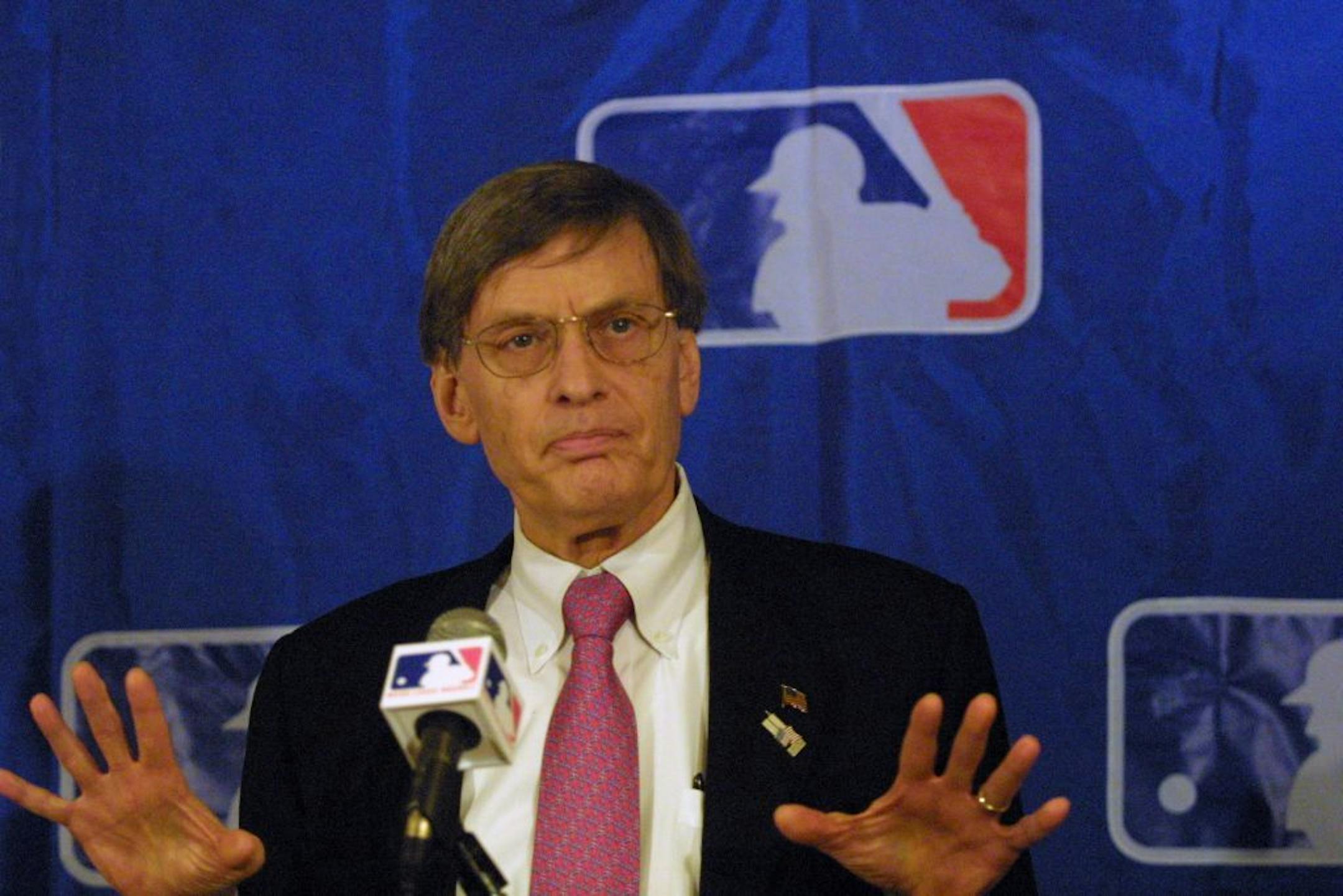
3:35While other professional sports have suffered some attendance losses the past couple of years, Major League Baseball continues to show increases including this year, according to Bud Selig. The baseball commissioner was here Tuesday to set the stage for the 2012 Reviving Baseball in Inner Cities (RBI) World Series that brought some 500 young baseball players to the Twin Cities.
Selig is not only the man behind baseball's attendance success but also was largely responsible for this area not losing the Twins.
Yes, a lot of people were responsible for keeping the Twins here while the battle to get a new stadium built was going on, but Selig used his power as commissioner to make sure the Twins stayed in Minneapolis.
After the 2001 season, a lot of the owners wanted to eliminate two franchises, including the Twins, so they wouldn't have to contribute to the $25 million in revenue sharing the Twins were receiving during the last few years they played at the Metrodome. Some of those owners told me personally that Selig refused to give up on this city's ability to eventually get a new stadium.
Despite the Twins' poor 44-60 record, they will draw at least 2.7 million to Target Field, and maybe 100,000 more than that. Overall, Major League Baseball went over 48 million in paid attendance this week. According to Selig, that's the earliest MLB has exceeded the 48 million mark.
"The last eight years have been the eight greatest years in baseball attendance, the last five years have been remarkable and we're going to show an increase this year," Selig said. "I mean, an absolutely enormous year in terms of attendance and revenue, and we have great races going."
Selig was asked if he ever considers how he'll be viewed historically as commissioner in light of all the recent positive news about the game.
"I'm a history buff," he said. "I'm a kid who wanted to be a history professor, so I'm going to let historians go through and do all that. But [I would not have believed it] if somebody would have told me back in 1992 that this sport's gross revenues would have grown from $1 [billion], $2 [billion] to this year $7.8 billion, and attendance would be where the average team is going to draw 2.5-2.8 [million] -- think about that, the average team."