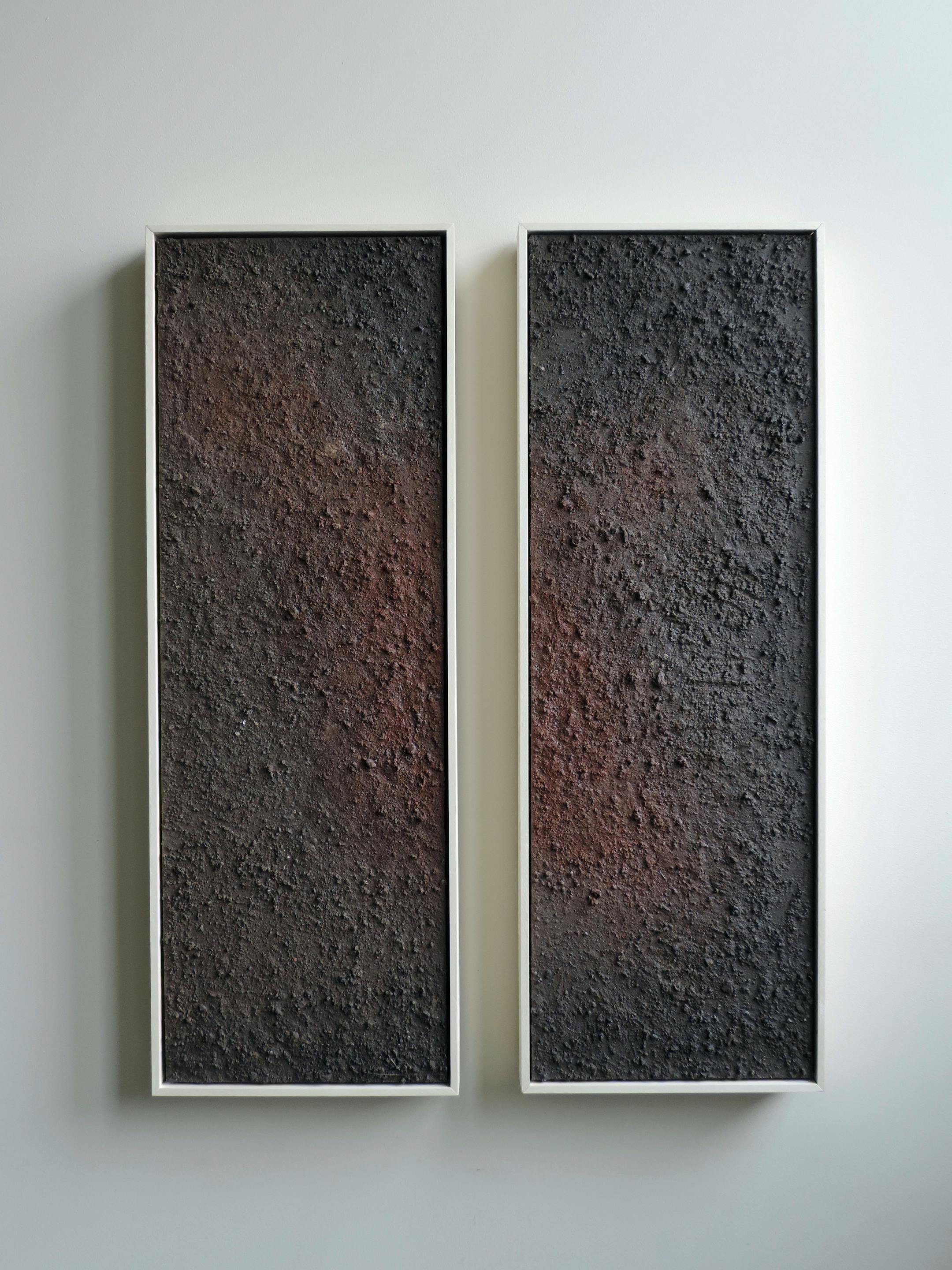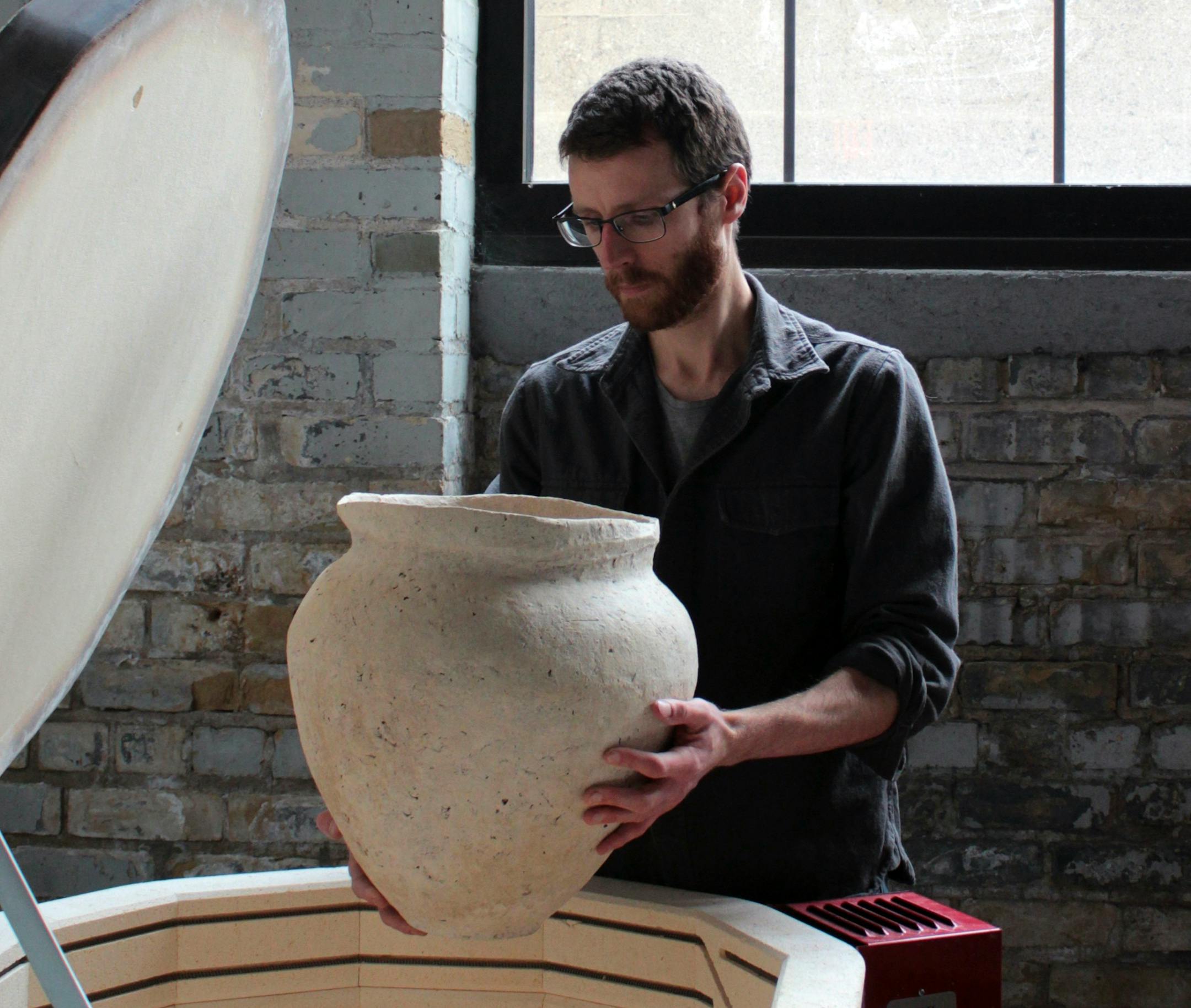
Mitch Iburg, who lives in St. Paul, makes ancient-looking tableware, vessels and sculptures primarily out of clay that he digs from the earth with his own hands (and some tools). Driving his truck 2½ hours to an open valley near the Minnesota River, he comes away with 1,000 or so pounds — a quantity that will last him roughly a year. (He has permission from the mining company that owns the property.)
Clay was not where his journey began. Born in Wisconsin and raised partly in Iowa City, Iowa, Iburg, 33, studied painting at Coe College in Iowa. But he was required to take a 3-D fundamentals class and it was there that he developed an appreciation for clay and its roots in nature and antiquity.
In 2015, he applied for a residency at the Cobb Mountain Art and Ecology Project in California, partly because the studio sat on top of a clay bed. And when he settled on a place to open a workshop, Studio Alluvium, with a fellow Cobb resident, Zoë Powell, who is now his fiancée, he chose Minnesota to no small extent because he was familiar with the clay.
On top of the matter of earth was the question of fire. Throughout his residency hopping, Iburg was drawn to specialized wood-fired kilns, which he continues to use. "My work has changed in each setting in response to the clays that are available and in response to the community of other wood-fire artists in that area," he said.
Wood firing produces different results depending on the type of timber used, how dry it is and how much oxygen is let into the kiln. The clay is typically fired without any glaze, and the texture, color and markings change over the course of several days.
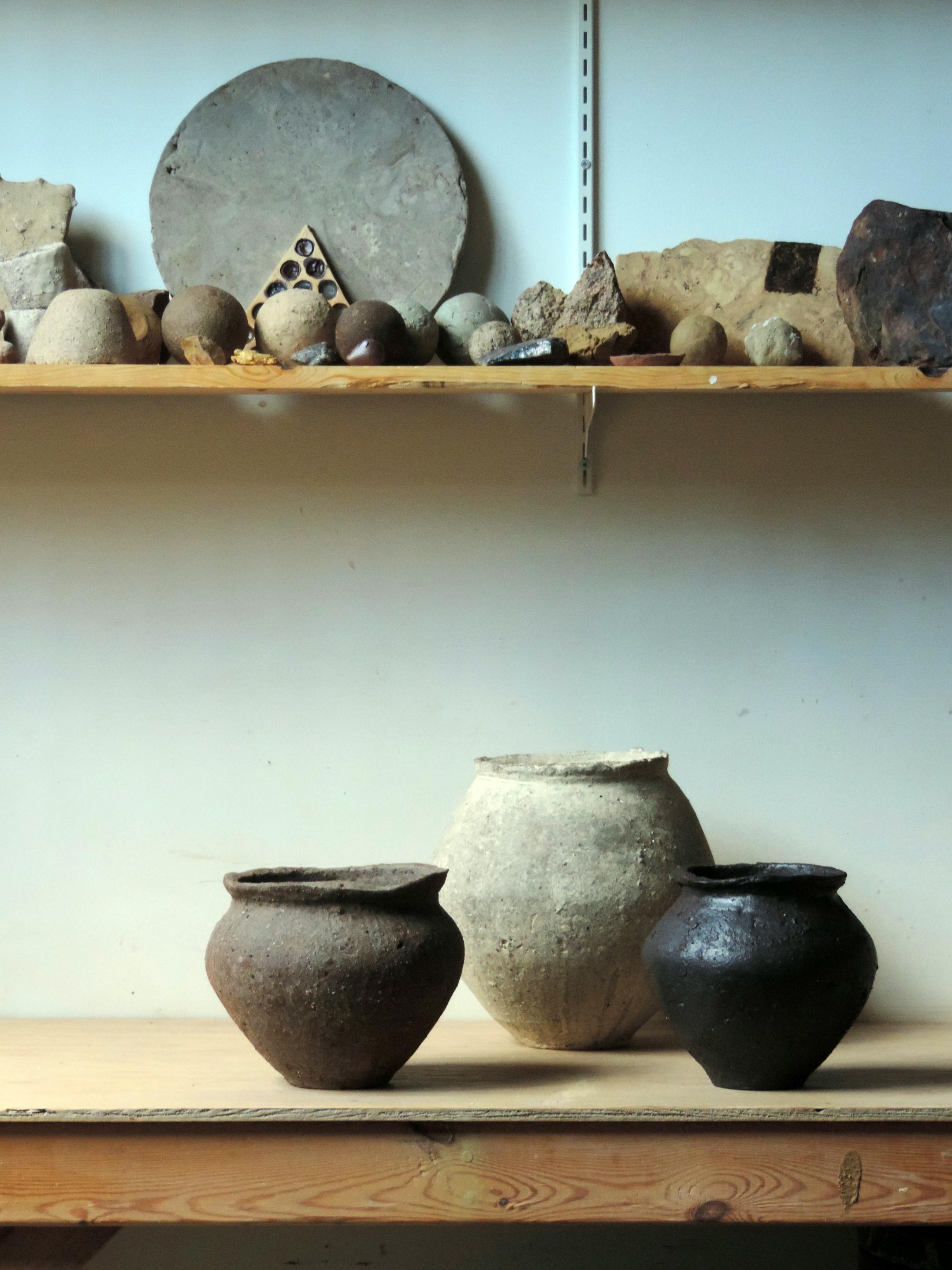
For his wood-fired pieces, Iburg mostly burns dead trees that have to be cut down for reasons of safety or the health of the forest. Or wood that has fallen in storms. Or the leftovers of traditional sawmills.
"At least we're putting it to work," he said.
Today he wood-fires about 40% of his pieces, using a kiln at the College of Saint Benedict in St. Joseph, Minn.