

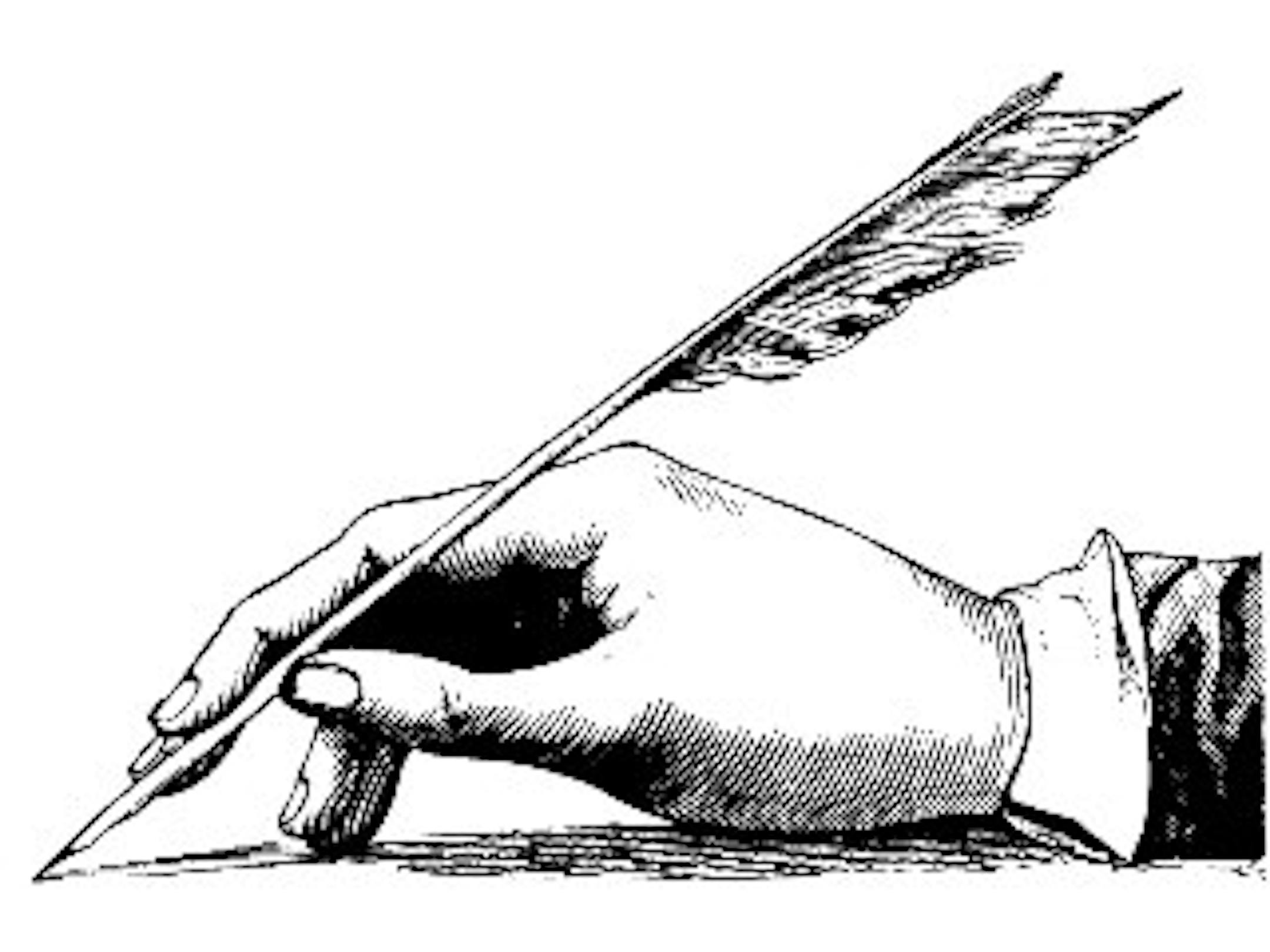
You have to hand it to John Hancock, whose signature on the Declaration of Independence was so distinctive, so over-the-top, that his name itself became another word for signature.
So we wish him a happy birthday today, were Hancock around to turn 276 years old.
Frankly, it's a good thing he's not. Despite years of service and sacrifice in the cause of American liberty, he remains best-known for writing with a particular flourish — and even that legacy is becoming an historical curiosity.
Today, school curricula in most states have no formal requirements for instruction in cursive, and its use has been falling off for years.
Even students who once mastered the rigors of the Palmer Method, with its fastidious attention to the height of letters and the length of loops, haven't always carried those skills into adulthood. Consider Jacob Lew who, at 57, is as much a baby boomer as they get. Yet the nominee for secretary of the Treasury has attracted attention for a signature that's devolved into resembling a stretched-out Slinky.
Form follows function
Mr. Palmer's penmanship has gone by the wayside — remember the weird Q that looked like a 2? — with cursive no longer necessarily being taught as a separate lesson, said Paul Beverage, K-12 literacy content lead for the Minneapolis School District. More often, he said, handwriting is embedded in other instruction and taught in a font that more resembles printing because that's the lettering that students will most often see in books and online.
"The urgency of making sure students are achieving good reading, writing and math skills and meeting state standards is one of the reasons there has been this shift," Beverage said. "Digital literacy is becoming more and more important, with students being connected to the keyboard."
When curricula include writing, he added, the focus is not as much on the ability to form beautiful letters as on the ability to form well-reasoned thoughts.


