

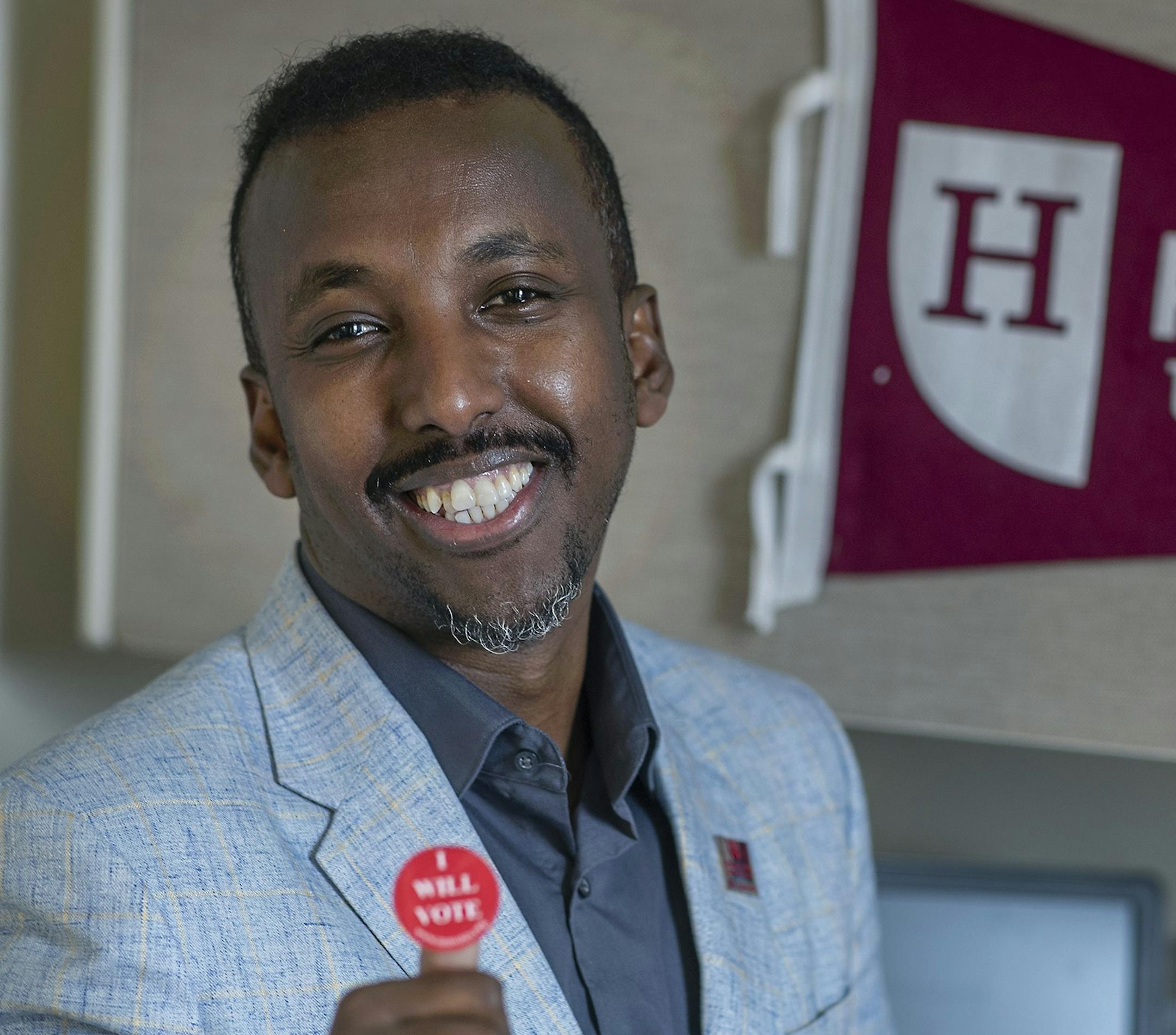
Nur Mood looks into the future every day — in the form of the bright young people walking across his St. Paul campus. As coordinator of social justice initiatives and strategic relations for Hamline University, Mood is leading an effort to channel youthful energy and civic-mindedness into action in a singular way: voting. Under Mood's leadership, the student voting rate jumped from 41% in the 2014 midterm elections to an enviable 63% in 2018. The 35-year-old Somali-American with degrees in applied economics and business recently returned from our nation's capital, where he shared ideas for engaging youth voters nationally. He shares updates and why voting means so much to him personally.
Q: What do you remember about your first voting experience?
A: It was in 2010, while I was a college student in Duluth. It was a few months after I became a U.S. citizen. It was important for me to vote because it was the first time I voted in my life. I can't be president, but anything else I can do. After I cast my vote, I was so excited and felt that my vote mattered. I've lived in Somalia and Egypt and never had the opportunity to vote.
Q: Now you've made it your mission to channel that excitement to college students. Why is it important that they engage in this civic act?
A: Because voting and civic engagement, in general, affect the future in which the young voter will live. The people they elect create the policies that determine what will happened in their communities.
Q: In 2014, about 41% of Hamline students voted in the midterm election. By 2018, it was 63%. How did you make that happen?
A: We worked very hard to engage the entire Hamline campus community. And the Hamline University Student Congress was a big part of our success. We also had support from organizations such as the Southern Poverty Law Center and League of Women Voters, which allowed us to host engagement events and raise awareness about Election Day. On the day of the midterm elections, I pushed all the students from 8 a.m. to 8 p.m. We didn't care how much gas we were using to get them to the polls. It was important to have every single person on campus go out and vote.
Q: How much research do you and your students conduct on candidates before an election?


