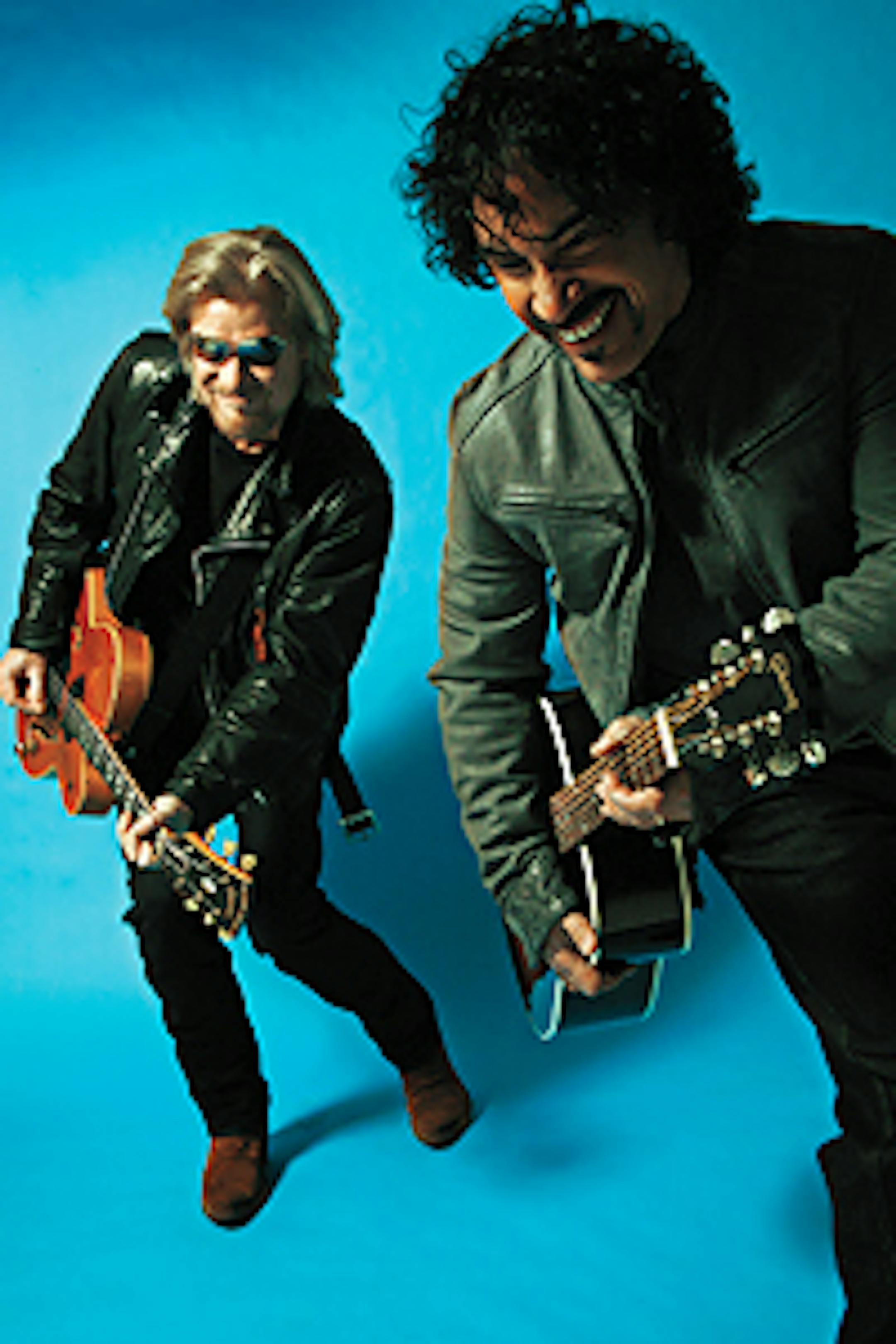
"I thought you were gonna ask about the mustache," says John Oates, half of the top-selling duo of all time. "I was about to roll my eyes but I didn't have to, which was nice."
In 2010, the Hall & Oates guitarist's legendary 'stache is a classic symbol of irony. And that irony isn't lost on him. With a sold-out gig Friday at the State Theater in Minneapolis (read: not Mystic Lake Casino), the '70s/ '80s rock 'n' soul hitmakers are hot again -- and not just with the AARP set. The conventional view of Hall & Oates as soft-rock relics is out, replaced by a surprising new indie cred. But does this credibility come from genuine appreciation of the duo's music, or is it merely camp appreciation from a younger generation?
Daryl Hall, 64, and Oates, 61, began collaborating in Philadelphia in the late 1960s, releasing several successful LPs in the '70s and nabbing their first Top 10 singles with "Sara Smile" and "Rich Girl" in 1976. Then the duo ushered in the '80s with a string of future karaoke staples -- including "Kiss on My List," "Private Eyes" and "I Can't Go for That (No Can Do)"-- and a marathon of five platinum/multiplatinum album releases.
Successful? Absolutely. Dismissed by music snobs? You bet. Top 40 supremacy lined Hall & Oates' pockets and made them a household name, but their style of blue-eyed soul was decidedly uncool -- that is, until decades later. A 2006 Spin magazine cover line read: "Why Hall & Oates are the New Velvet Underground." The Velvets are famous for their trickle-down indie influence ... but Hall & Oates?
Shortly thereafter, Hall launched his monthly Web TV series "Live From Daryl's House," which pairs the frontman with various musical guests. Youngsters the likes of Chromeo, Neon Trees and Train have all stopped by Hall's house. "Their fans began to kind of climb on board and rediscover us," Oates says. "This era of musicians have a greater respect for what has come before them."
Hipster culture has indeed embraced Hall & Oates. Death Cab for Cutie's Ben Gibbard has chalked up the duo as his prime influence. A memorably choreographed number, set ingeniously to the 1980 hit "You Make My Dreams," found its way into last year's Zooey Deschanel flick "(500) Days of Summer." And this year, Los Angeles synth-poppers the Bird and the Bee went as far as to release a covers record, "Interpreting the Masters Volume 1: A Tribute to Daryl Hall and John Oates." Indie band Band of Horses, rap-rockers Gym Class Heroes and the Killers' frontman Brandon Flowers all shore up the new fan base, with Flowers telling Spin, "Everything you need to know about writing a hit song, it's in 'Rich Girl.'" And H&O's tunes have long been sampled by hip-hoppers like De La Soul and the Wu-Tang Clan.
"I don't think that there's any tongue-in-cheek involved. With any pop music, it's made to be fun," says Inara George of the Bird and the Bee. "You're not listening to Leonard Cohen or anything; you're coming at it completely differently." She cites Hall & Oates' pristine pop sensibilities as the main reason the songs have aged so well. "All the people that I know really love Hall & Oates because they like Hall & Oates," she adds. "There's a kind of new, non-ironic appreciation for music that is happening right now."
When Minneapolis DJ Jake Rudh threw a Hall & Oates-themed party last March at his weekly dance night Transmission at Clubhouse Jäger, he was astounded by the capacity crowd, with a line snaking out the door. "It rides a fine line because there's some irony to them and I think they know that, too," says Rudh, an unabashed H&O backer. But Rudh arrives at a sentiment similar to George's:"They're really good at what they do -- creating pop music. The fans that come down to Transmission are into indie-rock, post-punk and new wave; but they embrace Hall & Oates, too."