

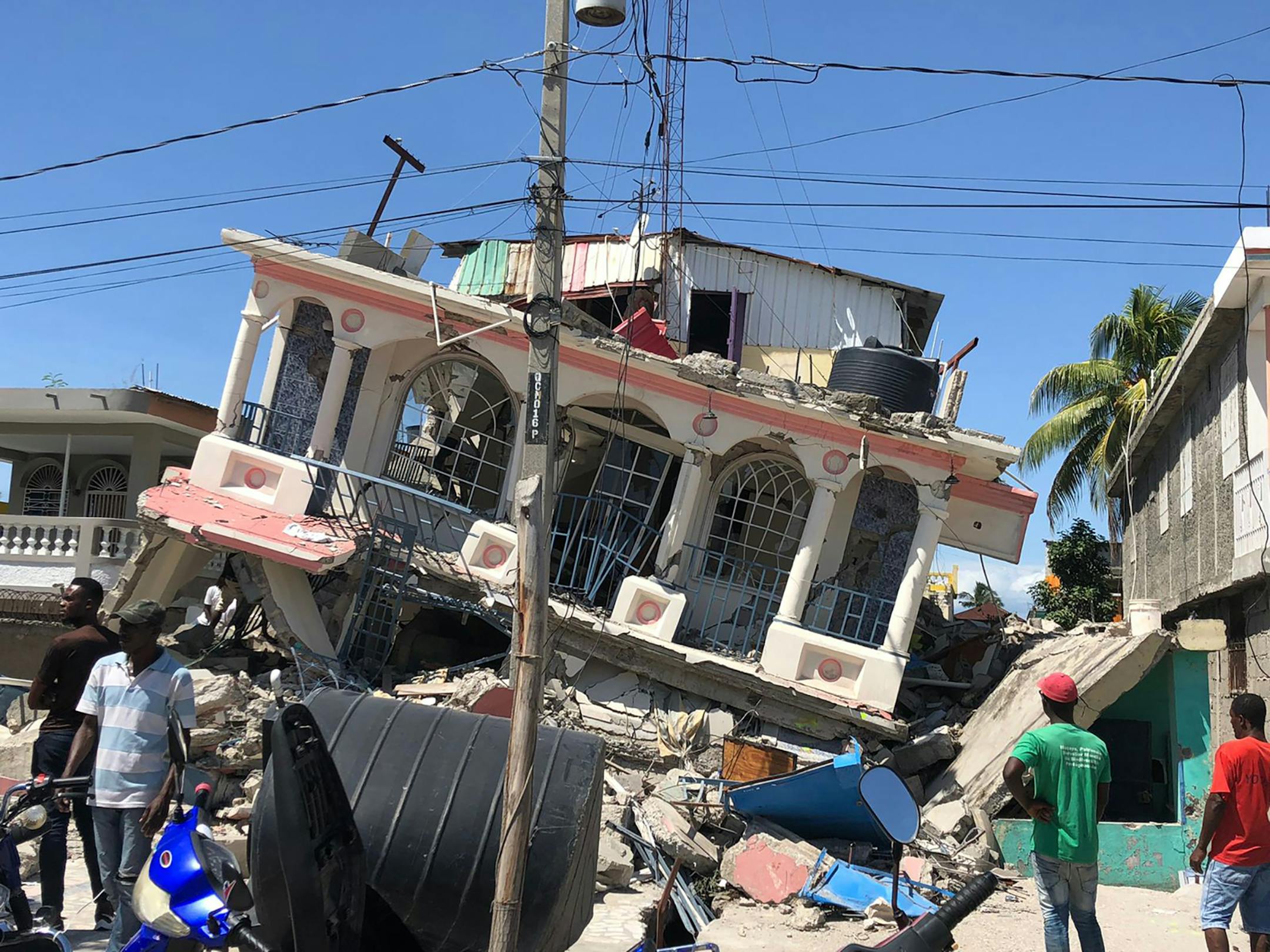
It was haunting, perhaps more so after our own Surfside tragedy, to see Haitian men lifting big chunks of rubble with their bare hands to reach survivors.
No gloves, no equipment, only superhuman efforts in those critical hours, and beyond, after a 7.2 magnitude earthquake struck southern Haiti on Saturday, bringing new devastation to the poorest country in the hemisphere.
No fleet of ambulances stood ready to transport the injured or provide first aid. Only men who lifted a man with a broken leg into the back of a van and hoisted a woman, likewise injured, onto the back of a motorcycle to drive them to the airport to be transferred to a hospital in Port-au-Prince.
It is haunting, once again, to see the faces of sweet children in pain, bones broken, tears falling and stunned stares, this time in Les Cayes, where the Miami Herald's Caribbean/Haiti correspondent Jacqueline Charles, and visual journalist Jose Iglesias, are risking their lives to chronicle tragedy amid violent political unrest and criminal gangs.
Stepping up for Haiti
Haiti's new trauma, compounded by a repeated cycle of catastrophic natural and political disasters, touches us all. South Florida is responding like we always do, with generous donations of supplies and money that make a huge difference — and, equally important, with open arms to survivors seeking medical care and shelter.
The U.S. government, too, has stepped up in a big way.
The Biden administration deployed a 65-person search-and-rescue team, four canines and 52,000 pounds of tools and equipment. With major roads and bridges between Port-au-Prince and the affected areas damaged, the Defense Department and the Coast Guard provided eight helicopters to transport American rescue responders, while the Navy is supplying aerial images of impacted areas.


