

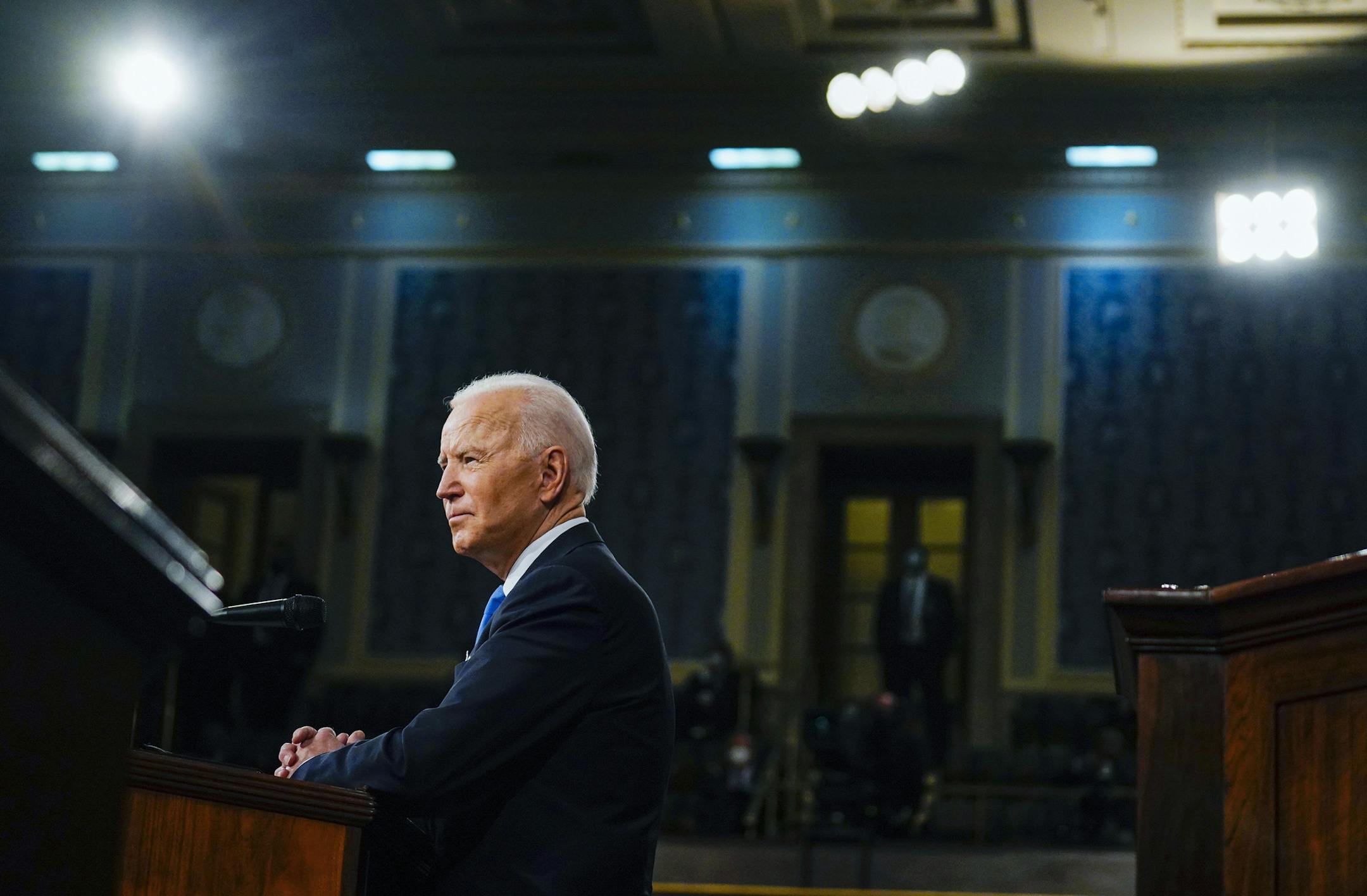
There was a smart line, almost a throwaway, in President Joe Biden's address to Congress on April 28. It sheds light on the whole project of American democracy. But not with patriotic pieties. And Biden didn't evoke a grand movement he himself had built, the way former Presidents Barack Obama and Donald Trump might have done. Instead, he highlighted one of the shortcomings of our system of government.
"Autocrats think that democracy can't compete in the 21st century with autocracies, because it takes too long to get consensus," Biden said.
By highlighting the chief problem with democracy, Biden also reminded his fellow Americans of its strengths. A leader in a democracy accomplishes goals by getting buy-in from many sides. That's the route to legitimacy. Unlike autocrats, successful American presidents don't govern by stifling dissent, the media or the vote; they don't threaten punishment or dangle pardons; and they don't humiliate their rivals via Twitter. This isn't because they're nice guys. It's because they'd forfeit real authority if they did these things.
But, indeed, American democracy can be very, very slow. It was clever of Biden to acknowledge this, giving autocrats such as Xi Jinping of China, and aspiring autocrats such as former President Trump, their due.
Autocracies and their leaders work swiftly. While hard-selling the people on gauzy movements such as communism or Trumpism, they proceed by fiat (in China) and executive order (in the U.S.) to bend people to their will.
But that's because the authority of autocrats is illegitimate. They don't have the faith of the majority. Autocrats move fast, but they don't really govern. They're too busy doing the things that keep a death grip on power, knowing it can be lost in a heartbeat through a popular uprising or to a military junta.
Biden did not take direct aim at Trump as a would-be autocrat. But toward the end of his address, he summed up the last four years this way: "We've stared into the abyss of insurrection and autocracy, pandemic and pain" — leaving little doubt about which administration represented that abyss.
Then he pivoted, praising America's democracy, not as an ideal but for its tactics.


