

Trees beware.
A huge infestation of leaf-loving gypsy moth caterpillars has been discovered in Grant -- and if they launch into a serious feast on the city's foliage this spring, look out.
"It's the largest infestation that I've ever seen," said Lucy Hunt, who oversees the gypsy moth unit at the Minnesota Department of Agriculture. "It's definitely one of the biggest in Minnesota."
The Grant infestation, which covers 844 acres of private land, is the first confirmed in Washington County since 1984. Metrowide, smaller infestations have been discovered this year in Coon Rapids and Minnetonka, Hunt said.
The gypsy moth, a true pest in the tradition of emerald ash borers and Japanese beetles, is an invasive species that hasn't yet hit Minnesota full strength. The wave, moving west from Massachusetts, now has invaded portions of Wisconsin.
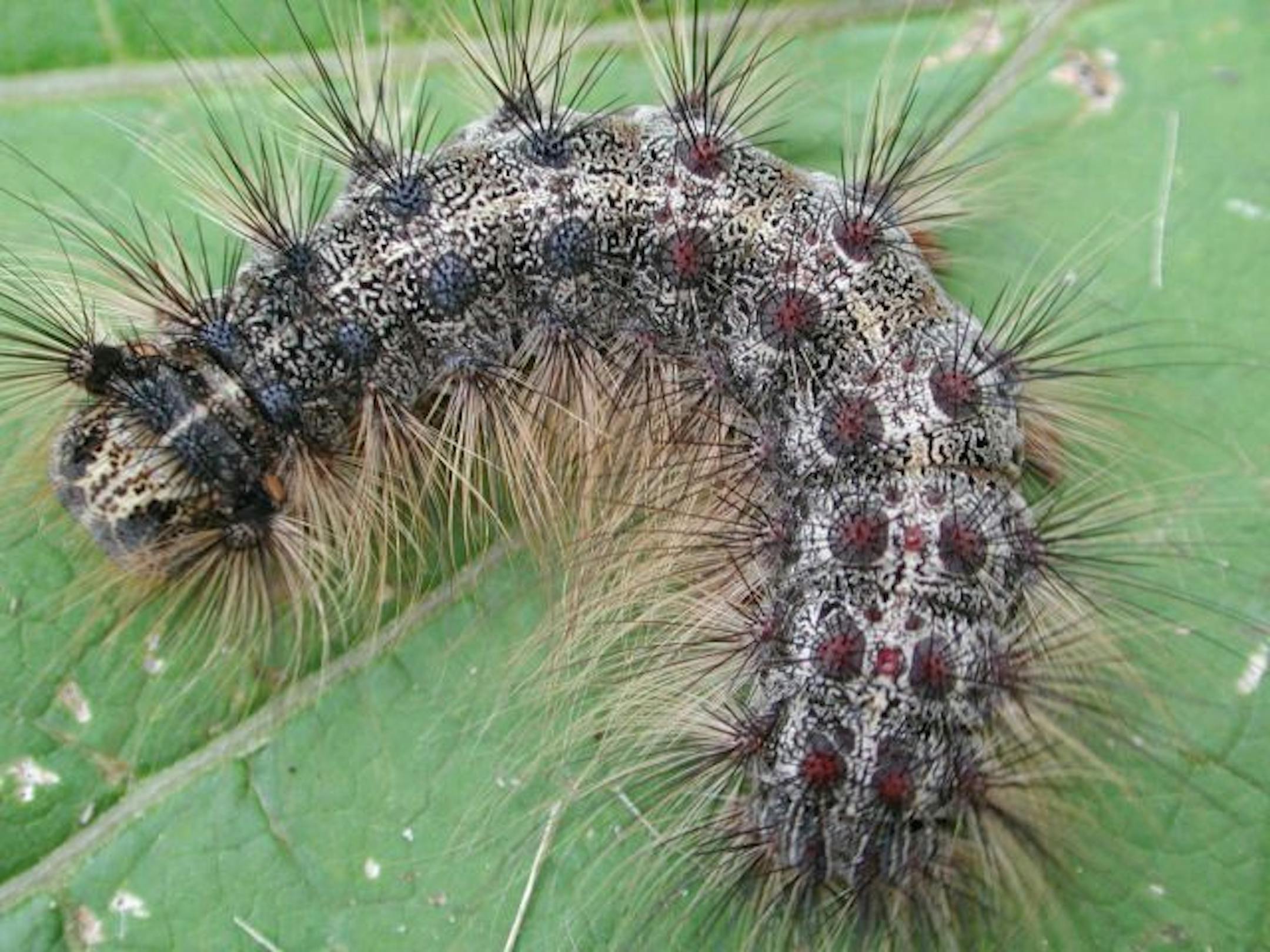
Damage comes from leaf-chomping caterpillars that haven't yet morphed into moths. The caterpillars can strip deciduous trees to bare branches, all the while dropping excrement that sounds like the patter of rain. They love oaks and willows but even have an appetite for coniferous trees.
Gypsy moths can multiply with alarming speed if left unchecked, consuming leaves again and again until trees die from fatigue. The moths have few natural enemies.
In Grant, crews from the Agriculture Department found hundreds of egg masses, each bearing 500 to 1,000 eggs. "If it's a bad infestation, we're all concerned," said Tom Carr, mayor of the 4,000-resident city just west of Stillwater. "We love our woodlands, our country life."


