

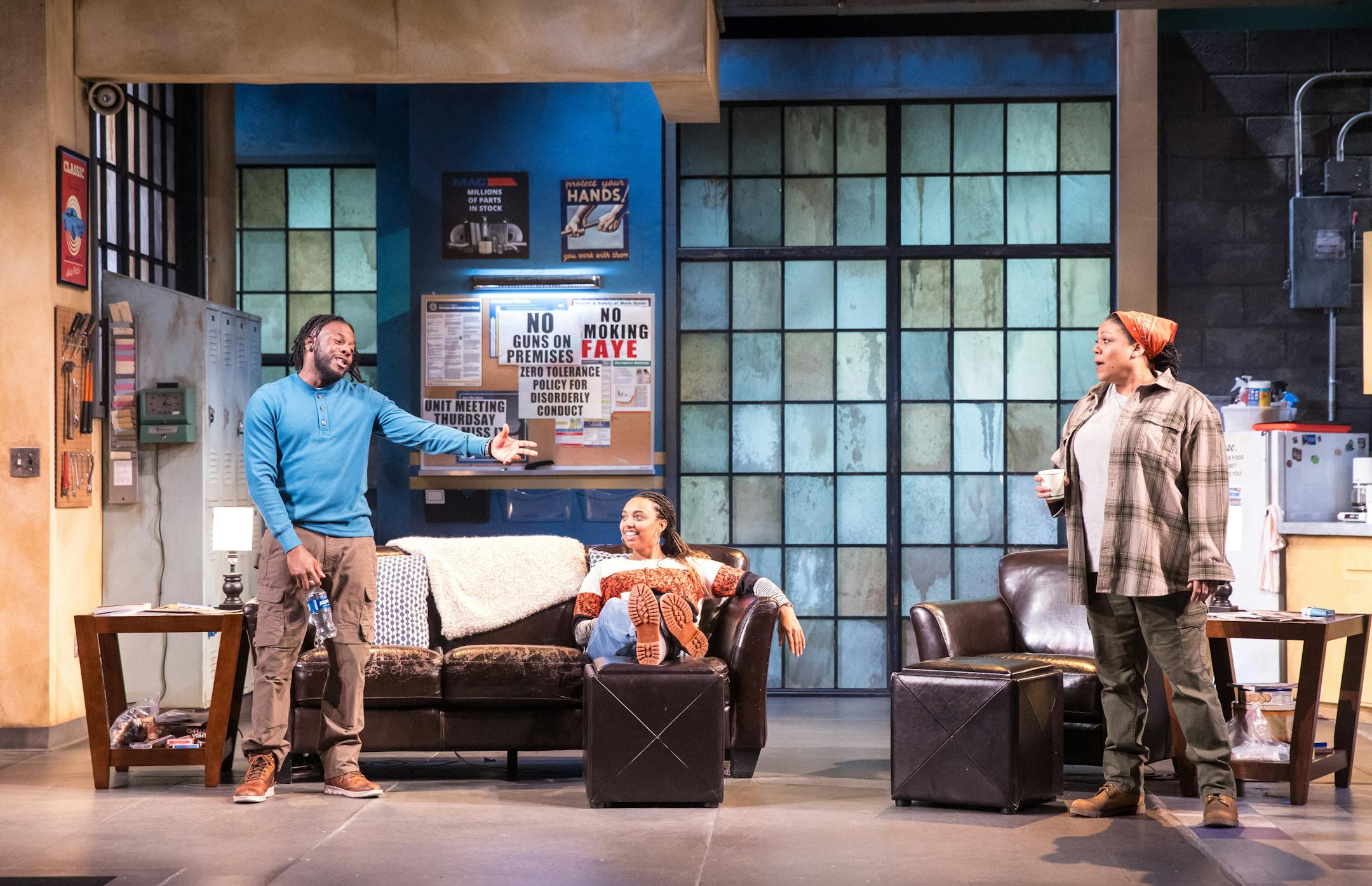
Music and motorcars. That shorthand for Detroit centers its glorious past at the nexus of Motown’s sophisticated, polished soul and the world’s auto capital. But even as the city has become a metaphor for America’s industrial decline, artists are examining its past to reflect on its phoenix-rising present.
For celebrated playwright Dominique Morisseau, her hometown is a place of grit, toughness and love. Morisseau chronicles Detroit’s social and political journey from 1949 to 2008 in a trilogy of plays: “Paradise Blue,” “Detroit ‘67″ and “Skeleton Crew,” the last of which is in previews now and opens Friday at the Guthrie Theater.
“Crew” is set during the 2008 recession and orbits four friends — Faye, Dez, Shanita and Reggie — who grapple with the idea of losing their livelihoods as the plant faces foreclosure.
“It’s told through African American characters, but it’s a very American story that everyone can relate to,” said director Austene Van. “It connects to all of us because everyone fears losing a job or a house or a car. But we see it through a lens that gives us an opportunity for a beautiful musicality.”
The Star Tribune spoke with Van and her cast before a rehearsal last week. The conversation has been edited for length and clarity.
Q: How do you relate to your characters’ struggles?
Stephanie Everett: Well, I didn’t think at first that I had a lot in common with Shanita. But as we’ve gone through the process of putting up the play, I think I really relate to pride in her work. She has technique and is devoted to everything her hands can do. So, when all else fails, she can fall back on is the fact that she has something that no one can take away from her. I relate to her pride in her skill set and the way it brings her confidence.
Mikell Sapp: I have family in Detroit and I’m doing this role in honor of their spirit. Every time I’ve gone to Detroit, I’ve felt their grit and determination. Dez is a hustler. He has goals and dreams and he works hard to make them real.


