

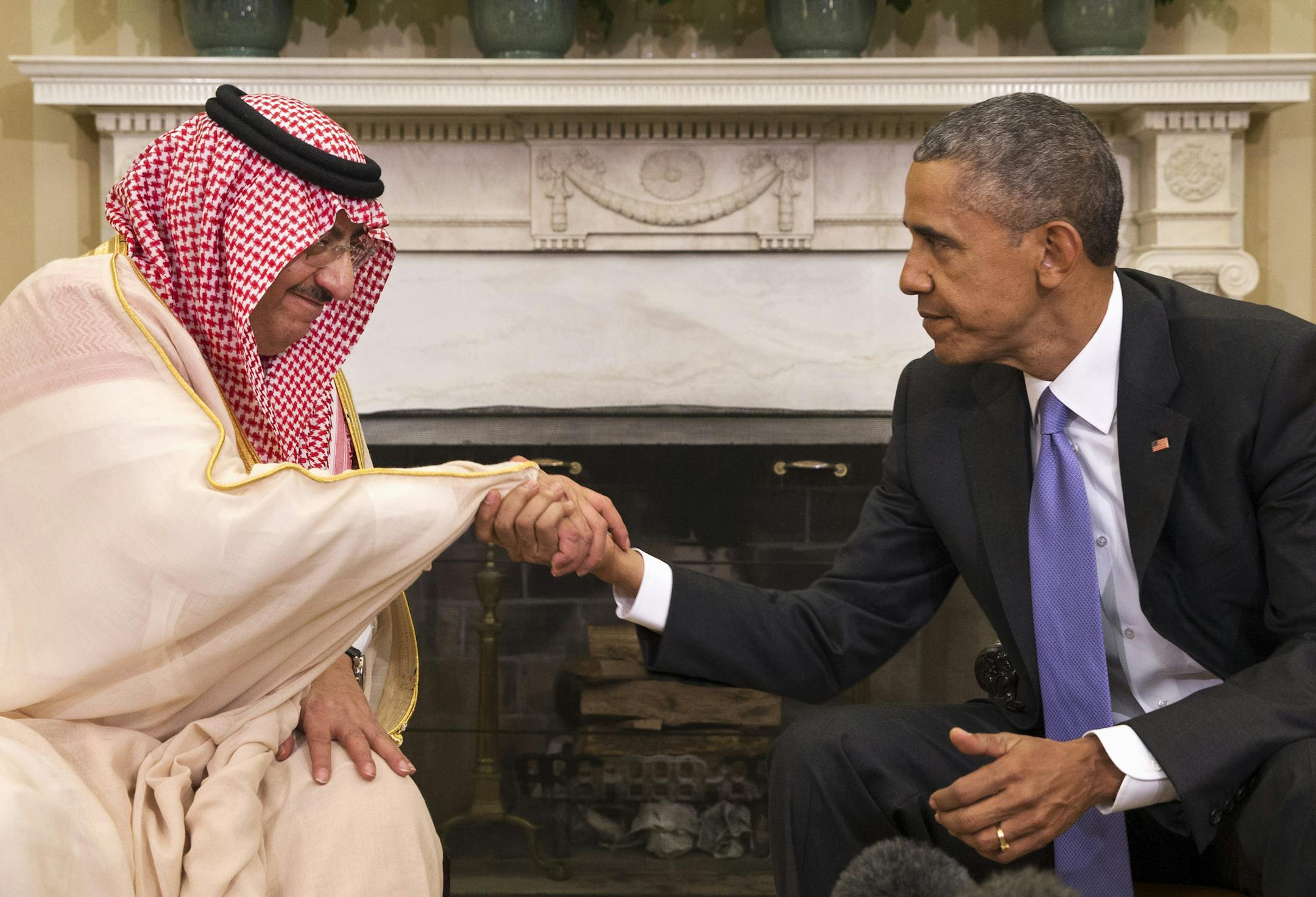
WASHINGTON — Gulf nation leaders joined President Barack Obama at the White House Wednesday to warn of the risks of completing a nuclear deal with Iran. Obama was seeking to convince his counterparts of the potential benefits for the region.
But when two days of talks wrap up on Thursday, it's unlikely much will have changed. The Gulf's skepticism of Iran is deep-seated and extends far beyond its nuclear pursuits. Obama, meanwhile, has invested too much in the Iran negotiations to let Gulf concerns upend his legacy-building bid for a deal.
"My guess is that the summit is going to leave everybody feeling a little bit unsatisfied," said Jon Alterman, the Middle East director at the Center for Strategic and International Studies.
The White House is expected to offer the Gulf nations more military assistance, including increased joint exercises and coordination on ballistic missile systems. But Gulf requests for a formal defense treaty already have been denied by the U.S., in part because of the difficulty of getting such an agreement approved by Congress.
Obama met separately Wednesday with Saudi Arabia's Crown Prince Mohammed bin Nayef and Deputy Crown Prince Mohammed bin Salman. The president had planned to meet with Saudi King Salman, but the kingdom abruptly announced over the weekend that the monarch would no longer travel to Washington and would instead send the lower ranking, but highly influential princes.
The president made no mention of Saudi skepticism of the Iran talks as he opened the meeting, but acknowledged the region is in the midst of a "very challenging time."
The White House and Saudi officials insist the king was not snubbing Obama. But Salman's conspicuous absence comes amid indisputable signs of strain in the long relationship between the U.S. and Saudi Arabia, driven not only by Obama's Iran overtures, but also the rise of Islamic State militants and a lessening U.S. dependency on Saudi oil.
"There have been disagreements under this administration and under the previous administration about certain policies and development in the Middle East, but I think on a set of core interests, we continue to have a common view about what we aim to achieve," said Ben Rhodes, Obama's deputy national security adviser.


