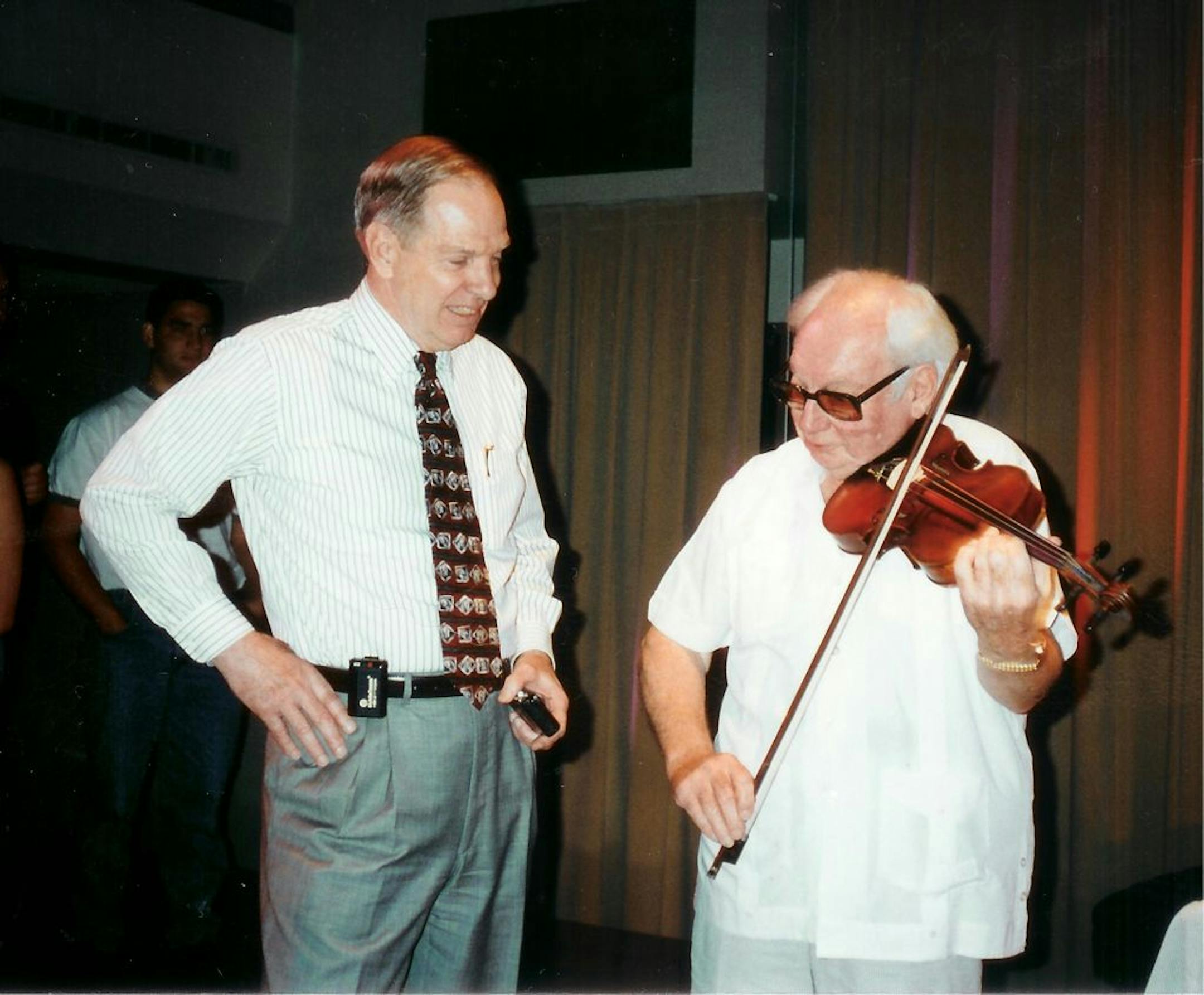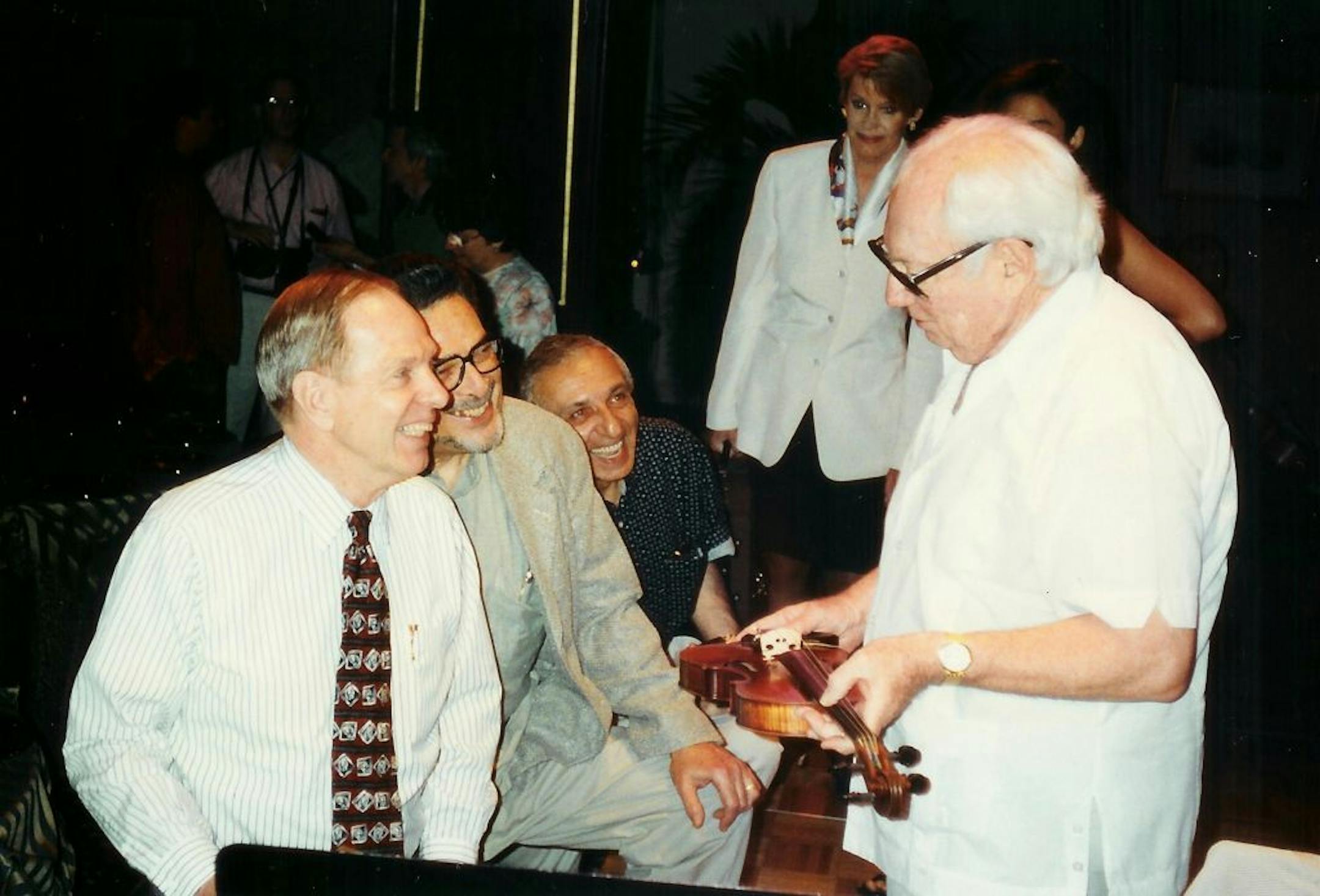
Isaac Stern was one of the most accomplished and celebrated classical violinists of the 20th Century.
He was also credited with saving Carnegie Hall, a storied building that was scheduled for destruction to make room for a garish office complex. Stern led a rescue effort that culminated in the purchase and restoration of the building by New York City. Its majestic, 2,800-seat auditorium is named after Stern.
Is it any wonder, then, that I am extremely proud that Isaac Stern played my father's violin, a Stradivarius copy made in Campo Pedrona, Italy, 100 years ago?
When my dad died at age 87, I found his violin in the attic of the house in which my mom and he had lived their final years. It had been subjected to the humidity, heat and bitter cold of Wisconsin weather, and it was in dismal condition.
I cherished the memories of my father playing the instrument, and had admired its beautiful wood grain. So I took it to the highly respected Potter Violin Company in Maryland for a consultation.
While holding the loose parts together, Dalton Potter lifted the violin carefully from its ancient, metal-strapped case and commented, "This is a pretty good fiddle. It should be restored." I gave him the green light, and two months later I claimed the once-again beautiful instrument.
Coincidentally, a day later, I was asked by the Levine School of Music in Washington, D.C., to provide complimentary flights for Isaac Stern and his wife, Linda, from New York to D.C. and back. Stern had agreed to perform with five Levine students at the school's annual fundraising gala. I was with US Airways at the time, and made the arrangements.
I wondered if Isaac Stern would return the favor by playing my father's violin. The Levine School inquired on my behalf, and he agreed.