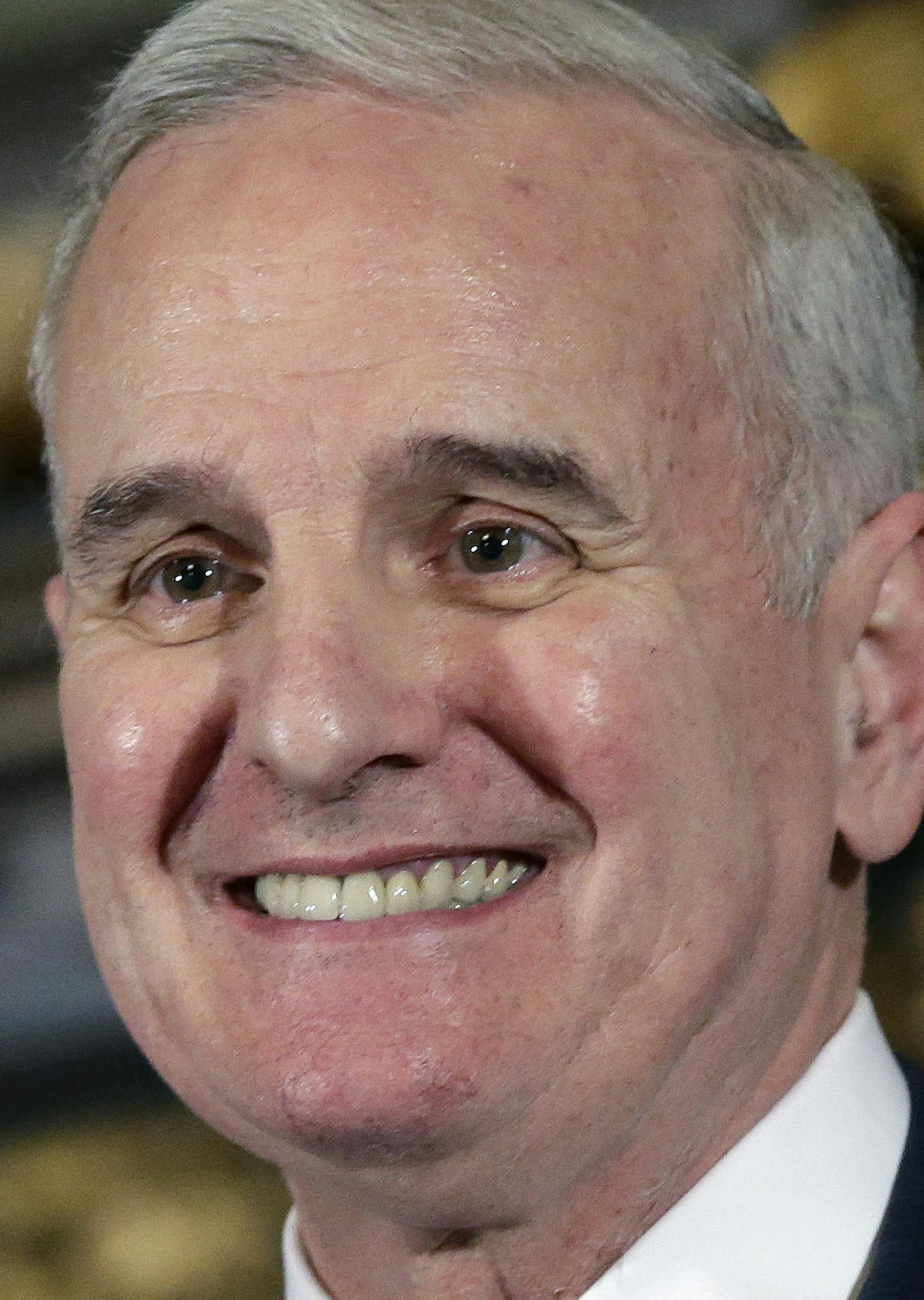
Gov. Mark Dayton and his Republican opponent, Jeff Johnson, both hold education at the core of why they went into politics. But they offer starkly different approaches to how Minnesota should fund and manage its schools.
A strong education system is central to Minnesota's identity but also a point of constant partisan tension at the Capitol. This year it sets up a grudge match between some of the state's most prominent political interests: while DFLer Dayton touts his backing by the powerful Education Minnesota teachers union, Johnson is counting on support from influential business groups like the Chamber of Commerce and the Minnesota Business Partnership that are heavily critical of Dayton's approach to schools.
As the school year gets going, one of Dayton's major accomplishments is coming into view: For the first time, every school district in the state offers all-day kindergarten because of a funding increase Dayton first promised as a candidate in 2010 and that he and a DFL-led Legislature delivered last year. Previously, many Minnesota families paid as much as $2,500 per child for all-day kindergarten.
"I said in 2010 I would increase state funding for our public schools every year as governor, no excuses, no exceptions, and I kept that promise," said Dayton, who often cites his stint as a New York City public schoolteacher from 1969 to 1971 as a major inspiration for his later political career.
Johnson says he too would make education his top funding priority but would go about it differently.
"I'm not necessarily opposed to all-day kindergarten," said Johnson, whose sons participated in the program at Wayzata public schools. "But rather than say we increased education spending by a lot but told districts how they have to spend it, my preference would be to let them [districts] decide."
Greater school control
Johnson says that as a rule the state should attach fewer requirements to the money it gives schools. Rather, he said, local school district leaders and parents should get greater say over how money is spent, even if it comes from taxpayers across the state. School leaders should also have more control over hiring and firing of teachers, he said, with decisions based on performance, not seniority.
A similar impulse was at the heart of Johnson's first foray into politics. A suburban parent and corporate attorney in the late '90s, Johnson first entered the Legislature by opposing a controversial set of state-mandated graduation standards — since scrapped — called the Profile of Learning.