

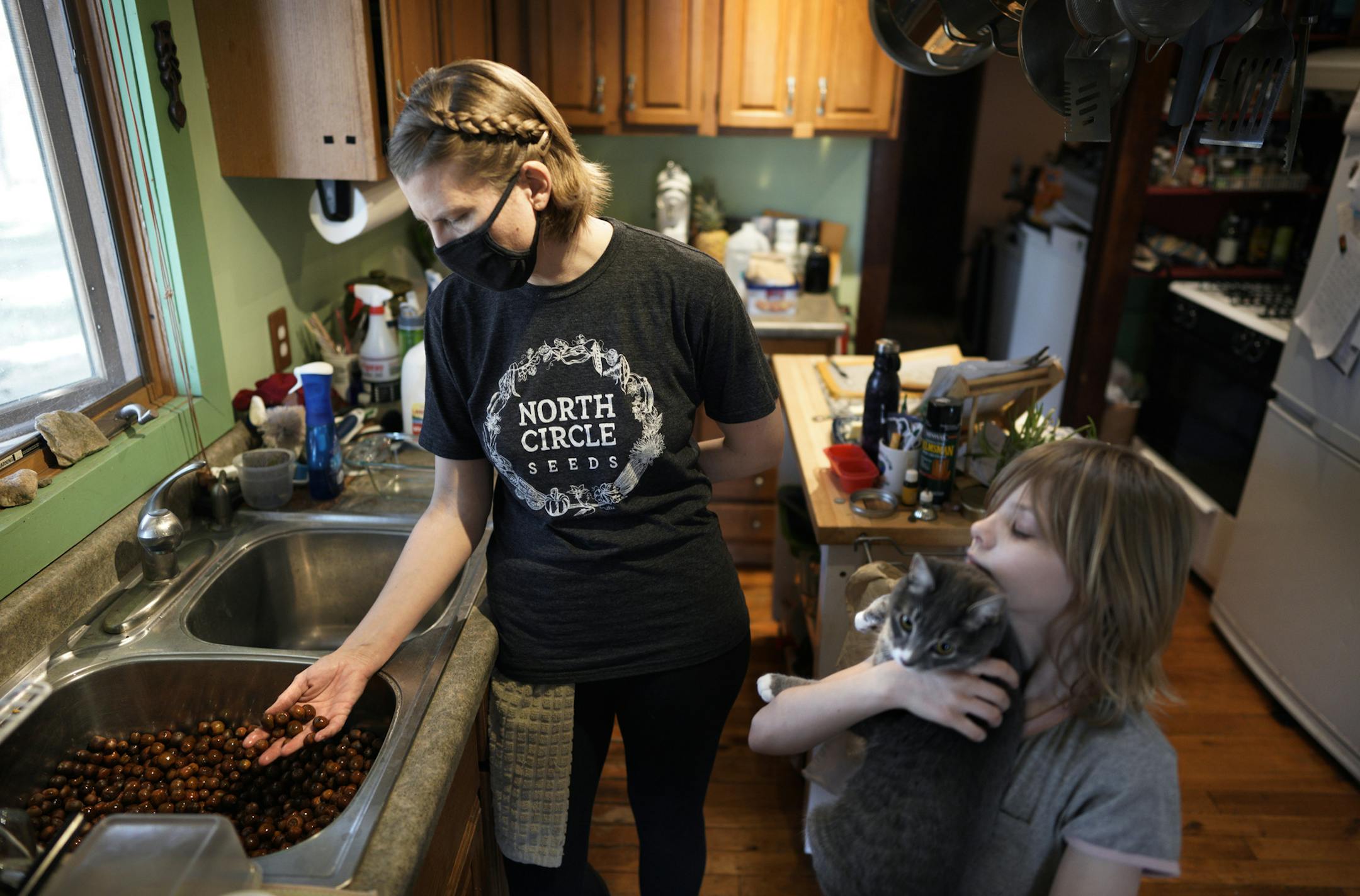
Allison Rian gently stuffs a sprouted acorn into a soil-filled plug in a plastic tray, then another.
Soaking acorns fill the kitchen sink. Trays of them sprout off the living room. Jars of yellow birch and white pine seeds chill inside the refrigerator.
"We've jumped into the deep end of the pool," said her husband, Scott Rian.
It's the family's first foray into forestry. With luck, most of the 10,500 tree seeds they're nursing in the converted sunroom of their old farmhouse near Aitkin will take root. They will be part of the first batch of climate-smart seedlings in a bold new effort to help Minnesota's northern forests handle the warming temperatures threatening to turn vast swathes of the state's forests into grass.
The Rians are part of a new Forest Assisted Migration Project, a grant-financed collaboration between the University of Minnesota, the Nature Conservancy and the Greater Mille Lacs Chapter of the Sustainable Farming Association of Minnesota. The five-year effort seeks to create a regional wholesale market for the types of tree seedlings northern forests will need to thrive — and fight climate change.
The five-year goal is to grow 1 million trees such as white pine, red oak and yellow birch, said project lead David Abazs, executive director of the U's Northeast Regional Sustainable Development Partnership. It's part solution, part adaptation, he said.
"If we do nothing we're going to be spotty forested in northeast Minnesota," Abazs said. "We have a rich wildlife habitat here that would be lost with a loss of forest."
The pilot project is part of a groundswell of reforestation efforts underway as people turn to trees — mighty consumers of carbon, a key greenhouse gas — as powerful tools in the race against global warming. Even Tazo Tea and the Minneapolis-area Rotary Clubs have projects to boost tree canopies.


