

Minnesota's ruffed grouse and woodcock populations were definitely affected by the cold, late spring, based on reports from the Ruffed Grouse Society's National Ruffed Grouse and Woodcock hunt held last weekend in Grand Rapids.
"We found a number of grouse that were quite small,'' said Dan Dessecker, RGS director of conservation policy. "They hatched the second and third week in July, five or six weeks late.''
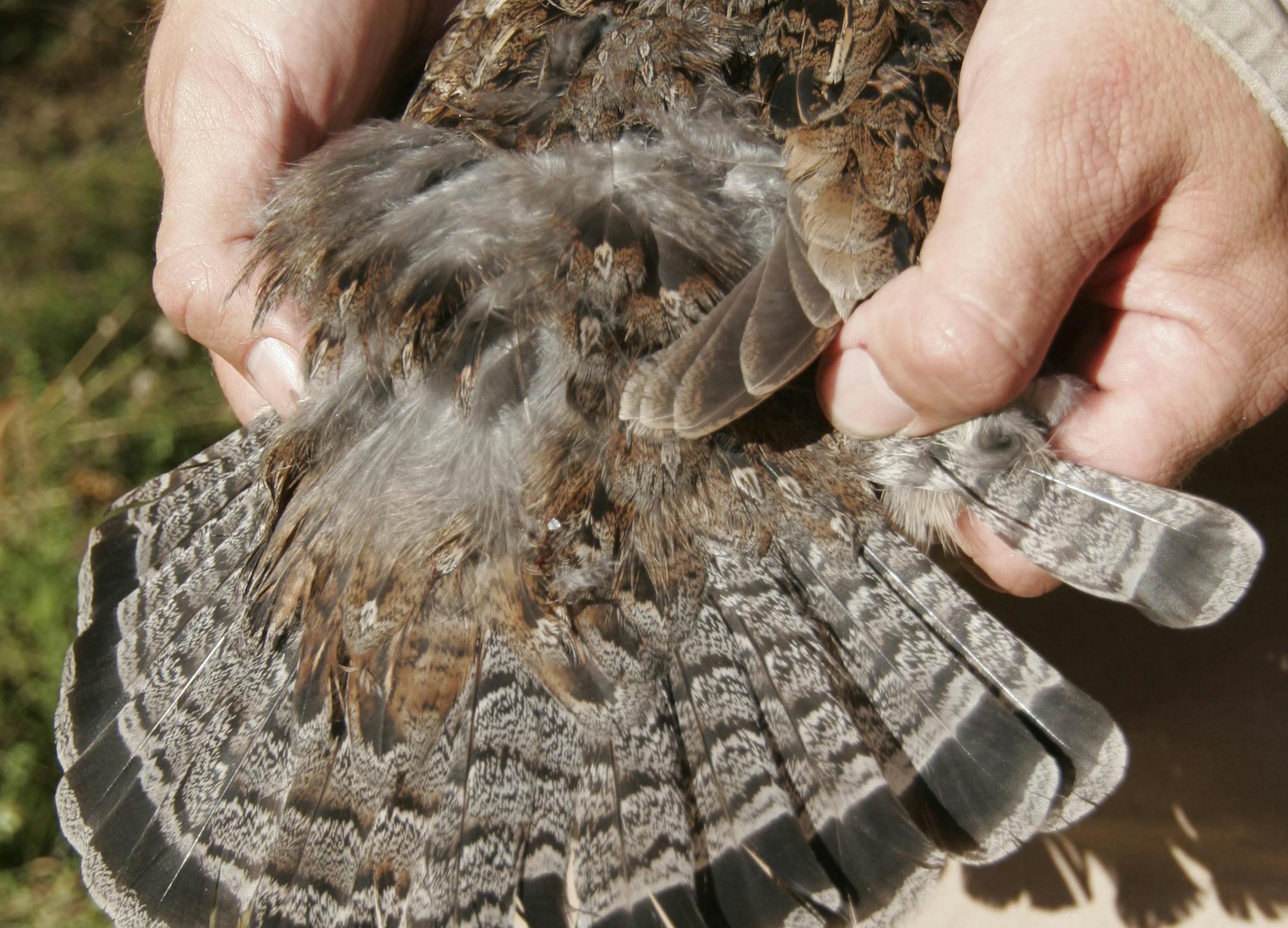
Officials also found numerous adult female woodcock that had retained their secondary feathers, and some that had retained their primary feathers, which is rare and shows a developmental delay.
Officials weigh, sex and examine all the grouse and woodcock shot during the two-day hunt, which has been held for 32 years, providing an unparalleled database. This year, 103 hunters harvested 219 ruffed grouse — or 1.06 birds per hunter per day — compared to 1.05 birds in 2012.
The state's grouse population is declining in its 10-year boom-to-bust cycle, but Dessecker said it's difficult to tell where it's at.
"We're probably in the third year of decline,'' he said. "My guess is we have another year or two [of population decline] to go yet.''
In 2006, the last time the grouse population hit bottom, hunters at the Grand Rapids hunt averaged about .9 birds apiece. Reproduction was down about 10 percent but still close to the long-term average. The ratio of immature birds to adult females was 5.9 this year; the long-term average is 6.47.
Meanwhile, hunters harvested 418 woodcock (2.03 birds per hunter per day — compared to 2.5 birds in 2012). The 2013 harvest rate is the third highest since woodcock harvest regulations were changed in 1997.


