

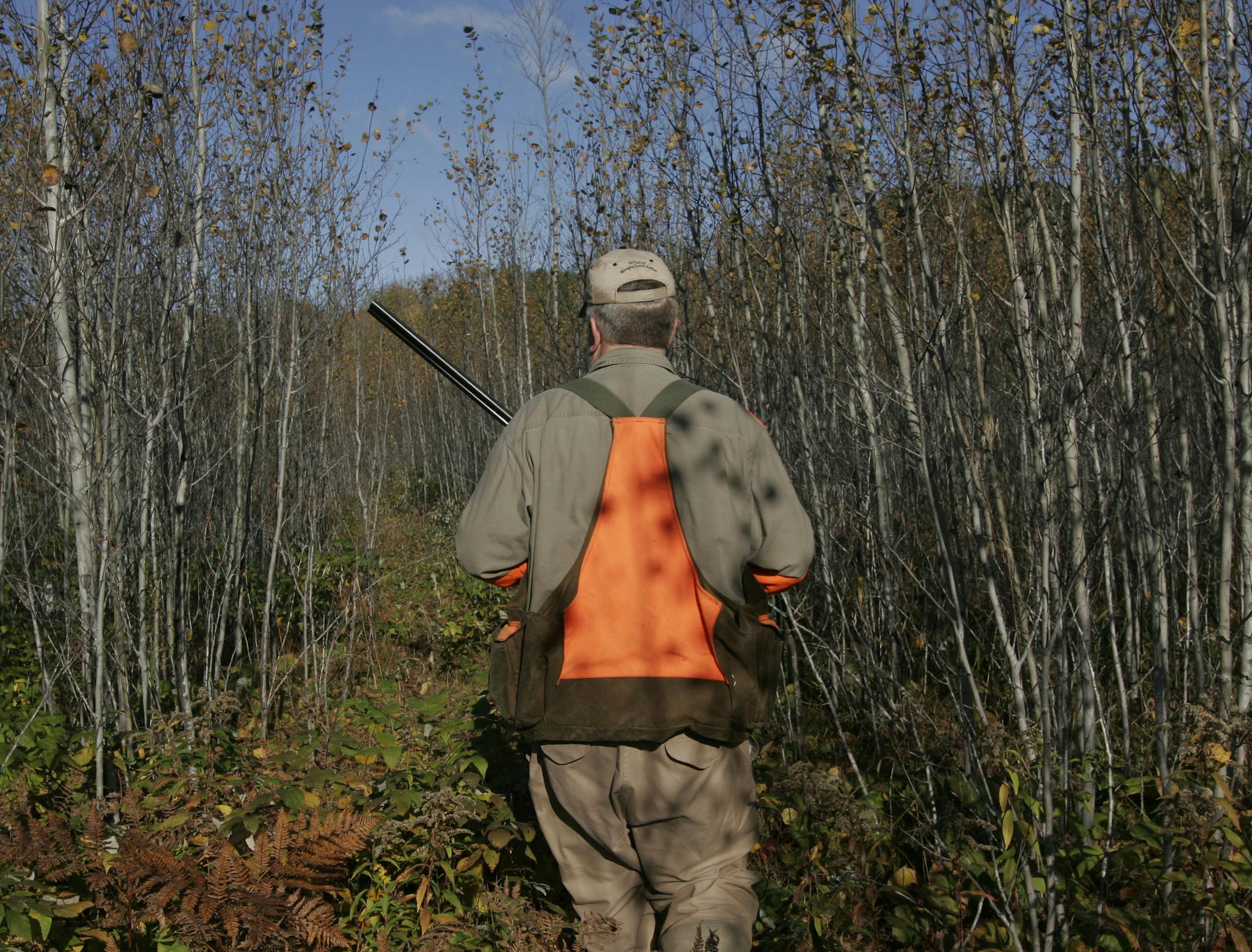
Minnesota's 90,000 or so ruffed grouse hunters can be forgiven if they're giddy with anticipation this year. With spring grouse drumming counts up 34 percent, they're hoping the 10-year boom-to-bust ruffie population cycle is on the upswing.
And it might be.
But maybe not.
The spring drumming count only estimates the adult ruffed grouse population, and doesn't reflect reproduction, which is key to the number of grouse hunters will find in the woods starting Saturday. Heavy rains in June coincided with the normal grouse hatch, which could have hurt chick survival.
"The numbers of birds that hunters see in the fall reflects both the numbers of breeders [counted in the spring] and production, which we're thinking was negatively affected by the weather,'' said Charlotte Roy, Department of Natural Resources grouse project leader. "We'll find out when people get out there.''
The grouse population had been declining since 2009. This spring's increased drumming occurred in the north.
Roy said she's received mixed reports about chick survival from wildlife managers. Ted Dick, DNR forest game bird coordinator, said he has received some encouraging reports of young birds being seen. He said officials are hoping that the late spring perhaps delayed nesting, so that chicks weren't hatched and exposed when the heavy June rains came.
Like pheasants, ruffed grouse will nest again if their eggs or nest are destroyed, but they won't if the newly hatched chicks succumb to weather.


