

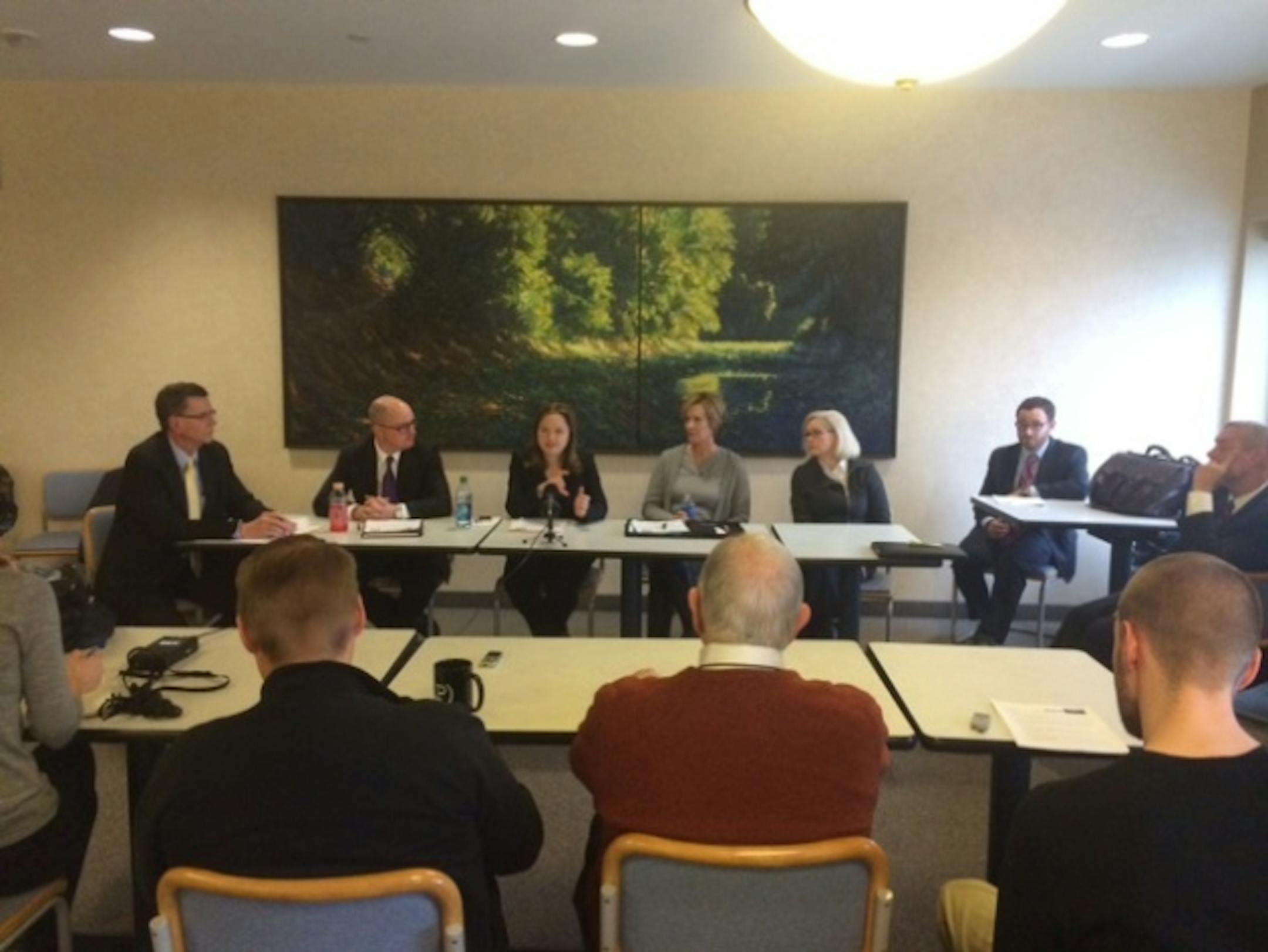
With less than three weeks until the kickoff of the 2015 Legislative session, interests representing business and the environment laid out their priorities on Thursday.
The Minnesota Chamber of Commerce says it will focus on tax relief for small and midsize businesses, a rollback of automatic increases in the minimum wage that are supposed to account for inflation, and changes in how transportation projects are funded in the state.
On tax relief, chamber officials say that Minnesota's corporate tax rate of 9.8 percent is too high, and ranks third highest in the nation, while its research and development tax credit has fallen behind those of other states.
The chamber also wants the Legislature to adopt a 10-year funding plan and find revenue sources that go beyond fuel taxes, vehicle registration and the motor vehicle sales tax. Bentley Graves, director of the chamber's health and transportation policy, said 33 states use money from the general fund to pay for roads and bridges, and that Minnesota should be among them.
"We're not suggesting that any dedicated sources go away, we're talking about how to get additional investment in the system," he said. Chamber officials would not say directly whether they opposed a standard gasoline tax increase.
Ben Gerber, the chamber's manager of energy and labor/management policy, said the 2015 Legislature should move to repeal automatic, inflationary increases to the minimum wage.
"We see a real problem with setting things on autopilot," Gerber said. "We elect legislators, we hold elections to put people in office to make these tough decisions, especially on an issue like the minimum wage, that legislators should be making that decision and it shouldn't be put on an automatic index." That automatic increase mechanism does not take effect until 2018. Gerber noted that Minnesota is the only state in the Upper Midwest with wage indexing, and a failure to repeal could send a signal to businesses eyeing a move across the border.
Other chamber goals include reducing standardized testing, getting rid of teacher tenure and increased oversight of MNsure, the state's health exchange.


