

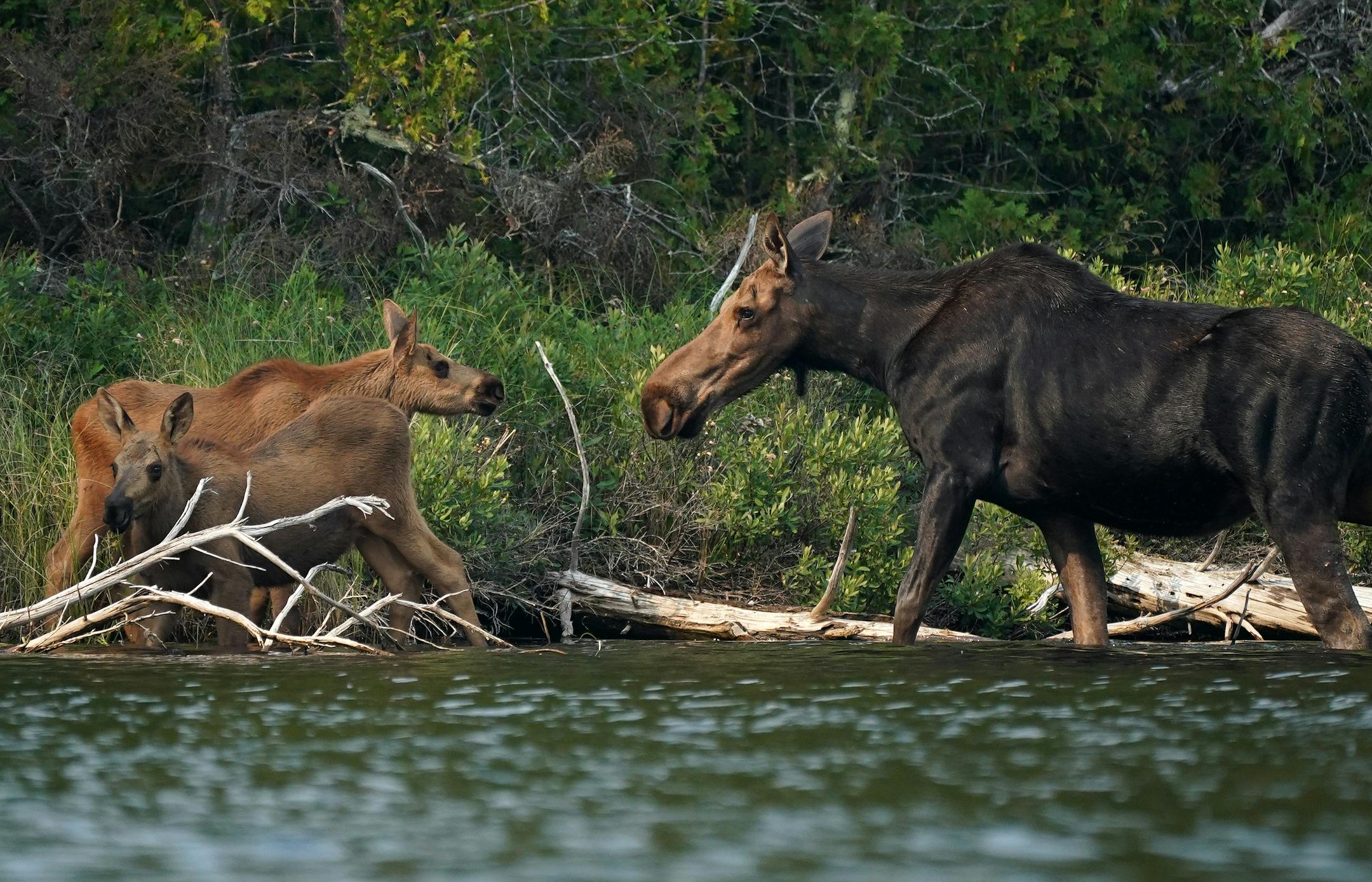
As the Greenwood fire threatened to spread to historic proportions this week, ecologists couldn't help but think of a vivid silver lining for moose, bear, grouse and other critters.
Especially for moose, listed in 2013 as a Minnesota species of special concern, the giant fire disturbance in Lake County will only improve an already vital segment of their home range, the experts said.
"To me, these areas where we've had big fires are some of the best moose habitats we have in the state,'' said Mike Schrage, wildlife biologist for the Fond du Lac Band of Lake Superior Chippewa.
He and others predict that moose and other animals eventually will return to the Greenwood fire area in larger numbers than before the blaze to feed on emergent vegetation as the forest regenerates with brushy plants like dogwood and saplings of willow, aspen, birch and other trees.
Whitetail deer, they said, are one notable exception, because they favor small forest openings, not huge expanses. And in the north, the deer need dense conifer stands for winter cover. But the 40 square miles of burned forest near Isabella, between Babbitt and Finland, wasn't a stronghold for deer even before the lightning-caused fire was detected Aug. 15.
The experts said wildfires in the region this summer have only displaced birds and animals. Any wildlife mortality has been minimal, they said.
"We hate to see the fire come uncontrolled like this, but if you were just managing wildlife that's how you create positives,'' said Ted Dick, forest habitat supervisor for the Department of Natural Resources in Grand Rapids.
For black bears, burned-out areas rebound to produce bumper crops of blueberries, raspberries and other foods. The abundance helps sows nurture more cubs. Woodcock and ruffed grouse also flourish in young, shrub-dominated forests.


