

At first glance, they seem to be unlikely places for parks: a front yard lining University Avenue, a former circus site and a broken-glass-and-concrete patch shadowed by towering grain elevators.
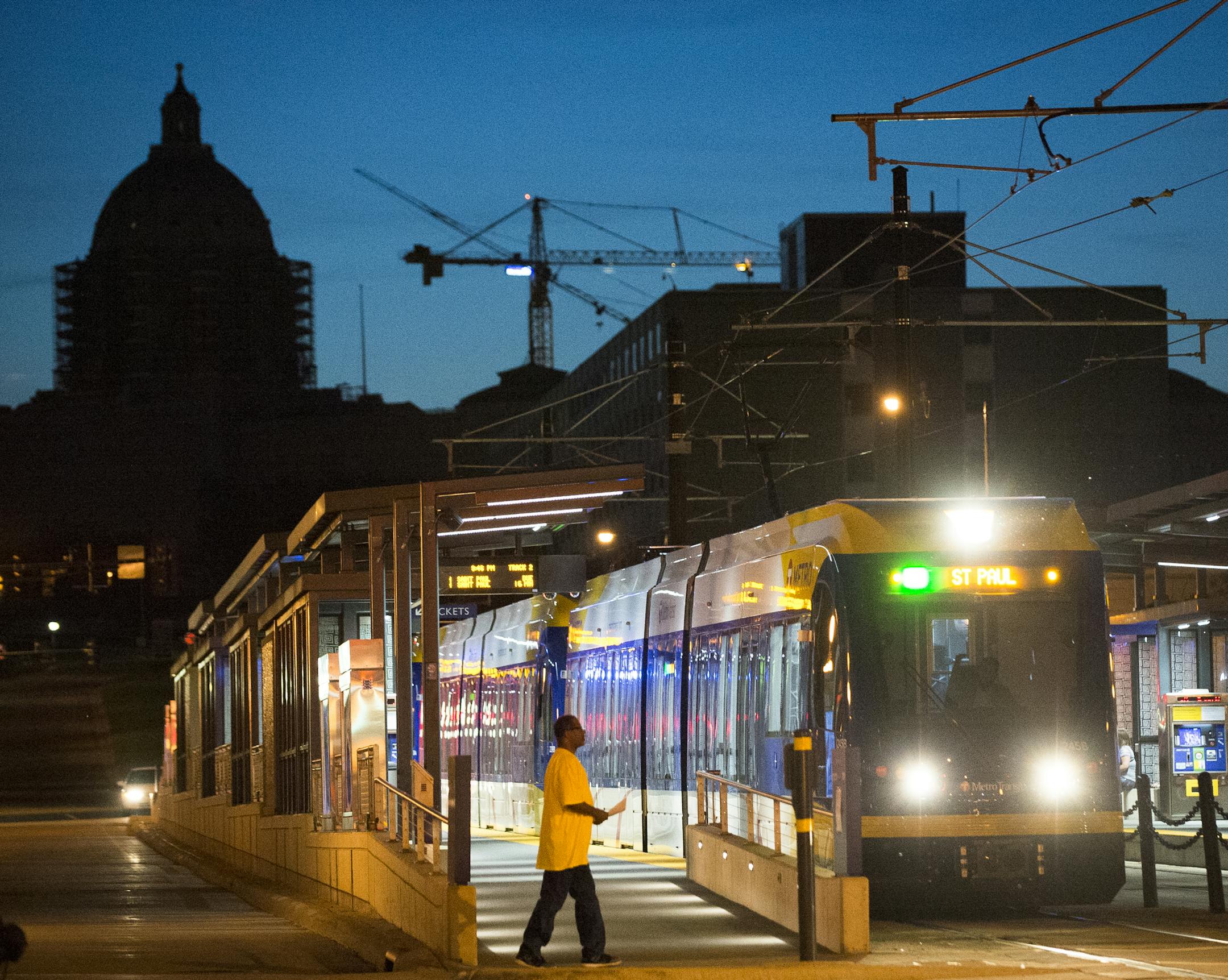
But more than a year after the Green Line made its inaugural light-rail run, new and renovated green spaces and public places around University are gaining momentum — many the result of public-private partnerships aimed at improving livability and bolstering property values along the tracks.
It's all part of a larger effort, mostly in St. Paul but also in Minneapolis, to leverage the billion-dollar public investment in the Green Line for urban development, while also promoting lifestyles in which walking and biking become easy substitutes for driving.
The goal is not to create large public tracts, but pockets and plazas where residents and visitors can gather, stroll and relax.
"This is the last piece of the puzzle," said Mike Hahm, St. Paul's Parks and Recreation director. "This is a public investment that will return private investment. It really improves the quality of all the things that people want and expect in great cities."
There's a widespread belief that it's needed. Parks make up 15 percent of land use in each of the Twin Cities, but only 4.7 percent in the Green Line corridor — an area expected to add 17,000 households in the next few years. The Trust for Public Land, a national nonprofit conservation group, issued a report last year that said the Green Line was desperately short on green space.
That helped fuel a series of recent park moves in St. Paul. Some examples:
• The St. Paul City Council this month agreed to purchase, along with the trust, three parcels near Griggs Street and University Avenue once known as Circus Hill and now slated for a 5.4-acre park tentatively called 3-Ring or Lexington Commons. The city's share of the $2.5 million deal: $1.5 million from its 8-80 Vitality development fund.


