

Long before the first piece of track was laid, the billion-dollar Green Line linking the downtowns of Minneapolis and St. Paul was envisioned not just as a train ride, but as an engine for growth in the neighborhoods it rumbled through.
And at least $80 million in taxpayer money has been invested over the past eight years to see that it happens.
"It always had to be about the community that you could create along the line," said St. Paul Mayor Chris Coleman. "In many ways, we have the most planned line in the country, in terms of the surrounding development that would occur."
Now with the line's opening just two weeks away, mixed results are raising concerns about whether the public investment will meet the goals of improving the economic bottom line for the cities and the quality of life for residents nearby.
The Metropolitan Council, the regional planning agency that built the line, and local government officials claim that the public spending has stoked $2.5 billion in projects constructed, underway or planned within a half-mile of the 11-mile route that stretches from Union Depot in St. Paul, through the neighborhoods along University Avenue and into downtown Minneapolis.
Yet much of that $2.5 billion includes housing, retail and other projects that likely would have gone up anyway. They include the $243 million publicly funded renovation of Union Depot, the boom in private student housing at the University of Minnesota, Ryan Companies' $400 million mixed-use project tied to the new Minnesota Vikings stadium and other developments in prime downtown Minneapolis spots where the Blue Line has been operating for 10 years.
Most of the $80 million or more in public money dedicated to development along the Green Line has been committed to housing, office and retail projects along a critical 7-mile stretch from the eastern edge of Minneapolis to downtown St. Paul.
Yet despite millions spent in an already poor 2-mile strip from Hamline to Western avenues in St. Paul's Midway district — most of it on low- and moderate-income housing — blocks appear largely unchanged: vacant storefronts and old clapboard houses are scattered among ethnic restaurants and small businesses that survived construction with the help of grants from the city.
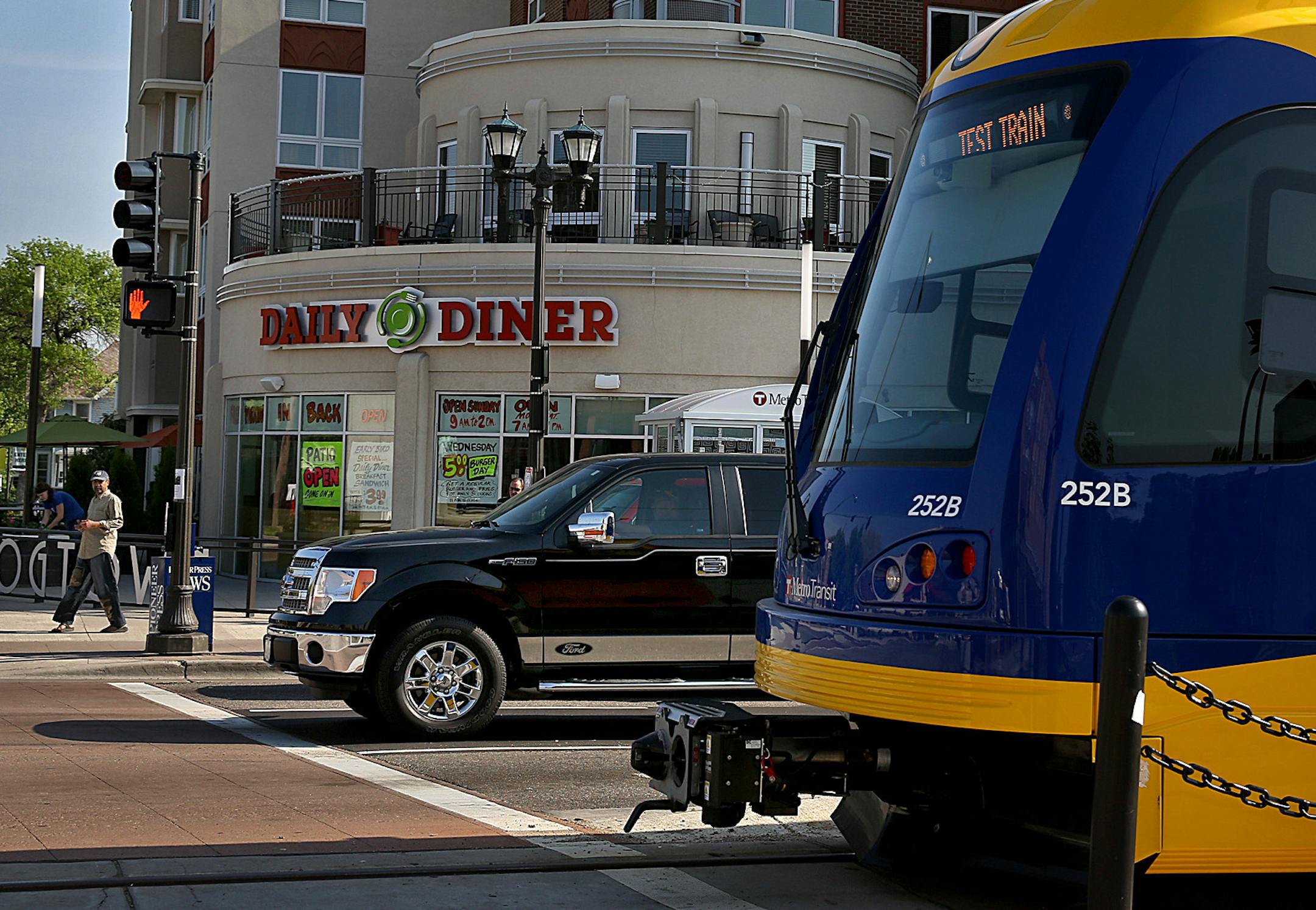
![A light rail train approached the Hamline Street station during Green Line’s testing period. ] JIM GEHRZ • jgehrz@startribune.com / St. Paul, MN / May 30, 2014 / 9:00 AM / BACKGROUND INFORMATION: It may look like a light-rail train and it will move people between downtowns, but the Green Line in many ways is a billion-dollar plan to revitalize downtown St. Paul and rebuild University Avenue as a dynamic and colorful commercial destination. It may be one of t](https://arc.stimg.co/startribunemedia/EF2XFH4YTXZAGBTPGLCYWJ7RIM.jpg?&w=1080)


